Asian Games swimming: R Madhavan's son misses final; Srihari Nataraj finishes 10th
Source Entity
SHUBHANSHU DWIVEDI
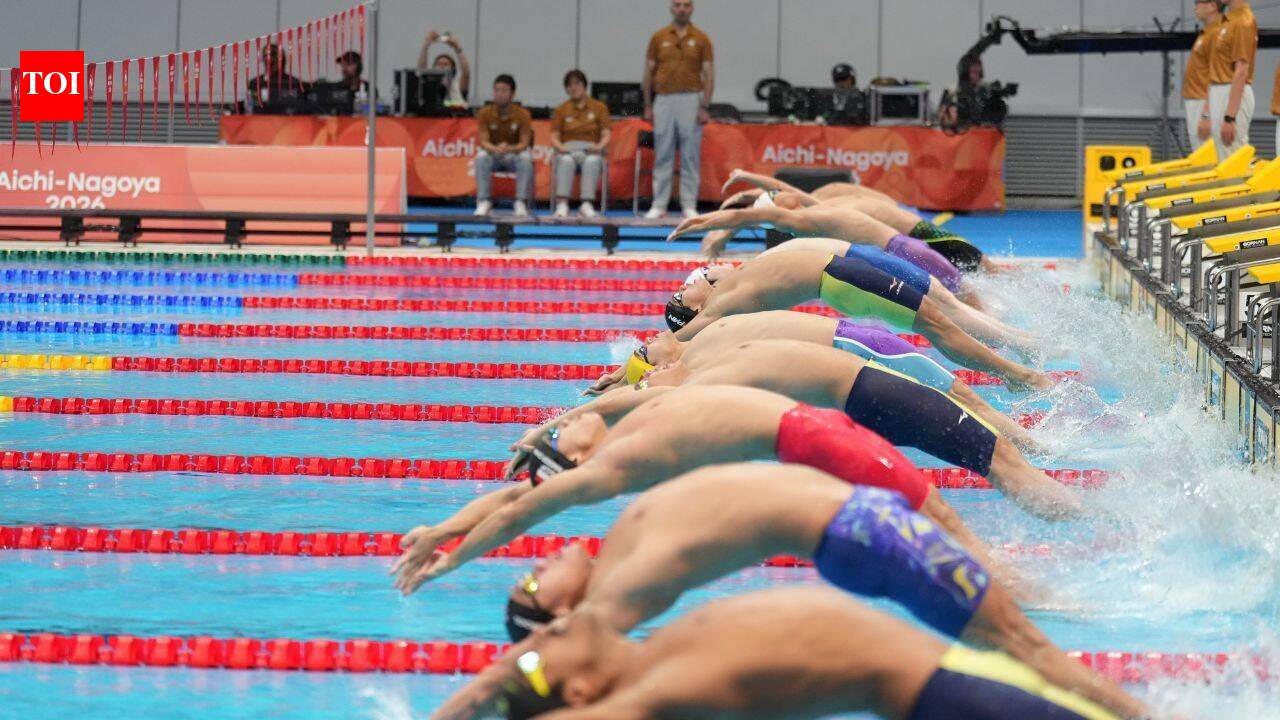
Indian swimmers faced a challenging day at the 2026 Asian Games in Tokyo, with Srihari Nataraj placing 10th in the 50m backstroke and Vedaant Madhavan missing the relay final. Despite the efforts of top athletes, the team struggled to secure podium finishes during the latest heats at the Tokyo Aquatics Centre.
Disappointment for India at the Tokyo Aquatics Centre
The 2026 Asian Games, currently hosted at the prestigious Tokyo Aquatics Centre, have proven to be a difficult stage for the Indian swimming contingent. On Monday, September 21, 2026, the nation's medal hopes faced significant setbacks during the men's swimming events. The high-pressure environment of the Tokyo venue, known for its world-class infrastructure, saw elite international competitors, such as China's Xu Jiayu, showcase dominant performances in the backstroke heats.
Srihari Nataraj’s Struggle in the Backstroke
Two-time Olympian Srihari Nataraj, one of India's most experienced swimmers, endured a particularly challenging outing in the men's 50-meter backstroke. Having qualified for the final, Nataraj clocked a time of 25.52 seconds, which ultimately placed him 10th. This performance was notably slower than his earlier heat time of 25.37 seconds, highlighting the difficulty in maintaining peak intensity across multiple rounds of competition in such a competitive international field.
Vedaant Madhavan and Relay Challenges
In addition to the individual setbacks, the Indian men's 4x200m freestyle relay team also faced disappointment. Vedaant Madhavan, son of the acclaimed actor R Madhavan, was part of the squad that failed to advance to the final round. The inability to secure a spot in the relay final underscores the depth of competition at the Asian Games, where margins between qualifying and elimination are razor-thin.
Contextualizing the Asian Games Environment
The Asian Games serve as a critical benchmark for regional aquatic supremacy. The use of the Tokyo Aquatics Centre—a venue steeped in recent Olympic history—adds a layer of professional intensity to these events. For athletes like Nataraj, the experience gained at this level is invaluable, even when the results fall short of expectations. The performance gaps observed on Monday indicate that while Indian swimming continues to reach new heights in terms of qualification, bridging the gap to the continental podium remains an ongoing challenge.
Future Implications and Performance Trends
Moving forward, the Indian coaching staff will likely analyze these results to understand the variance between heat and final performances. The physical and psychological toll of competing in a multi-sport event like the Asian Games requires rigorous preparation. As the games progress, the focus for the Indian squad will shift toward identifying tactical adjustments that can help athletes maintain their speed and stamina during the high-stakes final rounds. The performance in Tokyo serves as a sobering reminder of the global standard required to compete at the very top of the sport.