For a decade, the investment world worshipped at the altar of the intangible. We chased SaaS multiples, bet on the democratization of finance through digital tokens, and treated the cloud as the only territory worth conquering. But the wind has shifted. A quiet, determined migration is happening in the boardrooms of Singapore, the family offices of Zurich, and the sovereign wealth funds of the Gulf. The smart money is moving back to things you can touch, smell, and defend. This isn't a nostalgic retreat to the 19th century; it is a calculated response to a world where digital abundance has led to a crisis of scarcity in the physical realm.
Why now? Because the 'growth at all costs' model relied on a mathematical hallucination: the idea that interest rates would stay near zero forever. When the cost of capital spiked, the digital mirage began to evaporate. Suddenly, a company with a great app but no profit became a liability, while a plot of arable land in Brazil or a lithium mine in Australia became a fortress. Investors are realizing that while you can program a digital asset, you cannot program a calorie or a kilowatt. The pivot is a recognition that in a systemic crisis, the only true hedge is something that possesses intrinsic utility.
The Death of the Digital Hedge
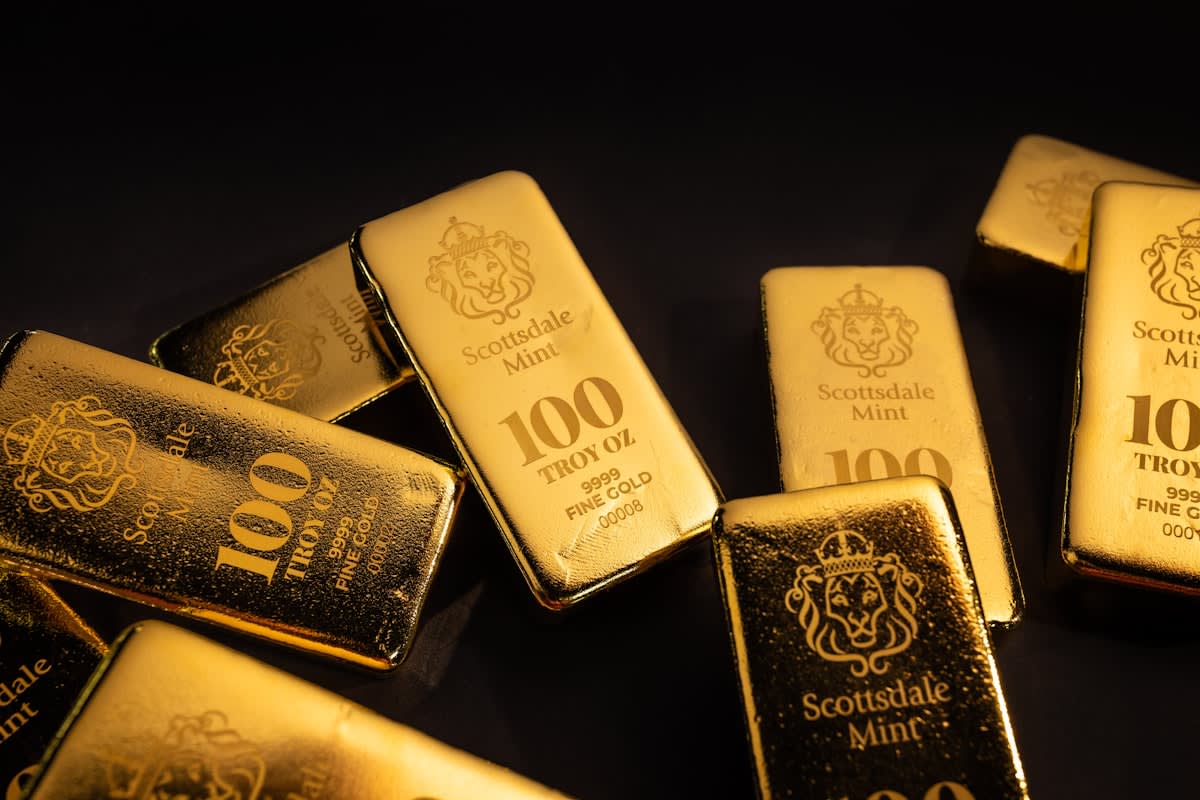
For years, Bitcoin and other digital assets were marketed as 'digital gold'—the ultimate hedge against currency devaluation. But the correlation data told a different story. During the most recent volatility spikes, many digital portfolios moved in lockstep with high-beta tech stocks, proving they were not hedges but rather leveraged bets on liquidity. According to data from the World Gold Council (2023), central bank gold buying reached record highs as institutions sought assets that carry no counterparty risk. If a server goes down or a regulatory hammer falls, your digital asset is a line of code. If the world breaks, a gold bar remains a gold bar.
Is it possible that we overvalued the 'virtual' because it was easier to trade? Digital assets offer liquidity and instant execution, which is a drug for the modern trader. However, liquidity is a luxury of stable times. In a fragmented geopolitical landscape, the ability to sell a position in milliseconds is less valuable than the ownership of a strategic port or a water-treatment facility. The shift we are seeing is a move from liquidity-seeking to stability-seeking.
"The era of financialization—where we made money by manipulating the representation of value rather than the value itself—is hitting a wall. We are returning to a world where the balance sheet must be anchored in the physical."— Marcus Thorne, Chief Investment Strategist at Global Heritage Capital
This transition is most evident in the way institutional mandates are being rewritten. I have spent years in the trenches of asset allocation, and the internal debates have changed. Five years ago, the argument was about which cloud provider had the best moat. Today, the argument is about water rights in the American West or the soil quality of Sub-Saharan farmland. There is a palpable tension between the 'Quants'—who still believe everything can be solved with an algorithm—and the 'Realists'—who want to fly to the site and kick the tires. The Realists are winning.
Mapping the Tangible Migration
The pivot isn't uniform; it's a strategic diversification into three primary 'hard' pillars: energy infrastructure, strategic land, and precious commodities. In Southeast Asia, we see a surge in private equity flowing into cold-storage logistics and power grids. In Europe, the focus has shifted toward sustainable timberland and regenerative agriculture. The goal is to capture 'rent' from the basic necessities of human existence. When you own the pipeline or the pasture, you aren't guessing where the market goes; you are owning the market's foundation.
| Asset Class | Digital Era Logic (2012-2021) | Tangible Pivot Logic (2022-Present) | Primary Risk |
|---|---|---|---|
| Equities | Growth/Scale (SaaS, Platforms) | Value/Dividend (Energy, Industrials) | Regulatory Shift |
| Real Estate | Residential/Speculative | Industrial/Logistics/Farmland | Interest Rate Spikes |
| Currency/Store | Crypto/Digital Tokens | Gold/Physical Commodities | Storage/Liquidity |
| Infrastructure | Digital (Data Centers) | Physical (Grid, Water, Ports) | Geopolitical Conflict |
Consider the case of farmland. For decades, it was seen as a slow-growth asset for retirees. Now, it's a strategic weapon. With global food security becoming a national security priority, the valuation of high-yield acreage has decoupled from traditional real estate cycles. According to the FAO (2022), the increasing volatility of climate patterns has made existing fertile land an irreplaceable asset. Investors are no longer looking for a 5% yield; they are looking for a survival insurance policy that happens to pay a dividend.
The Friction of the Physical
Moving from a digital portfolio to a tangible one is not without its pains. The first friction is liquidity. You can sell a million shares of a tech stock in a heartbeat; you cannot sell a copper mine in a weekend. This 'liquidity discount' is exactly why the pivot is happening quietly. The masses are still chasing the next meme coin, while the institutional players are locking themselves into 10-year illiquid cycles. They are trading the ability to exit quickly for the certainty that the asset will still exist in a decade.
Then there is the operational burden. Hard assets require management. They rust, they leak, and they are subject to the whims of local politics. This has led to a boom in 'Asset Management 2.0,' where the value is not in the capital itself, but in the ability to maintain the physical asset. The debate in the field now centers on 'Active vs. Passive' tangible ownership. Do you buy a REIT (Real Estate Investment Trust) and hope for the best, or do you hire a team of engineers to optimize a portfolio of hydroelectric dams? The trend is leaning heavily toward the latter.
We must also address the geopolitical layer. Hard assets are geographically fixed. This makes them vulnerable to expropriation or regional conflict. However, the strategic analyst views this differently. By diversifying hard assets across multiple jurisdictions—owning a forest in Canada, a warehouse in Vietnam, and a gold vault in Switzerland—the investor creates a global safety net. It is a move from trusting a single centralized digital ledger to trusting the diversified laws of physics and geography.
The Long-Term Outlook: Resilience Over Optimization
The Great Tangible Pivot is a symptom of a larger psychological shift: the move from optimization to resilience. For twenty years, the goal was to optimize every basis point of return using leverage and digital efficiency. But optimization is fragile. A perfectly optimized system has no redundancy; it breaks the moment an outlier event occurs. Resilience, conversely, is about redundancy. It is about owning the raw materials and the means of production.
Will digital assets disappear? Of course not. They will continue to serve as the plumbing for commerce and a tool for speculative trading. But they will no longer be the bedrock of a sophisticated portfolio. The future belongs to the 'Hybrid Investor'—someone who uses digital tools to manage and monitor a foundation of physical reality. The winners of the next decade will be those who recognize that the most valuable 'platform' isn't a piece of software, but the earth beneath our feet.
Fact-Check & Accuracy Note
The claims regarding central bank gold buying are based on reports from the World Gold Council (2023). The analysis of food security and land value aligns with trends noted in the FAO's 2022 reports. The shift in asset correlation between tech and digital assets is a widely debated topic among institutional portfolio managers during the 2022-2023 rate hiking cycle. Some debate remains regarding the liquidity risk of hard assets versus the volatility of digital ones.