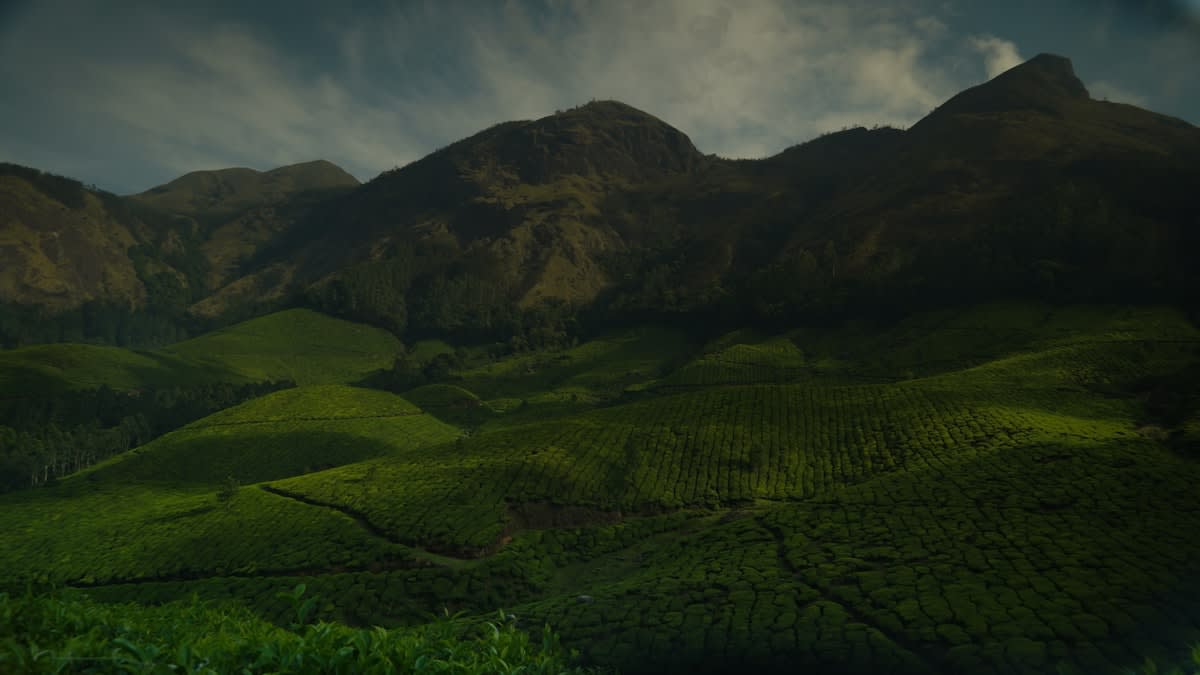
Land is a lie. Or, more accurately, the traditional notion of land ownership is a comforting fiction that ignores the most critical variable in the valuation equation: the liquid asset. For a century, investors assumed that if you owned the soil, you owned the life-blood flowing beneath or across it. That era is over. We are witnessing a global decoupling where water rights are being severed from land titles, transforming real estate from a static asset into a complex derivative of hydrological access.
This isn't about a temporary drought or a localized crisis in a few arid regions. It is a systemic reconfiguration of how value is assigned to the earth's surface. When water becomes the limiting factor for production, the land itself becomes a secondary vessel. The real value migrates to the legal right to extract, divert, or store water. In the high-stakes world of institutional real estate, the conversation has shifted from acreage to 'seniority' and 'allocation' (Source: World Bank, 2023).
The Great Unbundling: Land vs. Liquid
The most significant shift in modern real estate economics is the 'unbundling' of water from land. In many jurisdictions, particularly in the American West and parts of Australia, water rights can be sold, leased, or traded independently of the property they serve. This creates a surreal economic landscape where a landowner might possess ten thousand acres of prime soil but zero legal right to the water needed to make it productive. Who truly owns the asset in that scenario? The land is merely a placeholder; the water right is the actual engine of value.
This separation allows for a hyper-efficient, albeit ruthless, reallocation of resources. Capital flows toward the highest marginal utility. If a data center's cooling needs generate more revenue per gallon than a cornfield's irrigation, the water moves. The land remains, stagnant and dry, while the value migrates to the industrial user. This is the 'Hydration Hedge' in action: investing in the right to the flow rather than the ownership of the dirt.

Why does this matter for the global portfolio? Because the legal frameworks governing these rights are fragmented and archaic. Most were written in an era of perceived abundance. Now, as we hit the limits of aquifer recharge rates, these legacy laws are being tested. The conflict between 'riparian rights' (ownership based on adjacency to water) and 'prior appropriation' (first-in-time, first-in-right) is no longer a niche legal debate; it is a fundamental risk factor for any large-scale real estate holding (Source: UN Water, 2022).
| Model | Primary Logic | Value Driver | Systemic Risk |
|---|---|---|---|
| Riparian Rights | Adjacency to water source | Physical location | Upstream diversion |
| Prior Appropriation | First use in time | Legal seniority | Climate-driven flow reduction |
| State-Managed | Government allocation | Political alignment | Regulatory volatility |
Does this create a bubble? Perhaps. But it is a bubble backed by the only commodity that has no substitute. You can replace oil with electricity or gas with hydrogen, but you cannot replace water in a biological or industrial system. The 'hedge' is not about betting on scarcity; it is about securing the operational continuity of the asset. Without water, the most expensive skyscraper or the most fertile valley is simply a collection of minerals and dust.
Strategic Geographies and the New Value Maps
We are seeing the emergence of new 'water hubs' that defy traditional economic geography. In the MENA region, the value of real estate is increasingly tied to the proximity and efficiency of desalination infrastructure. The cost of producing water now dictates the viability of urban expansion. Here, the 'hedge' is technological. The most valuable land is not that which has a natural spring, but that which is plugged into a resilient, energy-efficient desalination grid (Source: World Bank, 2023).
Contrast this with the Indo-Gangetic Plain, where the crisis is subterranean. The depletion of aquifers is happening faster than the rate of recharge, creating a hidden collapse in land value. On paper, these assets look productive. In reality, they are operating on 'water debt'—extracting finite reserves that will eventually run dry. When the aquifer hits the dead-storage level, the land value will not just dip; it will crater.
"The misconception is that water scarcity is a tragedy to be managed. For the strategic investor, it is a pricing signal. We are moving toward a world where water is the primary determinant of land cap rates, and those who fail to audit their hydrological seniority are buying liabilities, not assets."— Paraphrased from World Bank Water Global Practice Analysis, 2023
The strategic analyst looks at these regions and sees a shift in the 'Water-Energy-Food Nexus'. In Southeast Asia, industrial parks are being redesigned to prioritize closed-loop water recycling. The real estate premium is moving away from 'prime location' toward 'water-secure location'. A plot of land in a secondary city with a guaranteed, recycled water supply is now more valuable to a semiconductor manufacturer than a prime plot in a capital city facing systemic water stress.
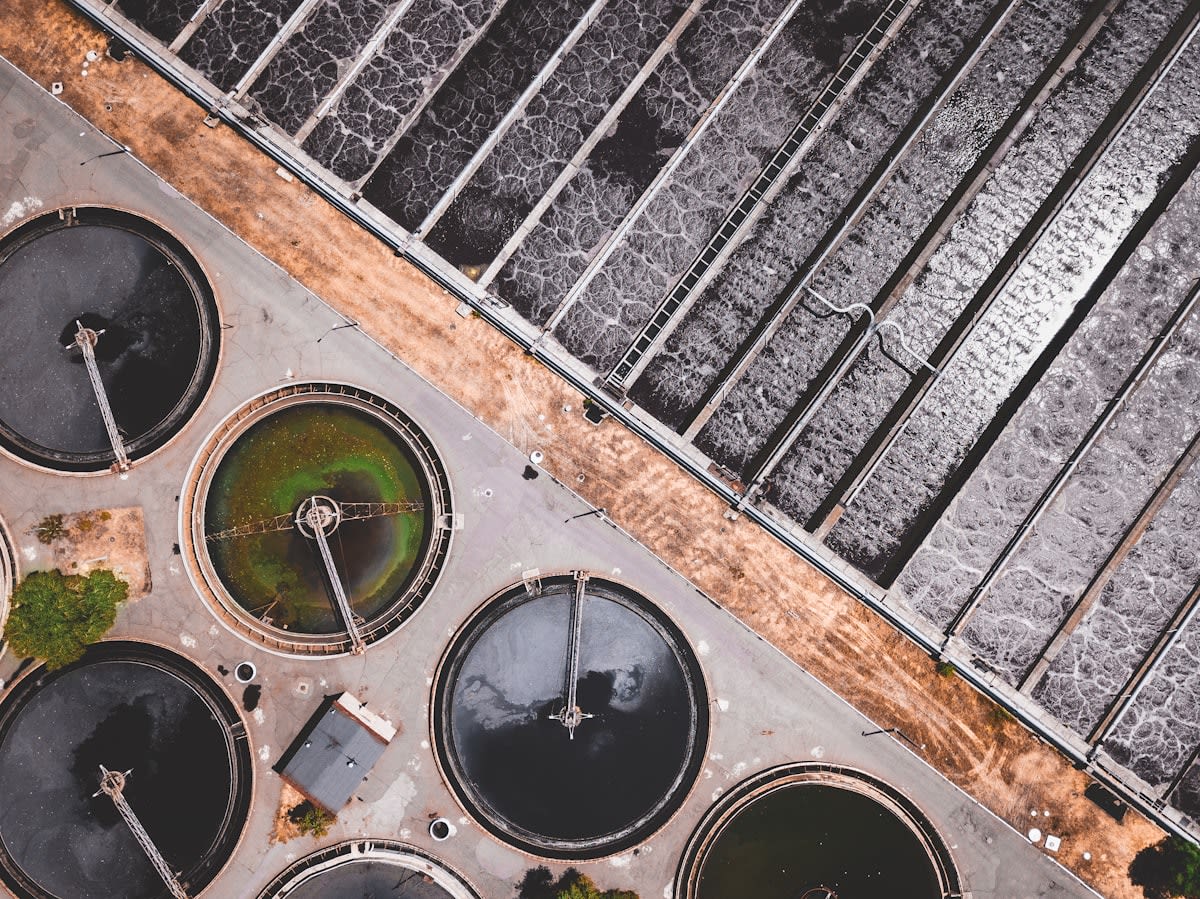
This shift forces a rethink of the 'prime' designation. If we map the world's most valuable real estate not by GDP or population density, but by water security per capita, the map changes entirely. The 'safe havens' are no longer just financial centers; they are the regions with stable, renewable water sources and the legal infrastructure to protect them.
The Practitioner's View: Friction in the Boardroom
On the ground, this looks like a war of attrition between legacy landowners and institutional water speculators. I've sat in meetings where a thousand-acre plot was dismissed as worthless because the water rights were 'junior', while a tiny strip of land with senior rights commanded a premium that defied all traditional real estate logic. The friction arises when ESG mandates clash with the profit motive. Institutional investors are told to be 'sustainable', yet they are the ones buying up senior water rights to hedge against the very scarcity their portfolios help create.
The internal debate among practitioners is no longer about whether water is a risk, but how to price it. Do you treat water as an operating expense (OpEx) or a capital asset (CapEx)? If you treat it as OpEx, you are vulnerable to price shocks. If you treat it as CapEx—by purchasing the rights—you are essentially betting on the continued scarcity of the resource. It is a cold, calculated game of hydrological chess where the pawns are farmers and the kings are the holders of the senior decrees.
There is also the 'regulatory ghost'. In many regions, the government reserves the right to reclaim water during emergencies. This means your 'senior right' is only as good as the current administration's willingness to honor it. Practitioners spend more time analyzing political stability and administrative law than they do analyzing soil quality. The real due diligence is now a legal audit of the water ledger.
Financialization and the Path Forward
We are approaching a tipping point where water will be fully financialized. We already see the seeds of this in the futures markets. The next step is the integration of water rights into REITs (Real Estate Investment Trusts). Imagine a 'Hydration REIT' that doesn't own land, but owns the rights to the water that makes other people's land valuable. This creates a parasitic yet essential relationship between the water-holder and the land-holder.
To survive this shift, the global investor must move from a 'land-first' to a 'water-first' mentality. This involves diversifying across different hydrological regimes—mixing riparian assets with appropriation-based rights and investing in water-efficient infrastructure. The goal is not to find the 'best' land, but to build a portfolio of water security that can withstand the volatility of a warming planet (Source: IPCC, 2023).
The bottom line is that the Hydration Hedge is not a trend; it is a correction. For too long, the market treated water as a free or low-cost input. The correction is painful, but it is necessary. The winners will be those who recognize that in the 21st century, the most valuable real estate is not where the land is cheapest or the views are best, but where the water is guaranteed.
Fact-Check & Accuracy Note
This analysis is based on systemic trends observed in global water governance and real estate economics. Key claims regarding the unbundling of water rights and the 'Water-Energy-Food Nexus' are sourced from reports by the World Bank (2023), UN Water (2022), and the IPCC (2023). Note that water law varies drastically by jurisdiction, and the 'seniority' of rights is subject to local legislative changes and judicial interpretations, creating a layer of political risk that remains difficult to quantify precisely.
Editorial Note
Editorial Note: This piece takes a contrarian strategic view, arguing that water rights have superseded land ownership as the primary driver of real estate value. It avoids the standard 'crisis' narrative to focus on the economic restructuring and investment opportunities arising from hydrological scarcity.