
The age of the invisible supply chain is dead. For decades, the global tech industry operated on a convenient fiction: that the minerals powering our semiconductors, batteries, and screens existed in a frictionless void, available for purchase by the highest bidder and shipped across oceans without political friction. This era of extractive capitalism relied on a stark divide between the 'resource-rich' and the 'tech-rich.' The former provided the raw dirt; the latter provided the intelligence and captured the value. But a new reality has emerged, one I call the Mineral Wall. This is not a barrier designed to stop trade, but a filter designed to force a fundamental redistribution of industrial power.
What is actually happening is a systemic pivot toward resource sovereignty. We are seeing a global trend where nations are no longer content to be the world's quarry. Why should a country with the largest nickel reserves on earth simply export raw ore only to buy back the expensive stainless steel or battery precursors produced in another hemisphere? This question is driving a wave of policy shifts that the West often mislabels as 'instability' or 'crisis.' In reality, it is a rational economic correction. These nations are leveraging their geological luck to force the factories to move to the mines, effectively demanding a seat at the high-value end of the production chain.
The End of Extractive Arbitrage
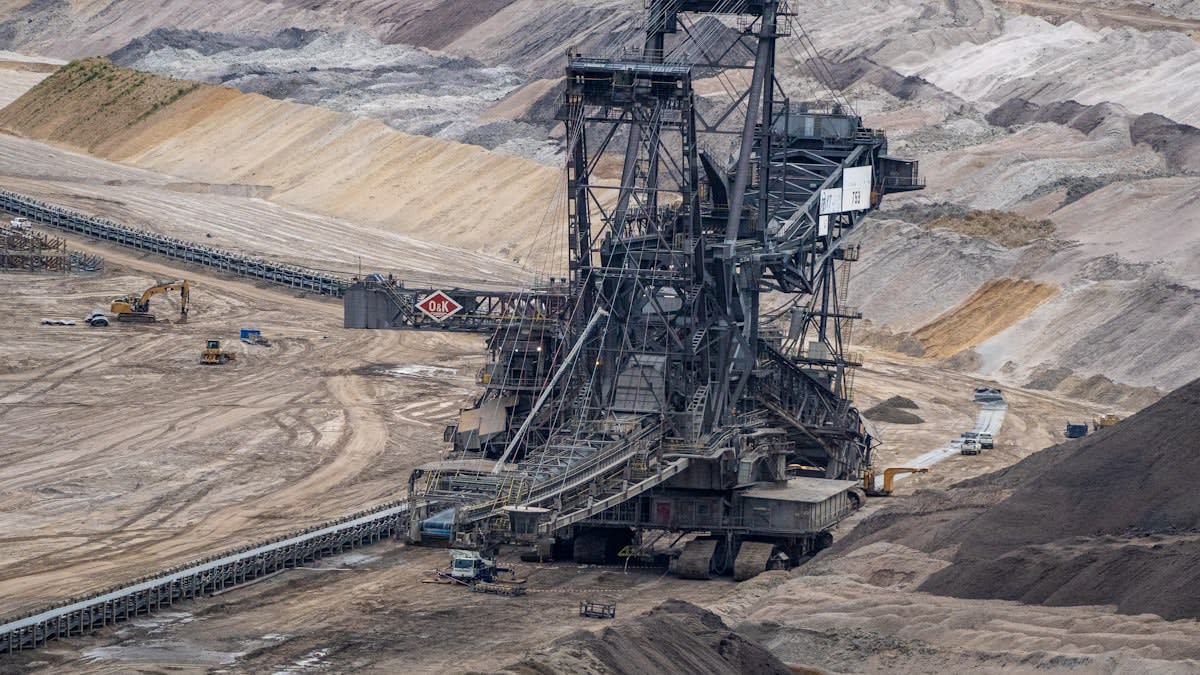
Consider the strategic gambit played by Indonesia regarding nickel. By implementing strict export bans on raw nickel ore, the government did not seek to starve the global market, but to compel foreign investors to build smelters and refineries within its own borders. This is a masterclass in industrial arbitrage. The goal is to climb the value chain from mining to refining, and eventually to battery cell production. When a nation controls 21 million metric tons of nickel reserves, it possesses the leverage to rewrite the terms of engagement. This isn't a trade war; it is a demand for industrialization.
Similar patterns are emerging across the Lithium Triangle of Chile, Argentina, and Bolivia, which holds over 50% of the world's known lithium resources. Here, the narrative is shifting toward state-led models and public-private partnerships that prioritize national development over quick quarterly dividends for foreign shareholders. Does the global tech industry find this inconvenient? Absolutely. But is it sustainable for the resource-holding nations to remain in a state of permanent under-industrialization? Clearly not. The friction we see today is the sound of the old extractive machinery grinding to a halt.
"The Mineral Wall is not a sign of global decay, but the birth of a more balanced industrial equilibrium where geological wealth is finally converted into economic complexity."— Strategic Analysis Perspective
The Democratic Republic of Congo (DRC) presents a more complex but equally telling case. Controlling roughly 70% of the global cobalt supply, the DRC is increasingly scrutinizing the transparency of its mining contracts and the actual value returning to its people. The push for formalization and state oversight of artisanal mining is not merely about human rights—though that is a critical component—but about capturing the rent that has historically leaked out of the country. The 'Mineral Wall' here manifests as a demand for ethical traceability and a fairer share of the profit margin.
This global shift exposes the fragility of the 'Just-in-Time' supply chain. For years, tech giants optimized for cost and speed, ignoring the geopolitical risk of extreme concentration. Now, they discover that their lean inventories are liabilities when a sovereign state decides to pivot its economic strategy. The realization is sinking in: you cannot have a high-tech economy if your foundational materials are subject to the whims of a few strategic bottlenecks. The industry is now forced to choose between paying the 'sovereignty premium' or investing in radical alternatives.
Key Concept
The 'Sovereignty Premium' refers to the increased cost of materials when resource-rich nations mandate domestic processing, higher royalties, or state equity in mining projects.
Systemic Shift: From Extraction to Integration
We are witnessing a transition from a linear supply chain to a networked ecosystem of integrated hubs. In the old model, the flow was simple: Mine $\rightarrow$ Ship $\rightarrow$ Refine $\rightarrow$ Manufacture $\rightarrow$ Consume. The new model is far more circular and localized. We are seeing the rise of 'mineral diplomacy,' where trade agreements are no longer just about tariffs, but about technology transfers. If a tech company wants access to lithium, it must now offer to build the chemical plants that process it. This is a fundamental change in the power dynamic of global trade.
| Dimension | Extractive Paradigm (Old) | Sovereign Paradigm (New) |
|---|---|---|
| Primary Goal | Low-cost raw material acquisition | Domestic value-addition & industrialization |
| Capital Flow | Outward (Profits to HQ in West/East) | Inward (Investment in local refining/tech) |
| Risk Profile | Geopolitical blindness/Concentration risk | Strategic interdependence/Diversification |
| Value Capture | Captured at the manufacturing stage | Distributed across the entire value chain |
| Supply Logic | Just-in-Time (Efficiency focus) | Just-in-Case (Resilience focus) |
Does this trend signal the end of globalization? Hardly. It signals the end of exploitative globalization. The new architecture is one of mutual dependence. The tech-rich nations still need the minerals, and the resource-rich nations still need the capital and the intellectual property. The difference is that the terms of the exchange are being renegotiated. This is an opportunity for the global economy to build a more resilient base, one where the wealth generated by the energy transition is not concentrated in a few corporate boardrooms but distributed across the geographies that make the transition possible.
The market is already reacting. We see a surge in investment toward 'urban mining'—the recovery of minerals from electronic waste. When the cost of raw ore rises due to the Mineral Wall, the economics of recycling suddenly become attractive. This is the silver lining of resource nationalism: it provides the necessary price signal to force the industry toward a circular economy. We are moving from a world of 'dig and discard' to one of 'recover and reuse,' driven not by altruism, but by the hard reality of sovereign constraints.
The Innovation Pivot: Beyond the Mine
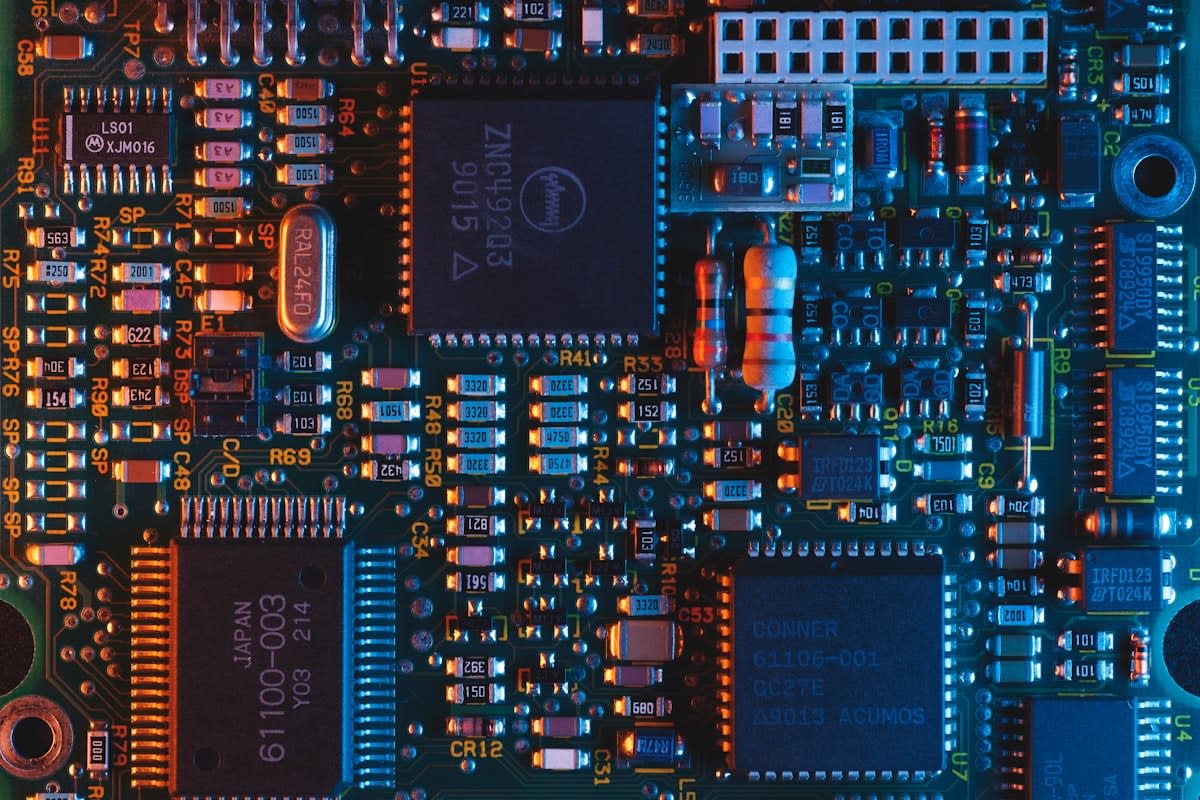
The most profound effect of the Mineral Wall is the acceleration of materials science. When lithium becomes a geopolitical weapon, the incentive to develop sodium-ion batteries skyrockets. When cobalt becomes a liability, the race for cobalt-free cathodes intensifies. This is the classic engine of innovation: constraint breeds creativity. The tech industry is now investing billions into synthetic alternatives and substitute materials that bypass the Mineral Wall entirely. We are not just changing where we get our minerals; we are changing what minerals we need.
This shift represents a strategic decoupling from geological destiny. For too long, the global economy has been a hostage to the map. By investing in substitution and circularity, we are building a tech stack that is independent of specific latitudes and longitudes. The Mineral Wall, therefore, acts as a catalyst for a higher form of efficiency—one that doesn't rely on the precariousness of extraction but on the ingenuity of molecular engineering.
Projected Shift in Mineral Sourcing (2024-2034)
Executive Insight
+18.4%
YTD Growth
Looking forward, the winners of this era will be the companies and nations that embrace this new complexity. The 'winners' will not be those who try to bypass the Mineral Wall through diplomatic pressure or sanctions, but those who partner with resource-sovereign states to build shared industrial capacity. The future belongs to the integrators—those who can blend the geological wealth of the South with the technological prowess of the North in a way that respects the autonomy of both.
We must stop viewing resource nationalism as a disruption to be managed and start seeing it as the new baseline. The 'friction' of the current transition is simply the cost of moving toward a more sustainable and equitable global industrial order. The Mineral Wall is not breaking the supply chain; it is breaking an obsolete version of the supply chain to make room for one that is actually fit for the 21st century.
Ultimately, the story of the Mineral Wall is a story about power. It is the story of the Global South realizing that its soil is the foundation of the digital future. By refusing to be mere exporters of raw materials, these nations are forcing a global conversation about value, labor, and environmental stewardship. The tech industry can either fight this tide or learn to swim in it. The choice is simple: adapt to the new sovereignty or remain stranded on the wrong side of the wall.