
The Great Recalibration
The party is over. For over a decade, global capital chased the intoxicating promise of scalability, software-as-a-service, and the frictionless nature of digital assets. We lived in an era where revenue multiples mattered more than cash flow and where the 'intangible' was king. But the tide has turned. The sudden realization that software cannot power a city, feed a population, or build a semiconductor plant has triggered a massive, systemic migration of capital back to the tangible. This is not a simple cyclical rotation; it is a fundamental reappraisal of what constitutes true value in an era of persistent inflation and fragmented trade.
Why did we assume the physical world was optional? The arrogance of the 2010s led many strategists to believe that the 'weightless economy' had permanently decoupled from the constraints of geography and geology. Yet, the volatility of the last few years has exposed the fragility of that assumption. When supply chains snap and energy prices spike, a digital platform is a liability, but a copper mine or a lithium brine pool is a strategic fortress. Capital is now flowing toward assets that possess intrinsic utility—assets that the world cannot simply code its way around.
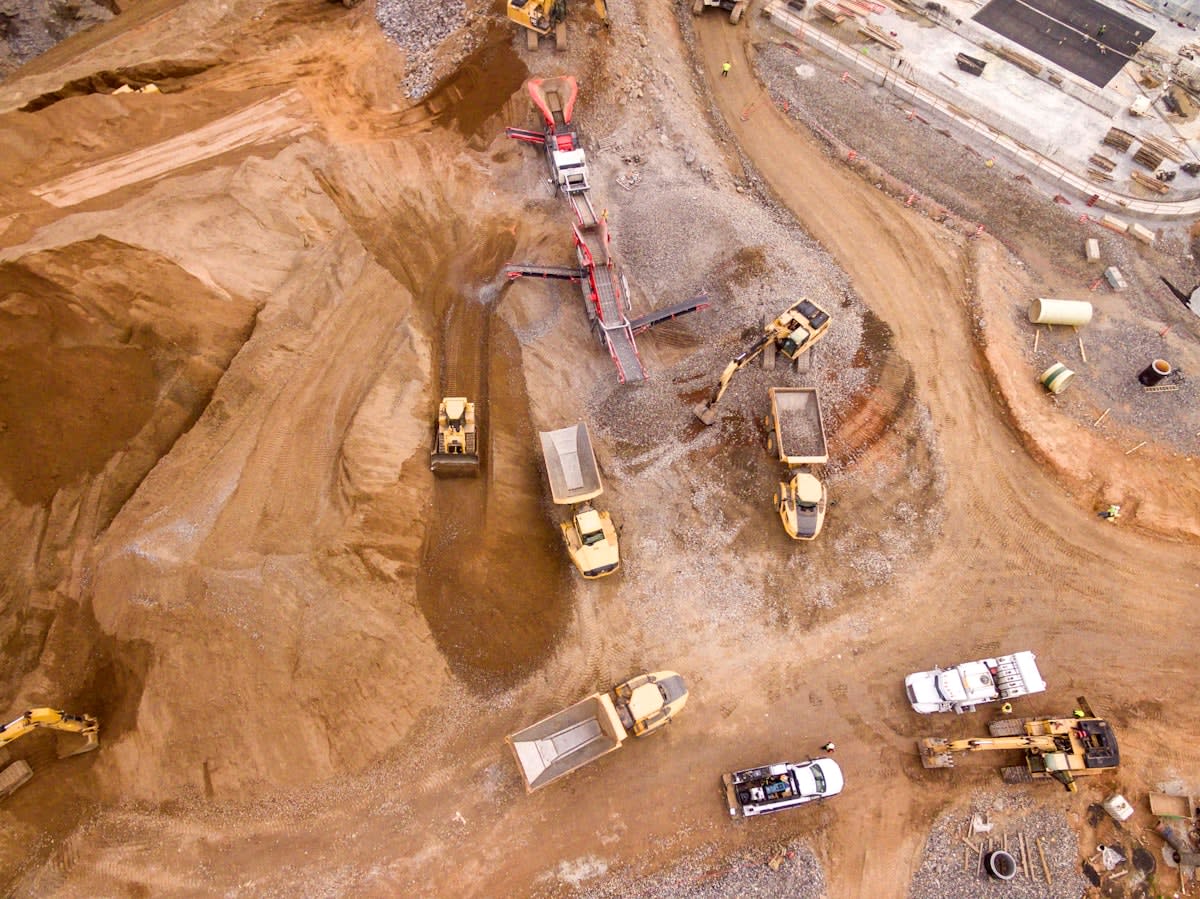
The Mechanics of Resource-Backed Financing
Resource-Backed Financing (RBF) operates on a logic that is as old as trade itself, yet it is being modernized for the 21st century. At its core, RBF involves borrowing against the future production of a physical commodity. Instead of relying solely on a sovereign credit rating or a corporate balance sheet, the lender secures the loan against the actual output of a mine, an oil field, or an agricultural estate. This effectively transforms a volatile commodity into a stable financial instrument, providing the borrower with immediate liquidity while giving the lender a hard asset floor.
This shift is particularly evident in the Global South. In regions like the Lithium Triangle of South America or the Copper Belt in Africa, we are seeing a move away from traditional IMF-style austerity loans toward strategic partnerships. According to the World Bank's 2023 Commodity Markets Outlook, the demand for critical minerals is projected to grow exponentially to meet the energy transition, making these resources the new 'global currency' for securing financing (Source: World Bank, 2023). The collateral is no longer a promise of future tax revenue; it is the physical ore in the ground.
| Feature | Traditional Debt Financing | Resource-Backed Financing (RBF) |
|---|---|---|
| Primary Collateral | Cash flow / Sovereign Credit | Physical Commodity Reserves |
| Risk Profile | Interest rate & Currency risk | Commodity price & Operational risk |
| Valuation Basis | Discounted Cash Flow (DCF) | Net Asset Value (NAV) of Resource |
| Primary Driver | Monetary Policy/Central Banks | Industrial Demand/Energy Transition |
Crucially, RBF allows nations and corporations to bypass the volatility of the bond market. When a country's credit rating is downgraded, its cost of borrowing typically skyrockets. However, if that country sits on the world's largest reserves of nickel, the physical asset maintains its value regardless of the credit rating. This creates a decoupling of 'financial health' from 'resource wealth,' allowing resource-rich entities to maintain leverage even during macroeconomic turmoil.
"The transition to a green economy is essentially a transition from a fuel-intensive system to a material-intensive system. This shift fundamentally alters the nature of collateral in global finance, moving the needle from financial derivatives back to geological certainty."— Institutional Analysis, IMF Commodity Price Reports
Geopolitical Fragmentation as a Catalyst
We are witnessing the end of the 'hyper-globalized' era. The trend toward 'friend-shoring' and 'near-shoring' is not just a political slogan; it is a financial strategy. Capital is no longer seeking the cheapest possible production point; it is seeking the most secure one. This has led to a surge in resource-backed deals where the financing is tied to guaranteed off-take agreements. In these arrangements, the lender provides the capital to build the infrastructure in exchange for a guaranteed percentage of the output for a fixed period.
Look at Indonesia's strategic move to ban raw nickel exports to force the development of domestic smelting capacity. This is a masterclass in leveraging tangible resources to attract foreign direct investment. By controlling the resource, Indonesia forced global capital to build the industrial base within its borders. This is the new playbook: using the physical scarcity of a resource to dictate the terms of the financing (Source: International Energy Agency, 2023).

The Practitioner's Friction: Where the Theory Hits the Dirt
From the perspective of someone who has spent years in the trenches of project finance, the shift to RBF is not without significant friction. In the boardroom, the debate isn't about whether resources are valuable—that's a given. The real fight is over valuation and jurisdiction. How do you accurately value a cobalt mine in a region where the legal framework can change with a single presidential decree? The 'geological certainty' cited by analysts often clashes with 'political volatility' on the ground.
Practitioners are currently obsessed with the 'off-take' agreement. The tension lies in the pricing mechanism: do you use a fixed price to provide stability for the lender, or a floating market price to ensure the borrower isn't underpaid if the commodity moons? We are seeing a rise in complex hybrid structures—collars and floors—that attempt to hedge this risk. The real work is no longer in the spreadsheets; it's in the legal drafting of the security interests over physical assets located thousands of miles away from the capital providing the loan.
The Strategic Edge of the Tangible
The pivot back to the tangible is ultimately a move toward resilience over efficiency. For twenty years, the goal of global capital was to strip out every single redundancy to maximize margins. The result was a system that was hyper-efficient but catastrophically brittle. Resource-backed financing introduces a necessary redundancy. It acknowledges that the physical world is messy, slow, and constrained, but it is also the only thing that provides a true floor during a systemic crisis.
As we move forward, expect to see the integration of digital ledger technology—not as a speculative asset, but as a tool for transparency in RBF. The ability to tokenise a specific lot of ore or a barrel of oil in real-time will reduce the 'trust deficit' that currently plagues resource financing. We are entering an era of 'Programmable Hard Assets,' where the physical resource provides the value and the digital layer provides the efficiency.
Fact-Check & Accuracy Note
Key claims regarding the growth of critical mineral demand and the shift in global trade patterns are sourced from the World Bank's 2023 Commodity Markets Outlook and the International Energy Agency's (IEA) 2023 reports. The analysis of RBF structures is based on standard industry project finance frameworks. Areas of ongoing debate include the legal enforceability of resource liens in emerging markets and the long-term volatility of 'green' metals.