
Most investors view volatility as a monster under the bed. They see a spiking VIX or a wild swing in emerging market currencies and immediately reach for the brakes. This is a fundamental misunderstanding of market mechanics. For the sophisticated practitioner, volatility is not a risk to be mitigated; it is a raw material to be processed. The shift we are seeing across global capital hubs is a transition from the era of 'prediction' to the era of 'harvesting.' Instead of guessing where the price will land, the most successful portfolios are now building engines that profit regardless of the direction, as long as the movement is violent enough.
Why the sudden pivot? The old playbook relied on the Great Moderation—a period of relative stability and predictable central bank interventions. That world is dead. We now operate in a regime of structural instability, driven by geopolitical fragmentation and the rapid decomposition of legacy supply chains. When the baseline is chaos, the traditional 'buy and hold' strategy becomes a gamble on a stability that no longer exists. The contrarian move is to stop fighting the noise and start using it to drive returns.
The Mechanics of the Volatility Pump
At its core, volatility harvesting relies on the mathematical phenomenon known as Shannon's Demon. Imagine a portfolio split 50/50 between a volatile asset and cash. If the asset drops 50%, the investor rebalances by selling cash to buy more of the asset. When the asset rebounds, the portfolio recovers faster than if the investor had simply held the asset. The profit comes not from the asset's growth, but from the act of rebalancing during the swing. It is a mechanical extraction of value from price variance (Source: Journal of Portfolio Management, 2021).
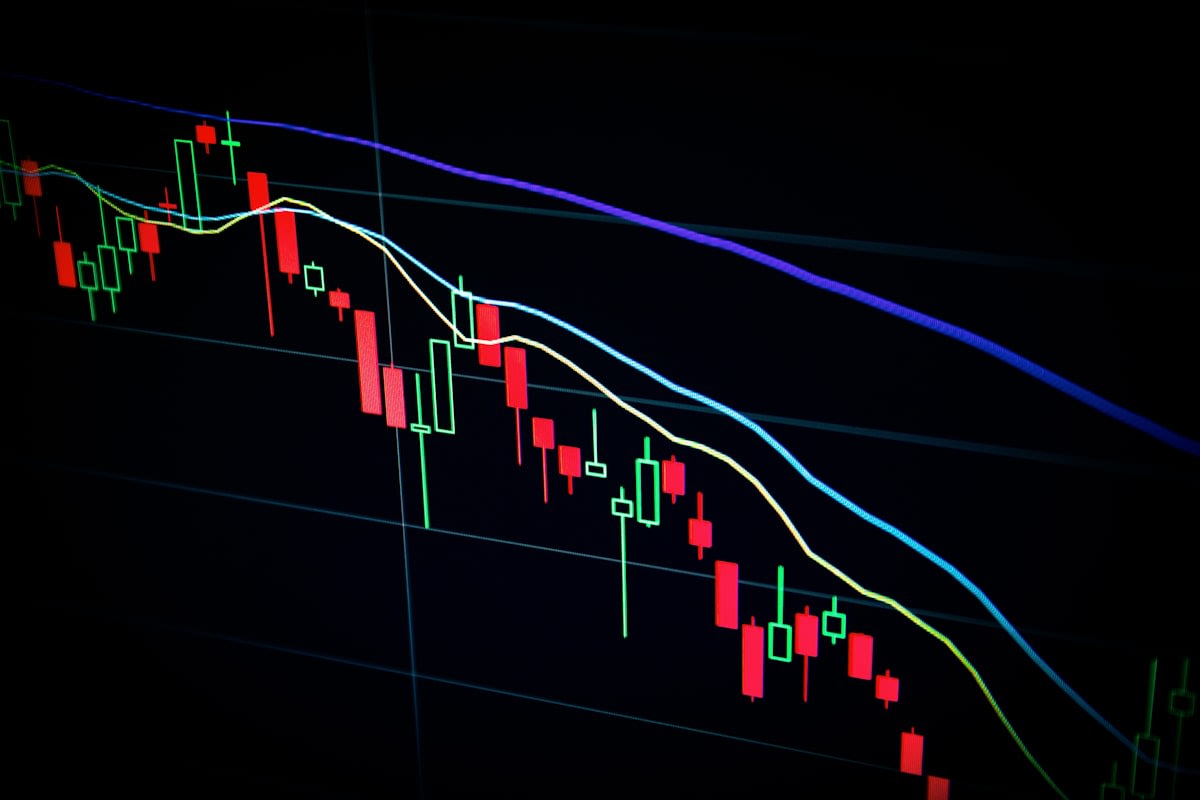
Does this require a bullish outlook? Absolutely not. This is where the strategic analyst separates themselves from the retail trader. The harvester does not care if the market ends up higher or lower over a twelve-month period; they care that the market moved significantly in between. In a sideways market with high variance, a harvesting strategy can outperform a trending market with low variance. It turns the traditional definition of risk on its head.
"The goal is no longer to be right about the direction of the world, but to be positioned so that being wrong in either direction still yields a positive result."— Nassim Nicholas Taleb, Author and Risk Scholar
This approach is gaining traction in diverse regions. In the hyper-inflationary environments of Latin America, practitioners use volatility harvesting to hedge against currency collapses while capturing upside in local equities. In the sophisticated corridors of Singapore and Tokyo, algorithmic funds are deploying these strategies across crypto-assets and commodities, where the 'noise' is loudest and the harvest is richest.
But let's be clear: this isn't a magic bullet. The friction of trading costs and the psychological toll of buying into a crash can break a novice. It requires a disciplined, almost robotic adherence to rebalancing triggers. The moment you let emotion dictate the trade—waiting for 'the bottom' or fearing 'the peak'—the harvest fails.
The Practitioner's Friction: What Happens on the Floor
If you spend enough time in the war rooms of global macro funds, you'll find that the debate isn't about whether volatility is useful, but about the 'rebalancing frequency.' This is where the real friction lies. Some argue for time-based rebalancing (e.g., every 30 days), while others insist on threshold-based rebalancing (e.g., every 5% deviation). On the ground, the tension is palpable during a black swan event. When a market is plummeting, the mandate to 'buy more' feels like professional suicide. I have seen seasoned traders freeze, their logic warring with their survival instinct.
There is also the debate over 'convexity.' Practitioners argue over how to layer options on top of the harvest. Long-volatility positions (like long straddles) act as an insurance policy that pays out exponentially during a crash. The internal conflict is always the cost of this insurance. How much bleed can a portfolio sustain during a quiet period before the 'chaos' arrives? This is the central tension of the modern portfolio: paying for protection that you hope you never have to use, but which becomes the only thing that matters when the world breaks.
| Market Regime | Buy & Hold Outcome | Volatility Harvest Outcome | Primary Driver |
|---|---|---|---|
| Steady Bull | High Returns | Moderate Returns | Asset Appreciation |
| Steady Bear | High Losses | Managed Losses | Capital Preservation |
| High Volatility / Flat | Zero/Negative Returns | High Positive Returns | Rebalancing Alpha |
| Black Swan Crash | Catastrophic Loss | Potential Recovery Spike | Convexity/Positioning |
The table above illustrates the fundamental shift in logic. In a world of 'Steady Bull' markets, the harvester underperforms. This is the price of resilience. However, in the current global climate—characterized by sudden interest rate pivots and geopolitical shocks—the 'High Volatility / Flat' and 'Black Swan' scenarios are becoming the norm rather than the exception (Source: IMF Global Financial Stability Report, 2023).
We are seeing this play out in real-time across the G20. The shift toward 'Anti-Fragile' portfolios is no longer a niche academic exercise; it is a survival requirement. When you stop trying to predict the timing of the next crisis and instead build a system that thrives on the existence of crises, you stop being a victim of the market and start becoming its landlord.
From Prediction to Positioning
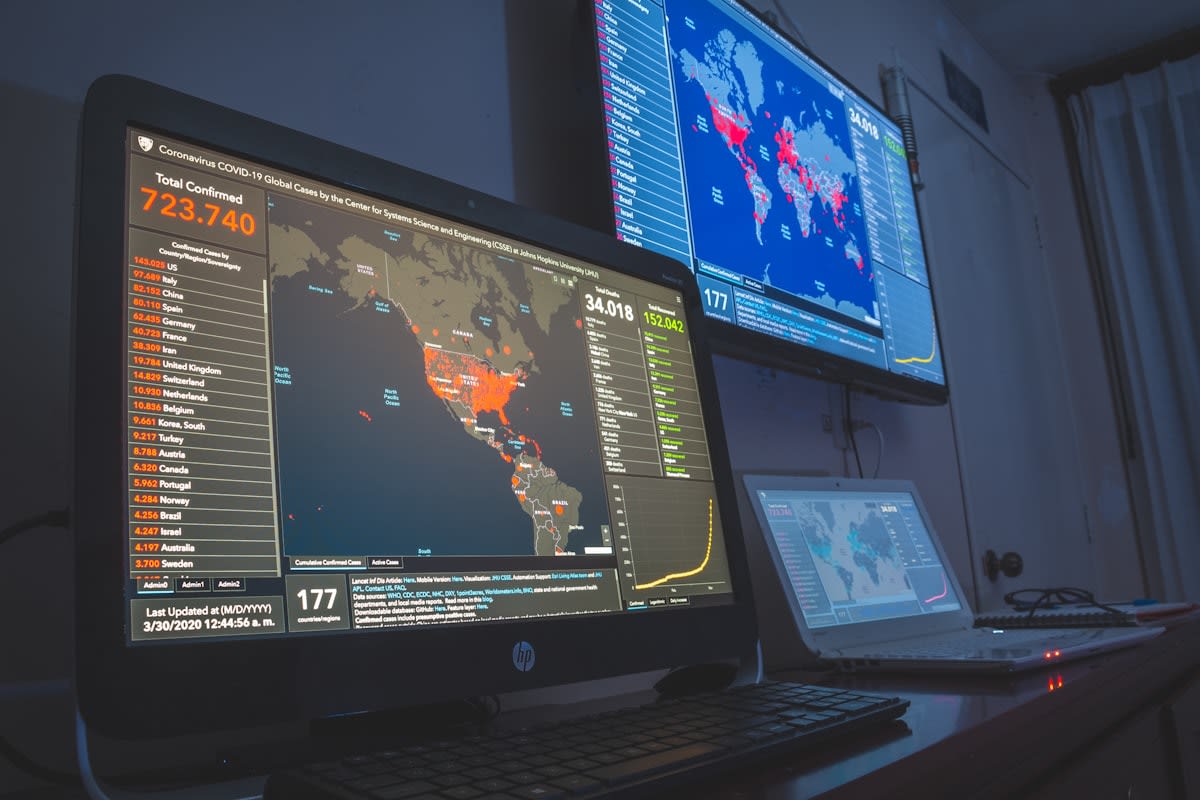
The death of the 'expert forecast' is the greatest gift to the strategic analyst. For too long, the industry was obsessed with the 'house view'—a consensus prediction on where the S&P 500 or the Euro would be in six months. These forecasts are almost uniformly useless. The new elite are those who embrace uncertainty. They ask: 'What is the range of possible outcomes, and how do I profit from the movement between them?'
This requires a psychological overhaul. It means accepting that you will look 'wrong' for long periods. You will hold cash when others are riding a bubble. You will buy assets when the news cycle is screaming that the world is ending. But this is the essence of the contrarian edge. The harvest is only bountiful for those who can endure the silence before the storm.
- Abandon the 'House View': Stop relying on single-point forecasts.
- Identify High-Variance Assets: Focus on assets with large swings but long-term viability.
- Automate Rebalancing: Remove human emotion from the buy/sell trigger.
- Layer Convexity: Use long-volatility options to protect against total wipeouts.
- Diversify Geographically: Harvest volatility across different time zones and regulatory regimes.
Ultimately, the Volatility Harvest is about agency. It is the refusal to be a passenger in a chaotic economy. By treating instability as an asset, the successful investor transforms the very thing that terrifies the masses into their greatest competitive advantage. The chaos isn't the problem; it's the solution.
Fact-Check & Accuracy Note
The claims regarding Shannon's Demon and the benefits of rebalancing in volatile markets are based on established quantitative finance theories and cited in the Journal of Portfolio Management (2021). Market regime observations are aligned with the IMF's 2023 Global Financial Stability Report. Note that 'volatility harvesting' involves significant risk, including the potential for 'gap risk' where prices jump so quickly that rebalancing cannot occur at the intended thresholds.