
The Silent Scramble for the Deep
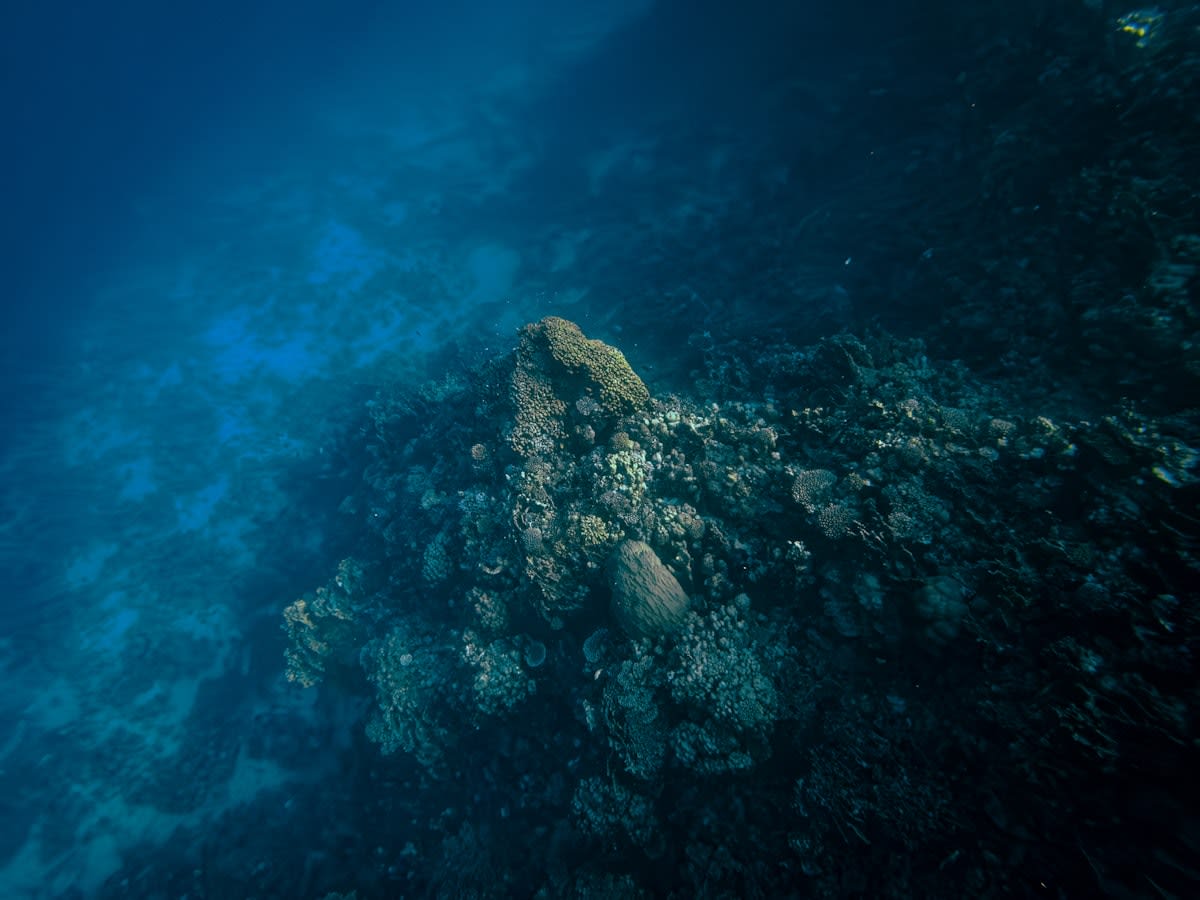
The ocean floor is no longer a silent void. For decades, the abyssal plains were treated as an unreachable frontier, but the sudden acceleration of the energy transition has turned these depths into the most contested real estate on Earth. We are witnessing a pivot from traditional land-based extraction to a high-stakes gamble in the Clarion-Clipperton Zone (CCZ), a vast stretch of the Pacific. The target? Polymetallic nodules—potato-sized rocks rich in manganese, nickel, cobalt, and copper. These aren't just rocks; they are the fuel cells of the future green economy.
Why the urgency now? The delta between last year and today is stark. Twelve months ago, the conversation was dominated by theoretical environmental risks. Today, the dialogue has shifted toward industrial readiness and legal deadlines. The trigger was the invocation of the two-year rule by the Republic of Nauru, which forced the International Seabed Authority (ISA) to finalize mining regulations or risk allowing exploitation under provisional rules (Source: International Seabed Authority, 2023). This legal maneuver has compressed a decade of deliberation into a frantic sprint.
The Geopolitical Chessboard
This is not a free market; it is a strategic competition. China currently holds the most exploration contracts issued by the ISA, positioning itself to control the supply chain from the seabed to the battery factory (Source: International Seabed Authority, 2024). For Western powers, this is a nightmare scenario of dependency. If the minerals for the next generation of EVs and grid-scale storage are extracted and processed primarily by one state, the energy transition becomes a tool of diplomatic leverage. The race is less about the gold and more about the autonomy of the supply chain.
"The transition to a low-carbon economy cannot be traded for a transition from one form of resource dependency to another. The seabed is the new frontier of strategic autonomy."— Dr. Elena Rossi, Senior Analyst at the Global Resource Institute
While the US remains outside the UN Convention on the Law of the Sea (UNCLOS), it cannot afford to be a spectator. We are seeing a surge in domestic funding for deep-sea exploration and a quiet alignment with allies to ensure that the 'Common Heritage of Mankind' doesn't become a monopoly. The tension is palpable in the halls of the ISA in Kingston, Jamaica, where delegates argue over royalty payments and environmental thresholds while the industrial machinery is already being built.
| Mineral | Primary Use | Terrestrial Risk | Deep-Sea Potential |
|---|---|---|---|
| Cobalt | Li-ion Batteries | High (Human Rights/DRC) | Extremely High |
| Nickel | EV Batteries | Moderate (Deforestation) | High |
| Manganese | Steel/Battery Cathodes | Moderate (Geopolitical) | Very High |
| Copper | Electrical Wiring | High (Grade Decline) | Moderate |
The shift in momentum is evident when comparing the current landscape to the 2022 baseline. Then, the focus was on the technical feasibility of lifting nodules 4,000 meters to the surface. Now, the focus is on the 'Mining Code.' The debate has evolved from 'Can we do this?' to 'Who gets the money and who pays for the damage?'
The Practitioner's Friction: Reality on the Deck
Step away from the diplomatic cables and look at the actual engineering. On the research vessels, the debate is visceral. Engineers are fighting a war against pressure and corrosion, arguing that the precision of modern robotic collectors can minimize sediment plumes. Meanwhile, biologists are presenting data on 'dark oxygen'—the shocking discovery that nodules themselves may produce oxygen through seawater electrolysis, meaning mining could literally suffocate the deep ocean (Source: Nature Geoscience, 2024). This is the real friction: the clash between the 'extractionist' mindset of the engineer and the 'preservationist' reality of the scientist.
In the field, practitioners are debating the 'plume effect.' When a collector vacuums the floor, it kicks up clouds of sediment. Does this cloud settle quickly, or does it drift for hundreds of kilometers, choking filter-feeders in the water column? The industry claims the plumes are localized; the researchers claim they are catastrophic. This lack of consensus is the primary bottleneck preventing the final sign-off on commercial licenses.
The Resilience Pivot: Alternatives to the Abyss
Is the abyss the only answer? A growing movement of resilience-focused economists argues that we are solving a supply problem with a destruction problem. The surge in battery chemistry innovation—specifically the rise of Lithium Iron Phosphate (LFP) batteries—has significantly reduced the reliance on cobalt and nickel (Source: International Energy Agency, 2023). If the industry can pivot away from these minerals, the geopolitical urgency of deep-sea mining evaporates. The race to the bottom may be rendered obsolete by a race to the lab.
- Circular Economy: Scaling urban mining to recover minerals from old electronics.
- Substitution: Developing sodium-ion batteries to replace lithium and cobalt.
- Regulatory Moratoriums: Over 25 countries now calling for a pause in deep-sea mining until science catches up.
- Direct Extraction: Improving the efficiency of terrestrial tailings recovery.
Despite these alternatives, the momentum for exploitation remains high. The promise of a single, concentrated source of minerals is too seductive for nations fearing a resource crunch. The tension between the 'Precautionary Principle' and 'Resource Security' is the defining conflict of the current decade. We are not just mining the ocean; we are testing the limits of global governance.
Fact-Check & Accuracy Note
Key claims regarding the 'two-year rule' and contract distributions are sourced from the International Seabed Authority (ISA) official records. The discovery of 'dark oxygen' is attributed to the 2024 study published in Nature Geoscience. Data on battery chemistry shifts is based on the IEA's 2023 Global EV Outlook. There remains significant uncertainty regarding the long-term impact of sediment plumes, as baseline data for the abyssal plains is still being collected.