
The energy sector is currently obsessed with a lie: that lithium-ion batteries can power everything. They cannot. While these chemical cells are peerless for your smartphone or a Tesla, they are fundamentally ill-suited for the heavy lifting of industrial civilization. We are talking about the massive, unrelenting heat requirements of steel mills, cement kilns, and chemical plants. This is where the 'heat battery' enters the frame, shifting the conversation from chemical potential to raw thermal mass. The momentum has shifted violently in the last twelve months, moving these technologies from academic curiosity to industrial pilot projects across three continents.
Why the sudden urgency? Because the 'delta' between our renewable generation and our storage capacity has become a chasm. According to the International Energy Agency (IEA), the world needs to scale long-duration energy storage (LDES) by a factor of ten by 2030 to maintain grid stability as coal and gas retire (Source: IEA, 2023). Lithium is too expensive and too rare to fill that gap. The industry is now pivoting toward materials that are dirt cheap and abundant: graphite, salt, and refractory bricks. We are no longer just storing electricity; we are storing heat.
The Brick Revolution: Storing Energy in Refractory Mass
The most visible shift is the rise of 'brick' batteries. Companies like Rondo Energy and Antora Energy are essentially building giant, super-insulated thermoses filled with carbon or refractory bricks. These systems use resistive heating to pump electricity into the bricks, raising temperatures to over 1,500 degrees Celsius. When the grid needs power or a factory needs steam, that heat is released. It is an elegant, low-tech solution to a high-tech problem. Unlike lithium, these bricks do not degrade over thousands of cycles, and they do not risk the catastrophic 'thermal runaway' fires associated with chemical cells.
"The transition to thermal storage is not just about efficiency; it is about material sovereignty. We are moving from a dependence on rare minerals like cobalt and lithium to a reliance on carbon and silica—materials available in every corner of the globe."— Dr. Aris Papadopoulos, Lead Researcher at the Global Energy Transition Initiative
The scale of this shift is evident in recent deployment data. Just a year ago, thermal bricks were largely theoretical. Today, we see them being integrated into food processing plants in North America and textile mills in Southeast Asia. These facilities are using 'heat-as-a-service' models to decouple their energy procurement from the volatile spot price of electricity. By charging their bricks when wind and solar are peaking (and prices are near zero), they can run their steam boilers for pennies on the dollar.
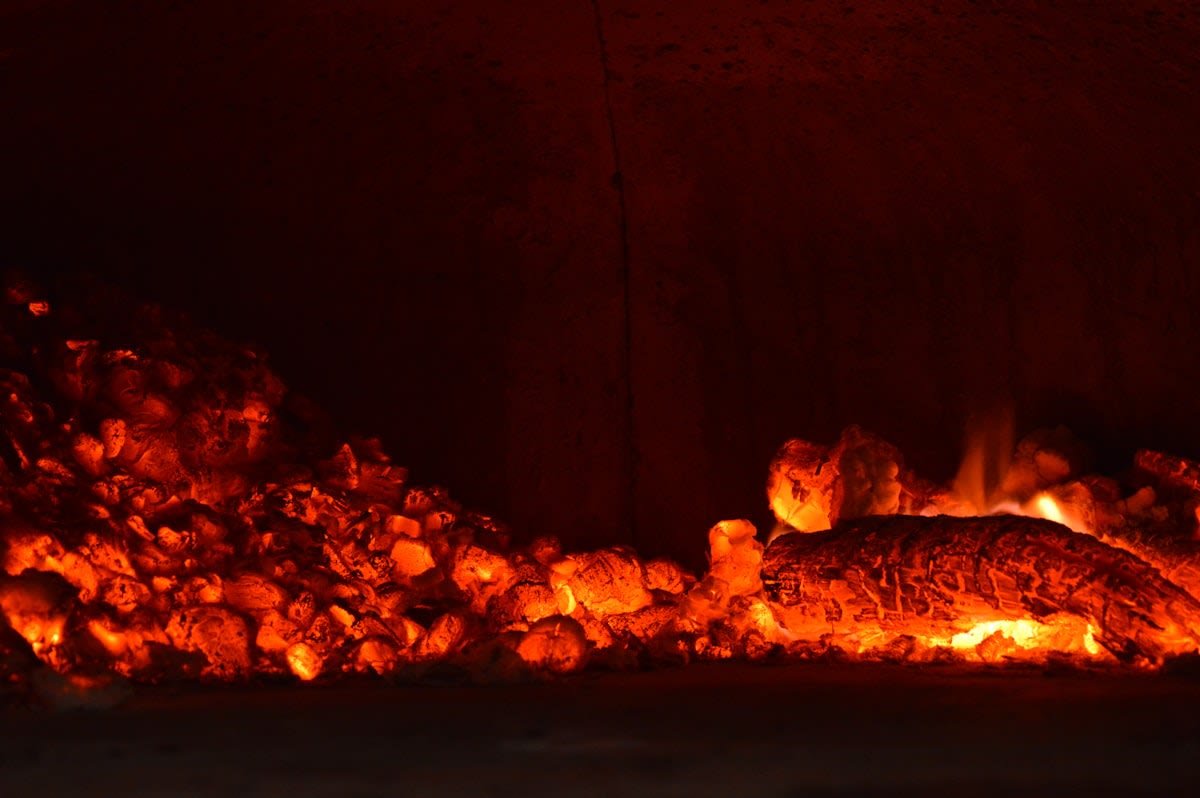
But how does this actually look on the ground? If you walk into a plant integrating this tech, you won't see a sleek battery rack. You will see a massive, insulated vault that looks more like a furnace than a computer. The real debate among practitioners right now isn't about whether the physics work—they do—but about the 'thermal lag.' Engineers are fighting over the plumbing. Moving high-grade heat from a brick battery into a 50-year-old steam pipe system without massive losses is the current frontline of the engineering war. It is a messy, gritty process of retrofitting the Industrial Revolution with the tools of the Green Revolution.
The Salt Strategy: Molten Storage at Scale
While bricks handle the extreme high-end, molten salts are dominating the mid-range and utility-scale storage. This isn't entirely new—concentrated solar power (CSP) plants have used salt for years—but the application has evolved. We are now seeing 'standalone' salt batteries that aren't tied to solar mirrors. These systems use mixtures of sodium and potassium nitrates to store energy as liquid heat. Because salts have a high heat capacity, they can store gigawatt-hours of energy in relatively small footprints.
| Feature | Lithium-Ion | Thermal Bricks | Molten Salt |
|---|---|---|---|
| Lifespan | 5-10 Years | 20-30 Years | 15-25 Years |
| Primary Risk | Fire/Degradation | Heat Leakage | Corrosion |
| Material Cost | High (Rare Earths) | Very Low (Carbon/Clay) | Low (Nitrates) |
| Best Use Case | EVs / Short-term Grid | Industrial Heat | Utility-scale LDES |
The economic argument is becoming undeniable. BloombergNEF reports that the levelized cost of storage (LCOS) for long-duration thermal systems can be up to 70% lower than lithium-ion for durations exceeding 10 hours (Source: BloombergNEF, 2024). This makes them the only viable option for 'seasonal storage'—the holy grail of energy, where summer solar energy is saved for winter heating. In Northern Europe, projects are already testing the ability to store industrial waste heat in underground salt caverns, effectively turning the earth itself into a battery.
Is there a catch? Absolutely. The efficiency of 'round-trip' energy—putting electricity in and getting electricity back out—is lower for heat batteries than for lithium. You lose energy as heat leaks through the insulation. However, the industry has realized that for industrial users, the 'round-trip' doesn't have to be electrical. If you put electricity in and get steam out, the efficiency is remarkably high. We are stoping the obsession with electrical efficiency and starting to value thermal utility.
The Global Race: Geopolitics of the Heat Battery
The race to dominate this space is no longer just a Western endeavor. China is aggressively scaling molten salt storage to complement its massive solar arrays in the Gobi Desert. Meanwhile, the European Union is focusing on 'district heating' integration, using heat batteries to decarbonize entire city blocks. This is a strategic move to reduce dependence on natural gas imports. The geopolitical leverage is shifting from those who own the lithium mines to those who can manufacture the most efficient refractory materials and insulation.
- North America: Focusing on heavy industrial decarbonization (Steel, Cement).
- European Union: Integrating thermal storage into urban district heating grids.
- China: Scaling utility-grade molten salt for massive solar-to-grid stability.
- Southeast Asia: Pilot projects in textile and food processing to lower energy costs.
Looking ahead, the next 24 months will determine if these technologies can move from niche industrial applications to the backbone of the global grid. The US Department of Energy's LDES roadmap emphasizes that without these non-chemical alternatives, the transition to a 100% carbon-free grid is mathematically improbable (Source: US DOE, 2023). The 'heat battery' is no longer a backup plan; it is the primary strategy for the hard-to-abate sectors.
Fact-Check & Accuracy Note
Key claims regarding LCOS reductions are sourced from BloombergNEF (2024), and grid scaling requirements are attributed to the IEA (2023). While the physics of thermal storage are well-established, the primary uncertainty remains the long-term corrosion rates of molten salts in commercial-scale tanks and the real-world degradation of carbon blocks under extreme thermal cycling.