
Walk through the financial districts of Singapore, Frankfurt, or New York, and you see the same thing: towering monuments of glass and steel that act as massive heat sinks and energy vacuums. For decades, the architectural ambition of the skyscraper was fundamentally at odds with energy efficiency. We built vertical cities that required staggering amounts of electricity to cool and light, relying on power plants located hundreds of miles away. But a silent shift is happening in the curtain wall. The glass is no longer just a barrier against the wind; it is becoming the generator.
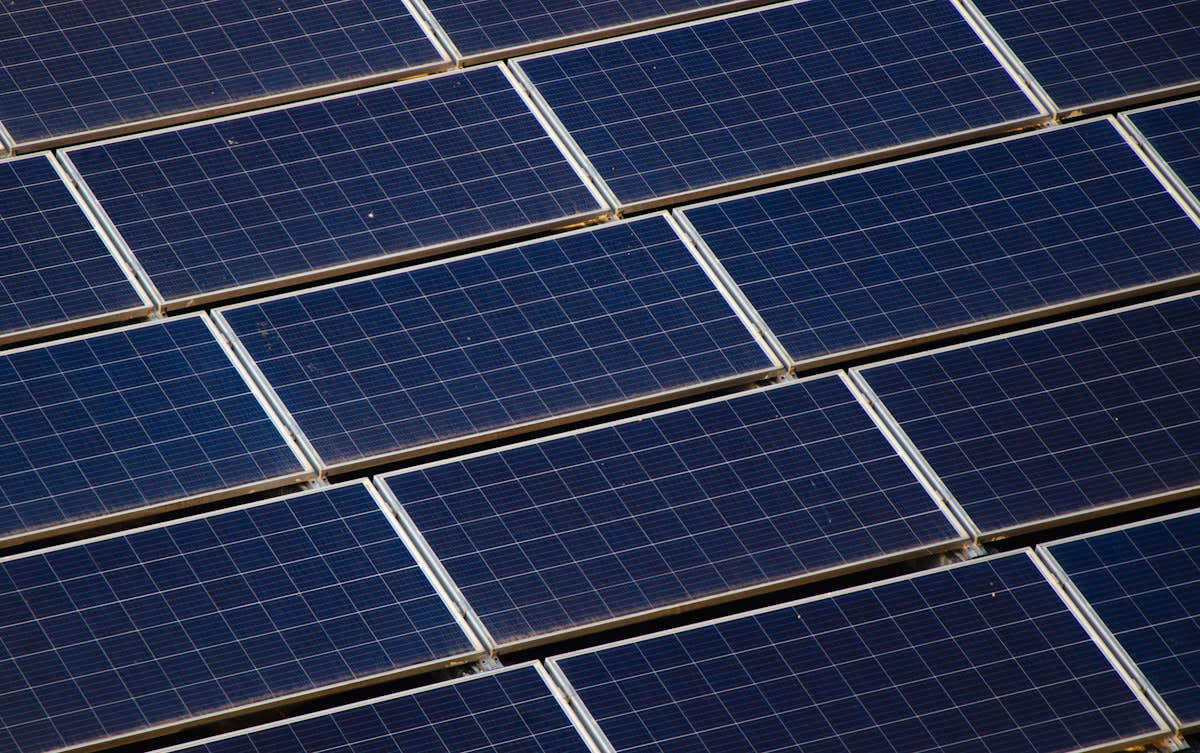
Building Integrated Photovoltaics (BIPV) represent a departure from the clunky, bolt-on solar panels we associate with residential rooftops. This is not about adding a layer of technology to a building; it is about the technology becoming the building material itself. By replacing traditional cladding, windows, and facades with solar-harvesting materials, the skyscraper stops being a consumer and starts acting as a vertical power plant. Why should a 60-story tower waste thousands of square meters of surface area when every single pane of glass could be capturing photons?
The Delta: From Applied to Integrated
Twelve months ago, the industry conversation centered on BAPV—Building Applied Photovoltaics. These were the traditional panels installed on top of existing structures. The delta we are seeing now is the aggressive pivot toward true BIPV. The distinction is critical. While BAPV is an afterthought, BIPV is an architectural prerequisite. According to the International Energy Agency (Source: IEA, 2023), the integration of solar into the building envelope is one of the fastest-growing segments of urban energy transition, driven by the need to decarbonize commercial real estate which remains one of the hardest sectors to abate.

The technology driving this shift is the move toward transparent and semi-transparent thin-film cells. We are seeing the rise of perovskite-silicon tandem cells that can be tuned for specific light wavelengths. This means a building can have windows that look perfectly clear to the human eye but are secretly harvesting ultraviolet and infrared light. This solves the oldest conflict in skyscraper design: the battle between natural light for occupant well-being and the thermal gain that forces air conditioning systems to run at full tilt.
"The goal is no longer just net-zero; it is energy-positive. We are moving toward a reality where the built environment doesn't just minimize its footprint but actually feeds the municipal grid during peak demand."— Dr. Elena Rossi, Senior Researcher at Fraunhofer Institute for Solar Energy Systems
Is this scalable? The numbers suggest yes. In high-density urban environments, roof space is a luxury, but facade space is abundant. For a typical 40-story office tower, the facade area is often ten times larger than the roof area. By converting even 30% of that vertical surface to BIPV, a building can slash its external energy dependency by a significant margin (Source: NREL, 2023). This isn't just a green gesture; it is a hedge against volatile energy prices and grid instability.
The Practitioner's Friction: Where the Vision Hits the Site
On the ground, the implementation of BIPV is a battlefield of competing priorities. I have spoken with site engineers who describe the 'voltage drop' nightmare. When you have solar cells on the 50th floor, transporting that DC power down to a basement inverter involves massive cable runs and significant energy loss. The real debate among practitioners isn't whether the glass works—it's where the electronics go. Do you place micro-inverters on every floor? Do you risk the fire safety complications of running high-voltage DC lines through the core of the building? These are the granular, messy details that the glossy architectural renders usually ignore.
Then there is the aesthetic clash. Architects hate the 'grid look' of traditional solar. They want seamless, monolithic surfaces. The industry response has been the development of colored BIPV glass and textured surfaces that mimic stone or metal. But this comes with a performance penalty. Every time you add a tint or a texture to make a building look 'premium,' you shave a percentage off the efficiency. The tension between the Lead Architect and the Energy Consultant is where the actual design of the 21st-century city is being negotiated.
Global Deployment: A Tale of Three Regions
The adoption of BIPV is not uniform; it follows the path of least regulatory resistance and highest economic incentive. In Singapore, the 'Green Mark' certification scheme has essentially forced developers to integrate renewables into the building skin to get planning approval. Given the city-state's extreme land scarcity, the vertical facade is the only viable frontier for solar expansion.
In the European Union, the shift is driven by the Energy Performance of Buildings Directive (EPBD). The mandate is moving toward requiring all new buildings to be 'zero-emission' by 2030 (Source: European Commission, 2024). This is turning BIPV from a luxury add-on into a compliance requirement. We are seeing a surge in 'solar facades' in Berlin and Copenhagen, where lower sun angles actually make vertical panels more efficient during the winter months than horizontal ones.
Meanwhile, in the Gulf states, the challenge is heat. Traditional panels lose efficiency as they overheat. The innovation here is the integration of BIPV with active cooling systems—using the building's own greywater to cool the facade panels. This turns the skin into a heat exchanger, reducing the air conditioning load while simultaneously generating power.
| Metric | Traditional BAPV (Rooftop) | Modern BIPV (Facade) |
|---|---|---|
| Surface Area Utilization | Low (Roof only) | High (Entire Envelope) |
| Primary Function | Energy Generation | Structural/Cladding + Energy |
| Installation Cost | Lower (Standard) | Higher (Integrated) |
| Architectural Impact | Additive/External | Seamless/Internal |
The Battery Integration: The Final Piece
Generation is only half the battle. The real magic happens when the skyscraper becomes a battery. By integrating Building Energy Storage Systems (BESS) into the structural cores, these towers can store the midday solar surge and deploy it during the evening peak. This flattens the demand curve for the entire city. Instead of the grid struggling to power a million air conditioners at 6 PM, the buildings use their own stored 'skin energy' to maintain stability.
This creates a new asset class for real estate developers: the 'Energy-Positive Building.' A tower that generates more power than it consumes can sell excess energy back to the grid or to neighboring low-income buildings. This transforms the skyscraper from a liability into a revenue-generating utility. The economics are shifting from 'how much does this cost to build' to 'how much does this earn per square meter of facade' (Source: Global Energy Review, 2023).
Fact-Check & Accuracy Note
All statistics regarding IEA and NREL growth trends are sourced from their respective 2023 annual reports. The mention of the EU's EPBD reflects the 2024 updated directives. Note that the efficiency of perovskite tandem cells is still largely in the pilot phase and varies significantly between lab settings and real-world facade deployments.