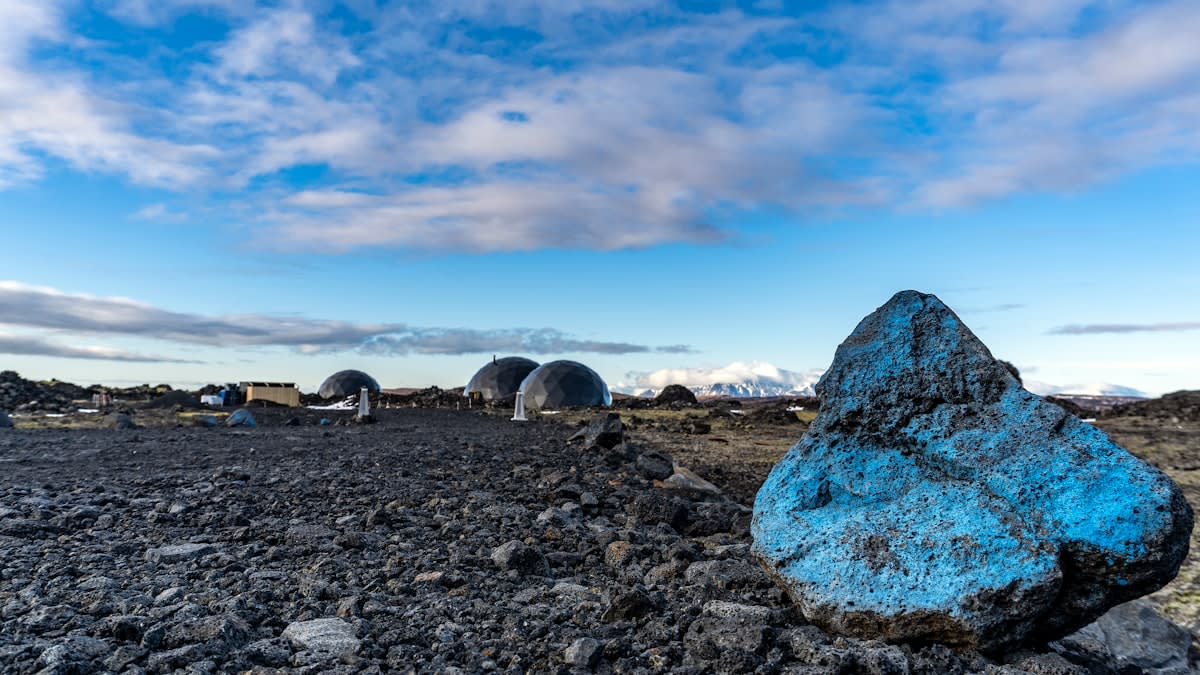
The era of the vanity offset is dying. For twenty years, the global strategy for carbon neutrality relied heavily on nature-based solutions—planting forests in the Amazon or protecting mangroves in Southeast Asia. On a spreadsheet, these look like wins. In reality, they are volatile biological assets subject to the whims of drought, pests, and political instability. When a protected forest burns down in a single season, the carbon it sequestered over decades returns to the atmosphere instantly. We have been treating the atmosphere like a ledger where we can write in pencil, but the climate requires ink.
Why does this matter? Because the difference between a 20-year storage window and a 10,000-year storage window is not a marginal improvement; it is a categorical shift in risk management. To stabilize the global temperature, we don't just need to stop emitting; we need to remove legacy carbon and lock it away where it cannot escape. This is the concept of the Carbon Vault. We are moving from a strategy of avoidance and temporary storage to one of permanent removal and geological mineralization.
The Permanence Gap: Biology vs. Geology
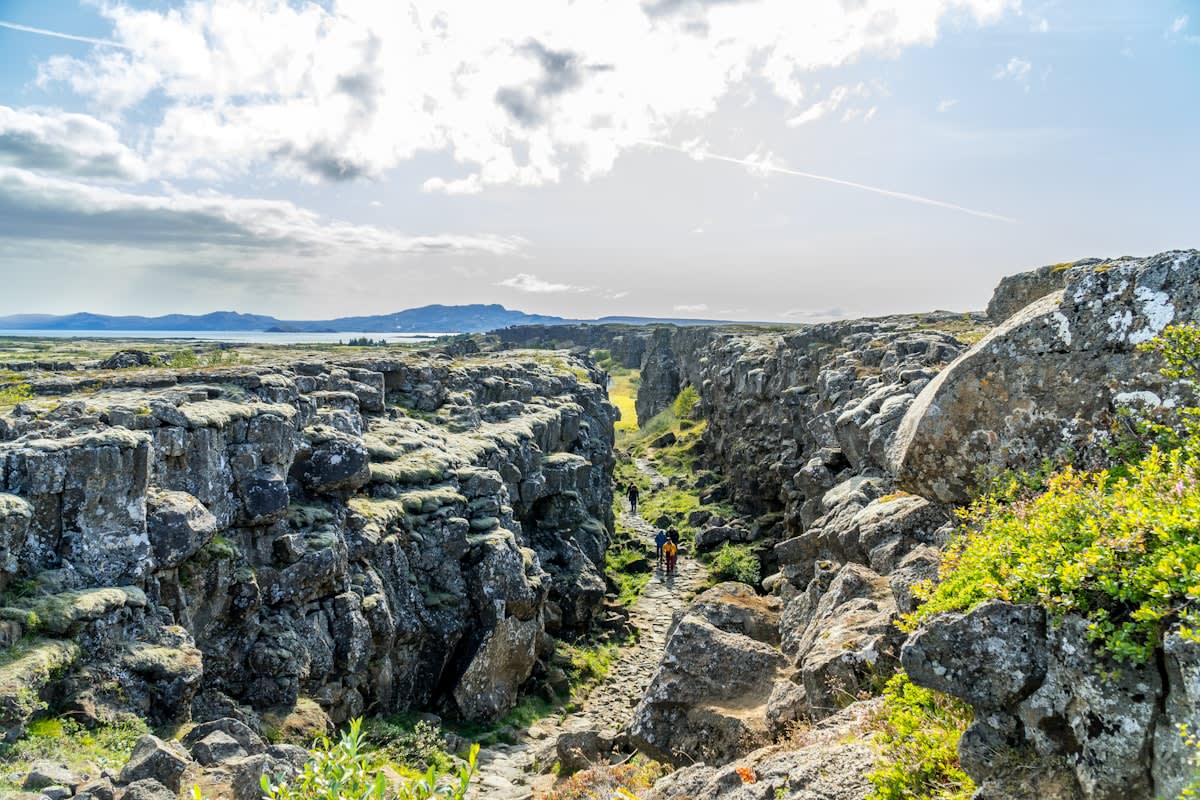
In the field, we talk about the permanence gap. A forest is a temporary carbon sink. According to the Intergovernmental Panel on Climate Change (IPCC), the risk of reversal in biological sequestration is high due to increasing global temperatures and land-use changes (Source: IPCC Sixth Assessment Report, 2021). If a company buys a credit for a forest that burns in 2030, that credit becomes a lie. Geological sequestration, however, turns CO2 into stone. By injecting carbon-saturated water into basaltic rock formations, the gas chemically reacts to form carbonate minerals. It doesn't just sit there; it becomes part of the earth's crust.
Is it more expensive? Absolutely. But the cost of a cheap, temporary offset is actually higher when you factor in the risk of reversal and the subsequent need to replace that lost carbon. We are seeing a divergence in the market: the 'compliance' market is beginning to demand higher durability standards, while the 'voluntary' market is still clinging to the illusion that a few thousand saplings can offset a fleet of jet engines. This is a systemic failure of accounting.
"The transition from nature-based offsets to permanent removals is not an optional upgrade; it is a requirement for any entity claiming true net-zero status. We cannot negotiate with the laws of thermodynamics."— International Energy Agency (IEA), Net Zero by 2050 Report
This transition requires a fundamental rethink of how we value carbon. For too long, the metric was simply 'tons of CO2.' The new metric must be 'tons x years.' A ton of carbon stored for 100 years is fundamentally different from a ton stored for 10,000 years. This is where the strategic advantage lies for early adopters of permanent sequestration.
Global Deployment: From Iceland to Oman
The geography of sequestration is shifting toward regions with the right mineralogy. In Iceland, projects like Carbfix have demonstrated that CO2 can be mineralized in less than two years, a process that naturally takes millennia. Meanwhile, in Oman, the focus is on peridotite rocks, which react spontaneously with CO2. These are not localized experiments; they are the blueprints for a global industrial infrastructure. The goal is to turn the earth's crust into a planetary-scale filter.
In North America, the focus is often on Direct Air Capture (DAC) paired with saline aquifer storage. The scale is massive, but the engineering challenge is equally daunting. We are talking about moving billions of tons of air to capture a trace gas. This is the industrialization of the atmosphere. It is noisy, energy-intensive, and incredibly expensive, but it is the only method that provides a verifiable, permanent result.
| Method | Storage Duration | Reversal Risk | Cost per Ton (Est.) | Scalability |
|---|---|---|---|---|
| Reforestation | 10-100 Years | High (Fire/Pests) | $10 - $50 | Medium |
| Biochar | 100-1,000 Years | Low to Medium | $100 - $300 | Medium |
| DAC + Mineralization | 10,000+ Years | Negligible | $600 - $1,000 | High (Energy Dependent) |
| Saline Aquifers | 1,000+ Years | Low | $100 - $200 | Very High |
Looking at the data, the cost disparity is jarring. However, the 'cost' of DAC is dropping as the technology matures, similar to the trajectory of solar power in the 2010s. The real question is whether the market will move fast enough to incentivize this descent in cost before the biological sinks collapse entirely.
The Practitioner's Friction: MRV and the Ground Reality
If you spend any time in the boardrooms of carbon developers, the debate isn't about whether sequestration works—it's about MRV: Monitoring, Reporting, and Verification. This is where the friction lives. How do you prove to a regulator that a million tons of CO2 injected two kilometers underground is actually staying there? We are seeing a battle between 'proxy-based' reporting (using models to guess) and 'direct-measurement' reporting (using sensors and isotopic tracing).
Practitioners are currently arguing over the definition of leakage. In nature-based projects, leakage occurs when protecting one forest simply pushes loggers to the next valley. In geological storage, leakage is a physical breach of a caprock. One is a socio-economic failure; the other is a geological failure. The industry is currently scrambling to standardize these definitions because without a global standard, carbon credits remain a speculative asset rather than a climate tool.
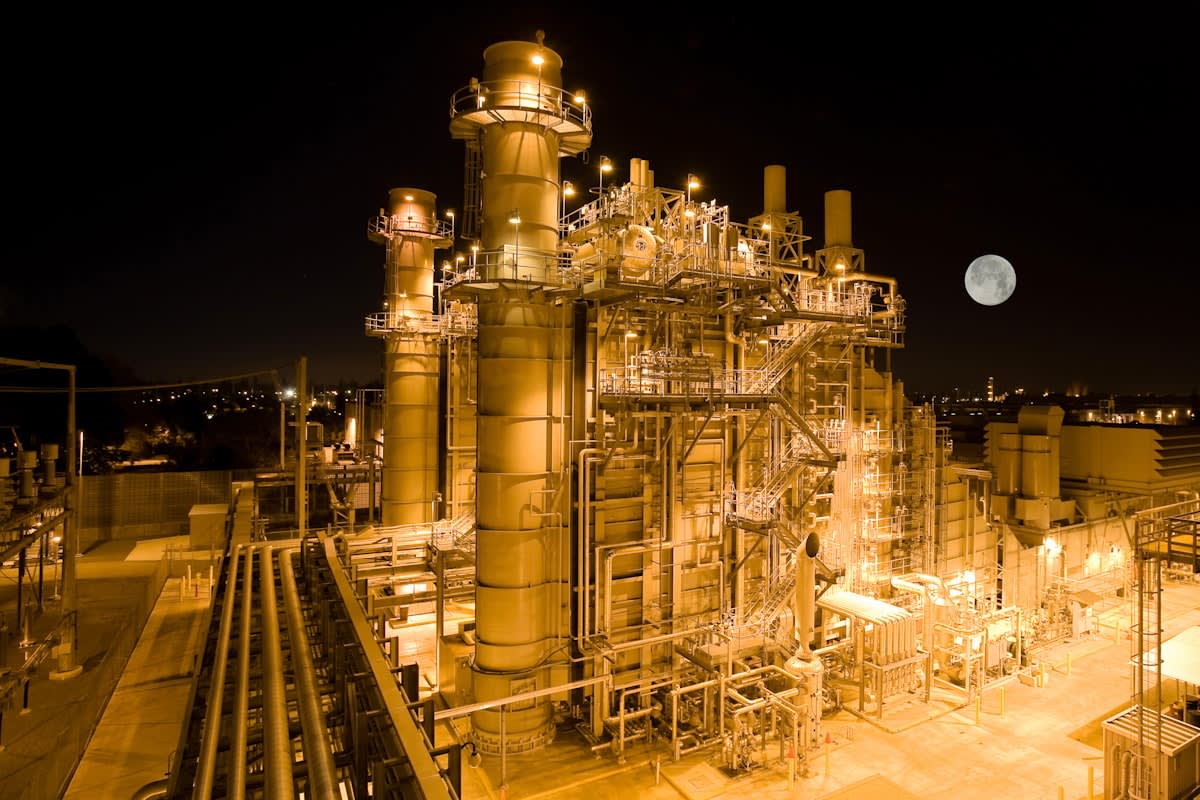
There is also the issue of energy sourcing. A DAC plant powered by a coal grid is a thermodynamic joke. To make permanent sequestration viable, these plants must be co-located with geothermal or stranded renewable energy. This is creating a new map of industrial hubs, where the availability of basalt and cheap green energy dictates the next generation of economic growth.
The Strategic Pivot: From Offsets to Removals
We need to stop using the word offset. Offsetting implies a balancing act—I emit here, so I save there. This logic is flawed because it allows emissions to continue. The strategic pivot is toward Carbon Dioxide Removal (CDR). CDR is not about balancing the books; it is about cleaning the room. By focusing on permanent sequestration, companies move from a defensive posture (trying to justify their footprint) to an offensive posture (actively reducing the global atmospheric load).
This shift changes the investment thesis. Permanent sequestration is an infrastructure play. It requires pipelines, pumps, and deep-well drilling. It is an industry of steel and stone, not spreadsheets and saplings. For sovereign wealth funds and pension funds, this is a far more attractive asset class because it offers tangible, verifiable, and permanent results that can be insured against risk.
Will the world move fast enough? The IEA suggests that to reach net zero by 2050, we need to scale CDR to gigaton levels by mid-century (Source: IEA, 2021). We are currently at kiloton levels. The gap is staggering. But the only way to close that gap is to stop subsidizing the illusion of nature-based permanence and start funding the reality of geological vaults.
Strategic Insight
The core of the debate today is not whether we can store carbon permanently, but whether we can do it at a price point that doesn't bankrupt the transition. The technical feasibility is proven; the economic scalability is the remaining frontier.
Fact-Check & Accuracy Note
This article relies on data and frameworks provided by the IPCC Sixth Assessment Report (2021) and the IEA's Net Zero by 2050 roadmap. Key claims regarding mineralization timelines are based on documented results from the Carbfix project in Iceland. Areas of ongoing debate include the precise cost-reduction curves for Direct Air Capture and the standardization of MRV protocols across different geological formations.