
The Signal in the Sludge
For decades, we treated our sewage systems as a giant eraser. Flush and forget. The goal was simple: move the waste away from the people as fast as possible and keep the water clean enough not to kill the fish. But that linear logic is breaking. We are seeing a quiet, aggressive shift in how municipal leaders and agricultural conglomerates view the 'waste' stream. They are no longer looking at disposal costs. They are looking at the molecular value of phosphorus and nitrogen. It is not about being green. It is about not being stranded.
The delta between last year and today is stark. Twelve months ago, circular nutrient recovery was a niche ESG talking point, a line item in a sustainability report to appease shareholders. Today, it is a matter of national security. With the volatility of global fertilizer markets and the concentration of phosphate rock in a handful of geographies—specifically Morocco, which holds over 70% of the world's known reserves (Source: US Geological Survey, 2023)—the risk of a supply chain snap is too high to ignore. The conversation has moved from the sustainability office to the risk management board.
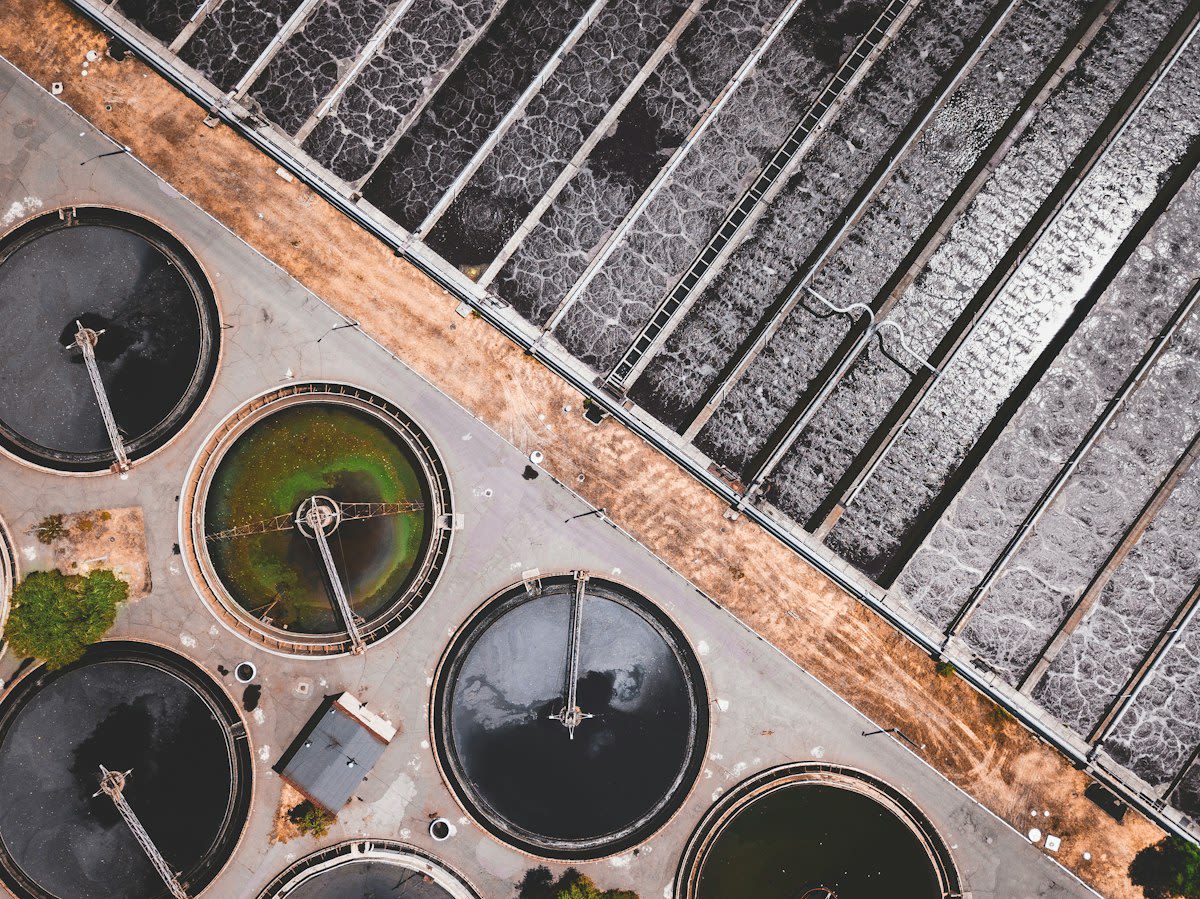
This is not just about phosphorus. It is about the systemic failure of the Haber-Bosch process to remain the sole pillar of nitrogen fixation. The energy intensity of producing synthetic nitrogen is a liability in a high-energy-cost environment. By recovering nitrogen and phosphorus from urban waste streams, cities are essentially mining their own populations. Every liter of wastewater is a liquid ore. The technology—specifically struvite precipitation—allows us to crystallize these nutrients into a slow-release fertilizer that the soil actually wants. It is a reversal of the industrial agricultural trend of overloading soil with soluble salts that leach into the groundwater.
"The obsession with synthetic inputs has blinded us to the goldmine in our sewers. We are not just cleaning water; we are harvesting the foundation of food security."— Dr. Elena Rossi, Lead Researcher at the Circular Bioeconomy Institute
Look at the regional shifts. In the European Union, the push for the Circular Economy Action Plan has forced a regulatory rethink of 'waste' definitions (Source: European Commission, 2020). In Southeast Asia, where soil degradation is accelerating, the focus is shifting toward integrated nutrient management. They are realizing that importing phosphate rock is a precarious strategy. The second-order effect here is the decentralization of fertilizer production. We are moving toward a model where the city feeds the hinterland, creating a closed-loop metabolic system that reduces reliance on volatile global trade routes.
| Metric | Traditional Synthetic Fertilizer | Recovered Nutrient (Struvite) |
|---|---|---|
| Source | Mined Phosphate Rock/Haber-Bosch | Municipal Wastewater/Industrial Waste |
| Carbon Footprint | High (Mining and Gas-intensive) | Low (Recovery process) |
| Soil Impact | Risk of Salinization/Leaching | Slow-release/Improved Structure |
| Supply Chain | Geopolitically Concentrated | Localized/Urban-based |
The economic calculus is shifting. For years, the cost of recovering nutrients was higher than the cost of buying cheap synthetic alternatives. But the math changes when you factor in the cost of sludge management. Removing phosphorus from the wastewater stream prevents the buildup of struvite scales in pipes, which reduces maintenance costs for municipalities. It is a double win: lower operational expenditure for the city and a new revenue stream in the form of a high-value bio-fertilizer. This is the signal that investors are finally picking up on.
Ground-Level Friction
Don't mistake the trend for a smooth transition. The reality on the ground is a mess of bureaucracy and biological stubbornness. First, there is the 'yuck factor.' Convincing farmers to spread processed human waste on their crops requires more than just a data sheet; it requires a cultural shift. Then there is the regulatory nightmare. In many jurisdictions, recovered nutrients are still legally classified as 'waste' rather than 'products.' This means transporting them requires hazardous waste permits, which kills the economic viability of the entire operation. You cannot scale a circular economy if the law treats your product like a pollutant.
Then there is the technical friction. Wastewater plants were not built for recovery; they were built for removal. Retrofitting a 40-year-old plant with nutrient recovery reactors is like trying to install a modern kitchen in a medieval castle. It is expensive, disruptive, and often meets resistance from plant operators who see it as more complexity in an already stressed system. There is a real tension between the engineers who want stability and the visionaries who want recovery. Most days, stability wins.

The political infighting is equally grating. We see a clash between the Ministry of Agriculture, which wants cheap inputs to keep food prices low, and the Ministry of Environment, which wants to stop phosphorus runoff from poisoning rivers. The recovery movement is caught in the middle. It offers a solution to both, but because it doesn't fit neatly into a single departmental budget, it often falls through the cracks. The successful projects are the ones that find a way to bridge these silos, usually driven by a municipal leader who is tired of paying for sludge disposal.
- Phosphate Rock Scarcity: Peak phosphorus is a looming reality that forces a shift toward recovery.
- Regulatory Reclassification: The movement from 'waste' to 'resource' is the primary legal bottleneck.
- Energy Decoupling: Reducing reliance on the natural gas-heavy Haber-Bosch process for nitrogen.
- Urban-Rural Symbiosis: Redefining the city as a nutrient provider for the surrounding agricultural belt.
The long game here is the restoration of soil health. Synthetic fertilizers provide the N-P-K (Nitrogen, Phosphorus, Potassium) but they do nothing for the soil microbiome. Recovered nutrients, especially when integrated with organic compost, help rebuild the soil's carbon sponge. This increases water retention and resilience against droughts. We are seeing a shift from 'feeding the plant' to 'feeding the soil.' This is the second-order effect that actually saves the farm in the long run.
As we move forward, expect to see the rise of 'Nutrient Hubs'—specialized facilities that process waste from multiple small municipalities to achieve the economies of scale necessary for high-tech recovery. The era of the isolated sewage plant is ending. The era of the urban refinery is beginning. The winners will be those who stop seeing sewage as a problem to be solved and start seeing it as a resource to be managed.
Fact-Check & Accuracy Note
The claim regarding Morocco's phosphate dominance is sourced from the US Geological Survey (2023). The transition of regulatory frameworks in the EU is based on the Circular Economy Action Plan (2020). Professional debate continues regarding the energy cost of struvite precipitation versus the carbon savings of reduced synthetic fertilizer production; some argue the energy trade-off is negligible at small scales but significant at industrial scales.