Ladakh administration asks activist Sonam Wangchuk’s wife to stop ‘unauthorised activities’ at their Leh school
Source Entity
India Latest News: Top National Headlines Today & Breaking News | The Hindu
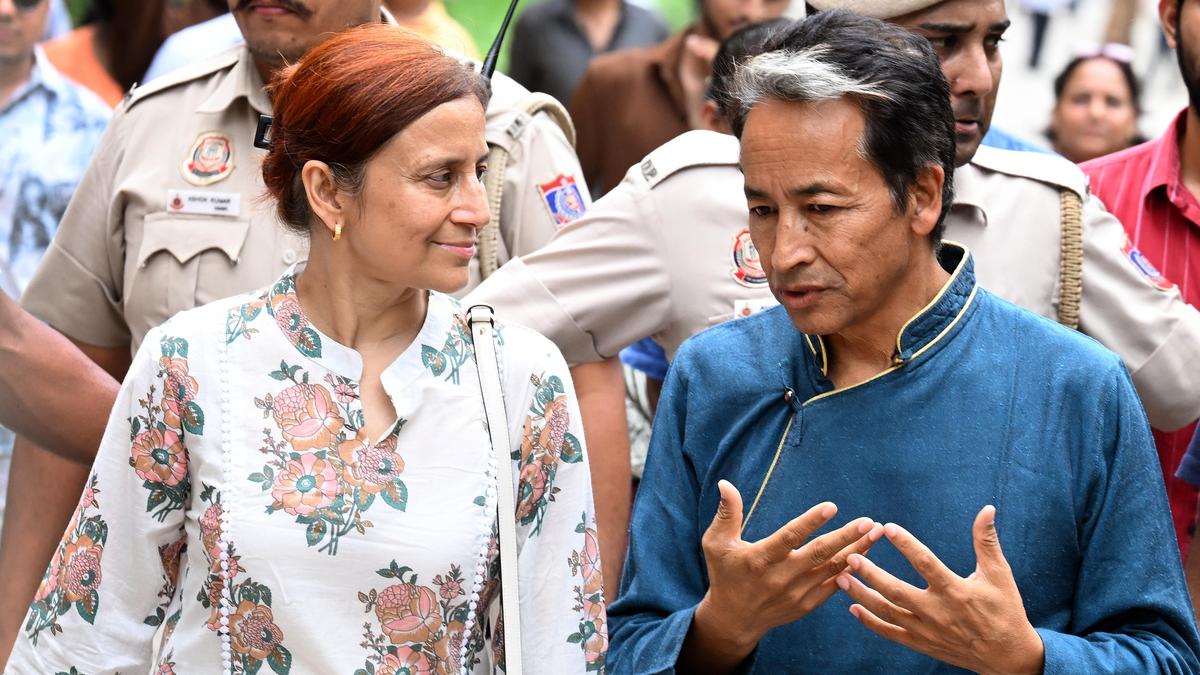
The Ladakh administration has issued a notice to Sonam Wangchuk’s Himalayan Institute of Alternatives (HIAL) to halt classes at its Phyang campus. The directive mandates a status quo while the dispute over the land's 40-year lease remains sub judice before the High Court.
Administrative Action Against HIAL
The Ladakh administration has officially issued a formal notice to the Himalayan Institute of Alternatives (HIAL), an educational institution founded by activist Sonam Wangchuk. The directive, delivered through the Tehsildar of Leh, specifically targets the Desert Flower School located in Phyang. The administration has ordered the school to cease all ongoing classes and activities, effectively mandating a strict 'status quo' until the ongoing legal dispute is resolved.
The Core of the Land Dispute
At the center of this controversy is the cancellation of a 40-year lease agreement for 1,076 kanals of land at Phyang Thang. This land was originally allotted to HIAL, an organization currently headed by CEO Gitanjali Angmo. The administration’s recent order follows an August 2025 decision to cancel this allotment, a move that Wangchuk has formally challenged through a writ petition filed with the High Court of Jammu & Kashmir and Ladakh.
Legal Standing and 'Sub Judice' Status
Because the matter is currently sub judice, the administration’s notice emphasizes that the school must refrain from any actions that could prejudice the ongoing court proceedings. The directive serves as a legal safeguard for the administration, ensuring that no further infrastructure development or educational operations continue on the disputed site while the judiciary evaluates the validity of the lease cancellation. This legal impasse highlights the complexities of land usage rights for non-profit educational ventures in the sensitive high-altitude terrain of Ladakh.
Allegations of Targeted Activism
Sonam Wangchuk has publicly alleged that this administrative action is not merely a bureaucratic land dispute, but a targeted effort to undermine his activism. Wangchuk suggests that the revocation of the land lease and the subsequent demand to halt school operations are being leveraged as tools to pressure him due to his public stances on regional issues. These claims add a layer of political tension to the administrative proceedings, framing the dispute as a collision between civil society advocacy and local governance.
Broader Implications for Education in Ladakh
The suspension of activities at the Desert Flower School raises concerns regarding the future of alternative education models in the region. HIAL was established with a focus on sustainable development and experiential learning, specifically tailored to the Himalayan environment. If the court eventually upholds the cancellation of the land allotment, it could set a significant precedent for how educational institutions in Ladakh secure and maintain long-term land leases, potentially impacting other non-governmental initiatives in the territory.
Future Outlook
As the High Court of Jammu & Kashmir and Ladakh deliberates on the writ petition, the academic future of the students currently enrolled under the HIAL ecosystem remains uncertain. The outcome of this case will likely serve as a litmus test for the balance of power between the Ladakh administration and prominent public figures who operate institutions on government-allotted land. For now, the 'status quo' mandate ensures that the physical site remains inactive, freezing any further development until the judiciary provides a final verdict.
Multiple Citing Sources
Verification Required?