
The Invisible Utility
For a decade, the conversation surrounding the cloud was obsessed with the plug. We debated carbon offsets, the stability of the grid, and the promise of 24/7 carbon-free energy. But while the world watched the power lines, a more visceral requirement was slipping through the cracks: water. Data centers are essentially massive heat exchangers. To keep the silicon from melting under the weight of trillion-parameter models, we need to move heat away from the chip and into the atmosphere. The most efficient way to do that remains the evaporation of water.
The delta between last year and today is staggering. Twelve months ago, the industry's primary anxiety was GPU availability. Today, the anxiety has shifted to the physical constraints of the land. We are seeing a pivot from 'can we power it?' to 'can we cool it without draining the local aquifer?' This is not a theoretical concern. In regions like the American Southwest and parts of Southeast Asia, the arrival of a hyperscale data center is no longer viewed as a purely economic win; it is viewed as a direct threat to municipal water security (Source: International Energy Agency, 2023).
"The intersection of AI growth and water scarcity creates a systemic risk that cannot be solved by buying carbon credits. We are talking about a physical limit to growth based on the availability of freshwater in stressed basins."— Sustainability Lead, International Energy Agency (IEA) Report 2024
Why now? The answer lies in the architecture of Generative AI. Traditional cloud workloads were relatively steady. LLMs, however, create intense, concentrated bursts of heat during both training and inference. A single request to an AI model doesn't just cost electricity; it costs a measurable sip of water. Research suggests that training a model like GPT-3 in Microsoft's state-of-the-art US data centers can directly consume 700,000 liters of clean freshwater (Source: University of California, Riverside, 2023). This isn't just a statistic; it is a blueprint for a coming collision between Big Tech and local governments.
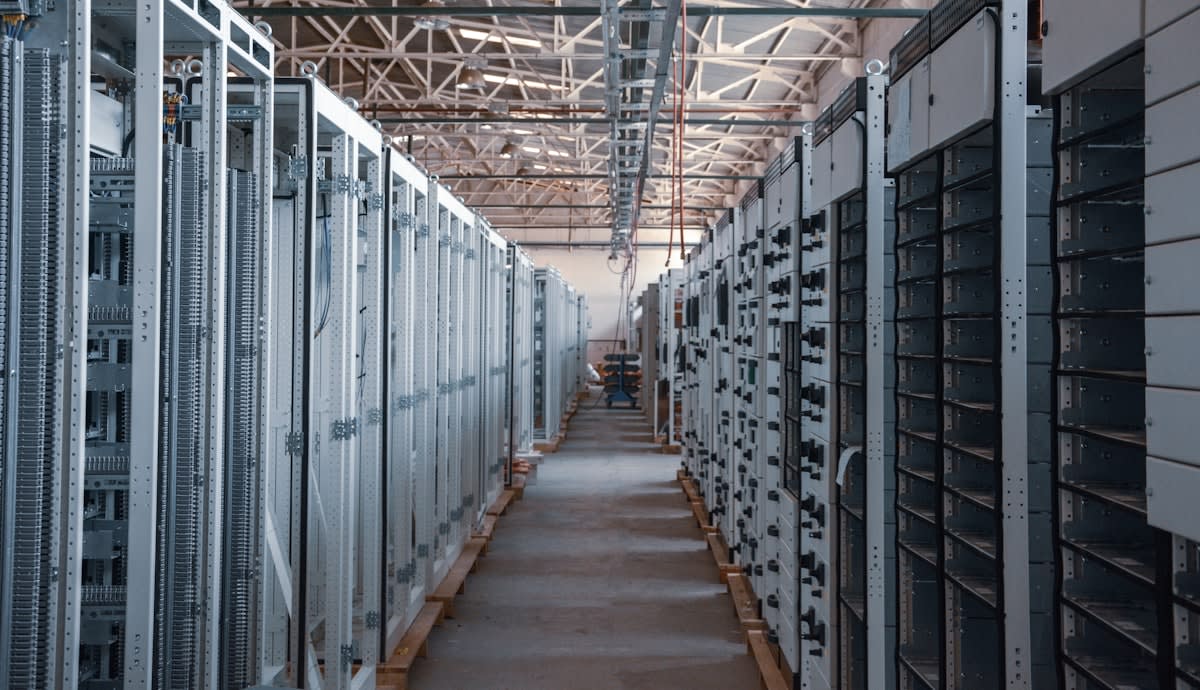
This shift is forcing a rethink of the 'cloud' metaphor. The cloud is not ethereal; it is a series of concrete warehouses that breathe water and exhale heat. When we talk about 'scaling' AI, we are actually talking about scaling the plumbing of the planet. Does the industry have a plan for when the water runs out, or are we simply hoping that synthetic cooling technologies will arrive before the taps go dry?
As a practitioner who has spent years auditing facility efficiency, I can tell you that the internal debate has changed. Five years ago, the goal was PUE—Power Usage Effectiveness. If you could get your PUE down to 1.1, you were a hero. Now, the conversation has shifted to WUE—Water Usage Effectiveness. I've sat in meetings where engineers are torn between lowering power costs and increasing water consumption. If you use more water for evaporative cooling, your electricity bill drops because you aren't running as many mechanical chillers. It is a zero-sum game played with the local environment.
| Metric | Traditional Cloud (2020) | Generative AI Era (2024) |
|---|---|---|
| Primary Constraint | Electricity/Connectivity | Water/Power Density |
| Cooling Method | Air-cooled/Chilled Water | Liquid-to-Chip/Immersion |
| Water Footprint | Low to Moderate | High (due to heat density) |
| Regulatory Focus | Carbon Emissions | Water Rights/Aquifer Health |
The friction is now global. In Uruguay, the government has had to weigh the promise of digital investment against the risk of water shortages for its citizens. In Ireland, the energy grid is already strained, but the water requirements for massive cooling arrays are beginning to trigger local protests. This is no longer a localized 'NIMBY' issue; it is a geopolitical strategy. Countries with abundant water and cold climates, like Norway and Iceland, are suddenly the most valuable real estate in the AI race.
The Geography of Thirst
We are seeing a divergence in how regions handle this thirst. Some are doubling down on 'water-neutral' pledges, claiming they will replenish more water than they consume. But replenishment is a slow, biological process; data center consumption is an instantaneous, industrial process. You cannot offset a million gallons of evaporated water today by planting trees that will take twenty years to recharge an aquifer.
- The American Southwest: Facing extreme drought, data centers are competing with agriculture for Colorado River allocations.
- Singapore: Implementation of strict water-efficiency mandates for new data center builds to preserve limited freshwater reserves.
- Northern Europe: Leveraging 'free cooling' from the ambient air to reduce water dependency, creating a competitive advantage for AI training.
- Chile: Emerging as a hub due to renewable energy, but facing intense scrutiny over water usage in arid mining regions.
The real danger lies in the 'hidden' water—the water used to produce the electricity that powers the servers. Thermoelectric and nuclear power plants require massive amounts of water for cooling. When we calculate the water footprint of a ChatGPT query, we often only count the water at the data center, ignoring the water evaporated at the power plant miles away (Source: Google Environmental Report, 2023). This systemic blindness is what makes the current trend so volatile.

But where there is friction, there is adaptation. The industry is moving toward closed-loop systems and liquid-to-chip cooling. Instead of evaporating water into the air, these systems circulate a coolant in a sealed loop, transferring heat to a secondary exchanger. It is more expensive to build and more complex to maintain, but it eliminates the constant thirst for freshwater.
Engineering the Adaptation
The next frontier is immersion cooling, where servers are literally submerged in a non-conductive dielectric fluid. This eliminates the need for water-based evaporative cooling entirely. While this sounds like science fiction, it is becoming a necessity for the H100 and B200 class GPUs that drive today's AI. The heat density of these chips is simply too high for air to carry away effectively.
Furthermore, we are seeing a shift toward using non-potable water. Why use drinking water to cool a server when you can use treated wastewater or seawater? In some coastal regions, hyperscalers are experimenting with seawater cooling, though this introduces the nightmare of corrosion and salt buildup. The engineering challenge is immense, but the alternative is a hard ceiling on AI growth.
Will this be enough? The pace of AI deployment is currently outstripping the pace of infrastructure evolution. We are building the software for the 2030s on the plumbing of the 1990s. The winners of the next decade won't be the companies with the best algorithms, but the companies that can solve the thermodynamics of the cloud without bankrupting the local water table.
Fact-Check & Accuracy Note
Key claims regarding GPT-3 water consumption are sourced from the University of California, Riverside (2023). Data on regional water stress and data center trends are based on the International Energy Agency's (IEA) 2023 and 2024 reports. There is ongoing industry debate regarding the exact 'water-per-query' metric, as it varies wildly based on the cooling technology used (evaporative vs. closed-loop).