The Great Drainage Delusion
The pipe is a lie. For a century, urban planners operated under the assumption that the most efficient way to handle a storm was to move water from point A to point B as quickly as possible, ignoring the fact that point B was often another city's front door. This 'grey infrastructure'—a rigid network of concrete culverts, storm drains, and subterranean tunnels—was designed for a climate that no longer exists. We built cities as impervious slabs, effectively turning our streets into slides that funnel pollutants and floodwaters into overburdened systems that inevitably fail when the rain doesn't stop.
Why did we trust the concrete for so long? It offered a sense of absolute control. Engineers could calculate the exact flow rate of a pipe and believe they had solved the problem of the flood. But this linearity is a fantasy. When a storm exceeds the design capacity of a drain, the system doesn't just overflow; it catastrophically fails. The water has nowhere to go but up, turning basements into ponds and subway stations into rivers. We aren't just fighting the rain; we are fighting the very materials we used to build our civilization.
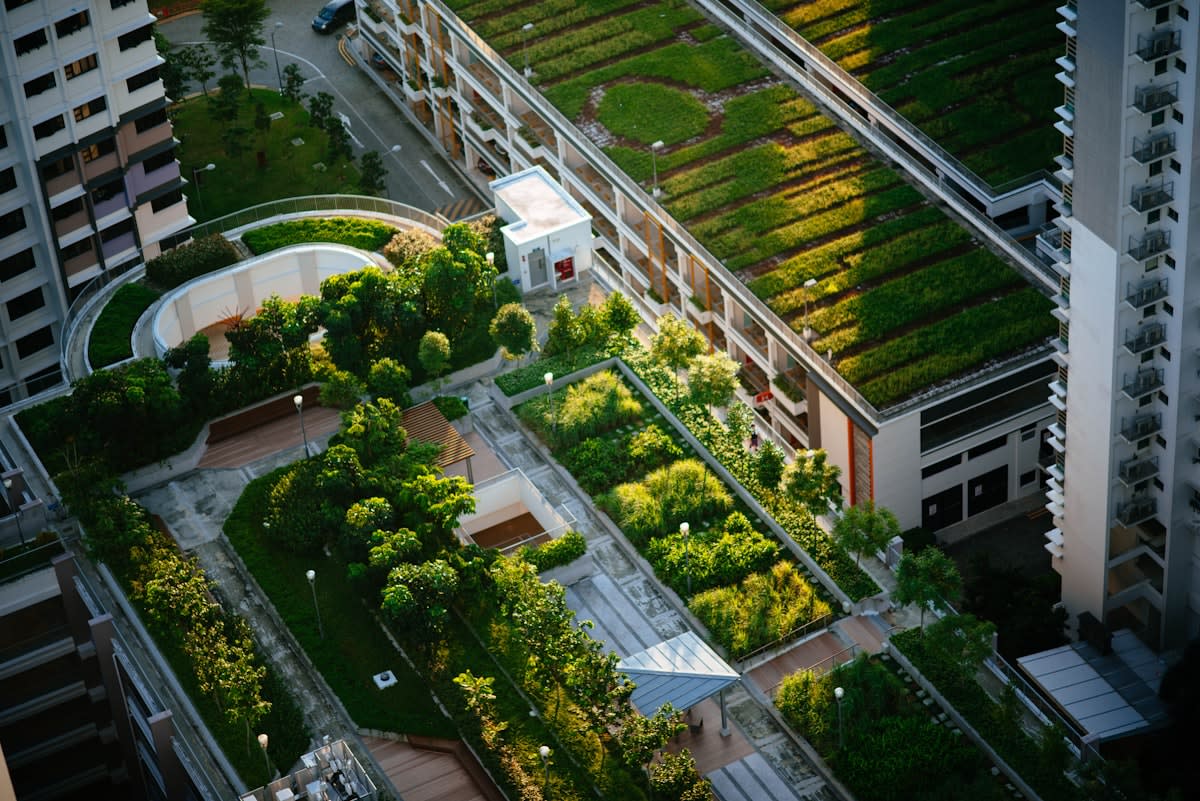
The shift we are seeing right now is a fundamental admission of defeat—not by the city, but by the concrete. Across the globe, the most forward-thinking municipalities are abandoning the 'drainage' mindset in favor of 'absorption.' This is the birth of the Sponge City. Instead of fighting water, these cities are learning to invite it in, store it, and slowly release it. This isn't a mere aesthetic upgrade with a few more street trees; it is a total systemic overhaul of how a city breathes and drinks.
The Delta: From Pilot Projects to Systemic Scale
Twelve months ago, 'Sponge City' concepts were largely relegated to architectural white papers and isolated pilot projects—a single permeable parking lot here, a rain garden there. Today, the delta is stark. We have moved from experimentation to integration. Major metropolises are now rewriting their building codes to mandate permeable surfaces and integrating blue-green corridors into their master plans. The urgency has shifted from 'should we do this?' to 'how fast can we scale this?'
This acceleration is driven by the realization that expanding concrete pipes is a losing game. To double the capacity of a city's drainage system using traditional methods would require digging up every single street and spending billions on subterranean concrete that will be obsolete in twenty years. The alternative—turning the surface of the city into a sponge—is not only more sustainable but fundamentally more flexible. It allows cities to adapt in real-time to precipitation patterns that are becoming increasingly erratic.
"We stopped trying to out-engineer the water and started designing with it. The moment you stop fighting the flood is the moment you actually start solving it."— Urban Resilience Lead, Global Infrastructure Forum
The East Asian Blueprint: Scaling the Sponge
China is currently running the world's most ambitious experiment in urban absorption. The Sponge City Initiative, launched to combat chronic urban flooding, targets 30 or more pilot cities with a staggering goal: ensuring that 80% of urban areas can absorb and reuse 70% of rainwater. In cities like Wuhan and Shenzhen, this means replacing asphalt with permeable bricks and constructing massive 'wetland parks' that act as temporary reservoirs during peak storms. They are effectively turning the city into a giant filter.
This approach solves two problems at once. First, it prevents the flash floods that paralyze commerce. Second, it addresses the urban heat island effect. Concrete absorbs heat; plants and water dissipate it. By bringing water back to the surface, these cities are lowering their average summer temperatures while simultaneously securing their water tables. It is a symbiotic relationship where the infrastructure provides both safety and comfort.
| Feature | Grey Infrastructure (The Drain) | Green Infrastructure (The Sponge) |
|---|---|---|
| Primary Goal | Rapid evacuation of water | Infiltration and retention |
| Material | Concrete, Steel, PVC | Soil, Vegetation, Permeable Pavers |
| Environmental Impact | Pollutant runoff into oceans | Natural filtration of pollutants |
| Cost Profile | High upfront, high maintenance | Moderate upfront, ecological dividends |
| Climate Response | Rigid/Fixed capacity | Adaptive/Scalable |
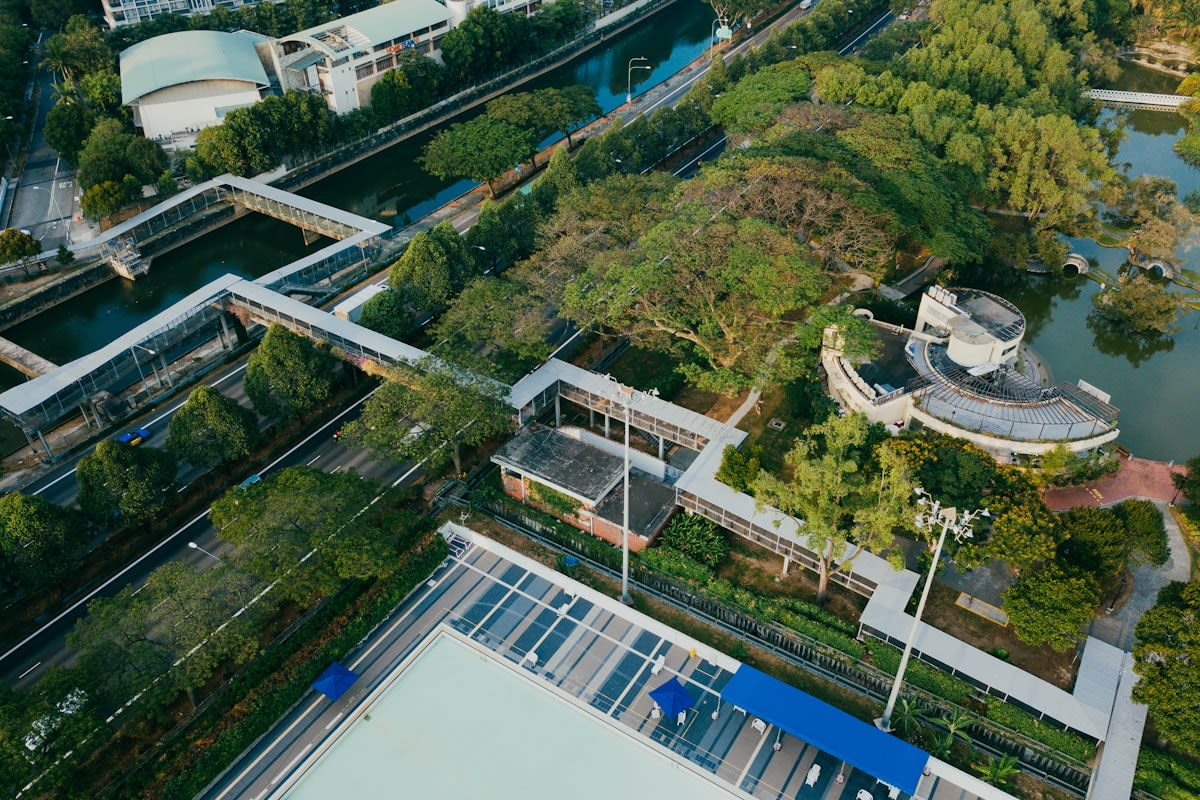
But the East Asian model isn't the only one. Singapore has perfected the 'ABC Waters' (Active, Beautiful, Clean) program, transforming concrete canals into naturalized rivers. By turning a drainage channel into a winding stream with lush banks, Singapore has increased its water catchment capacity while creating public spaces that actually attract people. The water is no longer something to be hidden in a pipe; it is a central feature of the urban experience.
European Adaptation: The Cloudburst Strategy
In Europe, the approach is often more surgical. Copenhagen provides the gold standard with its Cloudburst Management Plan. After a devastating flood, the city realized that no amount of pipe-widening would save them. Instead, they designed 'cloudburst roads'—streets that act as normal roads most of the year but transform into controlled canals during extreme rain, directing water away from buildings and toward the harbor.
This is a masterclass in multi-functional design. A park is no longer just a place for a picnic; it is a sunken basin designed to hold millions of gallons of water during a storm. A sidewalk is no longer just a path; it is a bioswale that filters toxins from the road before the water hits the aquifer. The city is no longer a barrier to nature; it is a partner with it.
Technical Deep-Dive: The Bioswale
Bioswales are landscaped depressions designed to concentrate and convey stormwater runoff while removing debris and pollution. They use engineered soil and specific plant species to slow water down and let it soak into the ground, mimicking the natural forest floor in the middle of a concrete jungle.
The economics of this shift are becoming impossible to ignore. Traditional grey infrastructure is a depreciating asset; the moment it is poured, it begins to crack and decay. Green infrastructure, conversely, is an appreciating asset. As trees grow and soil ecosystems mature, the system becomes more efficient at absorbing water. We are moving from a model of 'maintenance' to a model of 'growth.'
Does this mean the concrete pipe is entirely dead? Not yet. Even the most 'spongy' city needs some grey infrastructure for extreme overflows. The goal isn't the total elimination of the drain, but the end of the drain's dominance. The resilient city of the future uses a hybrid approach: a green skin to handle the 90% of rain events and a grey skeleton to handle the catastrophic 10%.
The transition is a litmus test for urban leadership. Cities that cling to the concrete mindset are essentially gambling that the climate will return to the stability of the 1950s. Cities that embrace the sponge are betting on a volatile future and building the flexibility to survive it. The question is no longer whether we can stop the water, but whether we are brave enough to let it in.
Ultimately, the death of the concrete drain is the rebirth of the urban ecosystem. By restoring the natural water cycle, we aren't just preventing floods; we are bringing biodiversity back to the city center, cooling our streets, and recharging our groundwater. We are discovering that the most sophisticated technology for managing water isn't a bigger pipe—it's the earth itself.