
For over a hundred years, we have operated under the assumption that a city is a biological entity with a single heart—a central power plant—pumping electricity through a rigid arterial system of transmission lines. This model is not just outdated; it is a liability. When the center fails, the periphery dies. But what if we stopped trying to protect a fragile center and instead treated energy as a distributed property of the urban fabric itself? The shift from centralized generation to a decentralized mesh allows a city to breathe, adapting in real-time to local demand rather than relying on a distant, monolithic source that is prone to systemic collapse.
Prerequisites: What You'll Need Before Breaking the Grid
You cannot simply rip out a power plant and replace it with a few thousand solar panels and hope for the best. A truly decentralized city requires a foundational shift in how we define power. First, you need a localized generation strategy that leverages every available square meter, from industrial rooftops to curbside infrastructure. Second, you require edge-storage capacity—think electric vehicle fleets and neighborhood-scale batteries—to buffer the intermittency of renewables. Finally, and most critically, you need a software-defined orchestration layer that views flexibility not as a product you buy, but as a system property you manage.
- Distributed Generation Assets: Solar, wind, and hydroelectric installations integrated into urban zoning.
- Edge Charging Infrastructure: High-density Level 2 chargers and 'right to plug' access for multi-unit dwellings.
- A Flexibility Mesh Framework: A system architecture that matches resources to specific places, times, and durations.
- Strategic Interconnections: Resilient links between micro-grids to prevent localized isolation during peaks.
The Step-by-Step Implementation Process
- Map the Flexibility Mesh: Stop counting total megawatts and start mapping where, when, and for how long energy is needed at specific nodes. A national total of flexible megawatts is a vanity metric; what matters is whether a specific congested transformer can handle another connection (Source: CleanTechnica, 2026).
- Deploy Distributed Generation: Scale up local production. In regions like Lagos State, the potential for off-grid capacity already exceeds 19 GW (Source: SEforALL, 2024). The goal is to move production as close to the point of consumption as possible to minimize transmission loss.
- Integrate Edge Storage and Mobility: Treat EVs as mobile batteries. For example, Seattle's plan to install 200 curbside Level 2 chargers by 2030 using a $1.55B transport levy demonstrates how municipal funding can bridge the gap for apartment dwellers (Source: The Next Web, 2026).
- Mitigate Transmission Congestion: Solve the curtailment problem. In some systems, renewable curtailment reached 6,084 GWh in 2025, meaning a massive amount of clean energy was wasted because the grid couldn't move it (Source: ACERA, 2026). Decentralization solves this by consuming energy where it is generated.
- Balance Cost and Security: Transition from expensive industrial self-generation to a coordinated community model. Currently, independent generation by firms like the Dangote Group (generating over 1,500 MW) can cost twice as much as grid electricity in markets like Nigeria and South Africa (Source: The Electricity Hub, 2025).
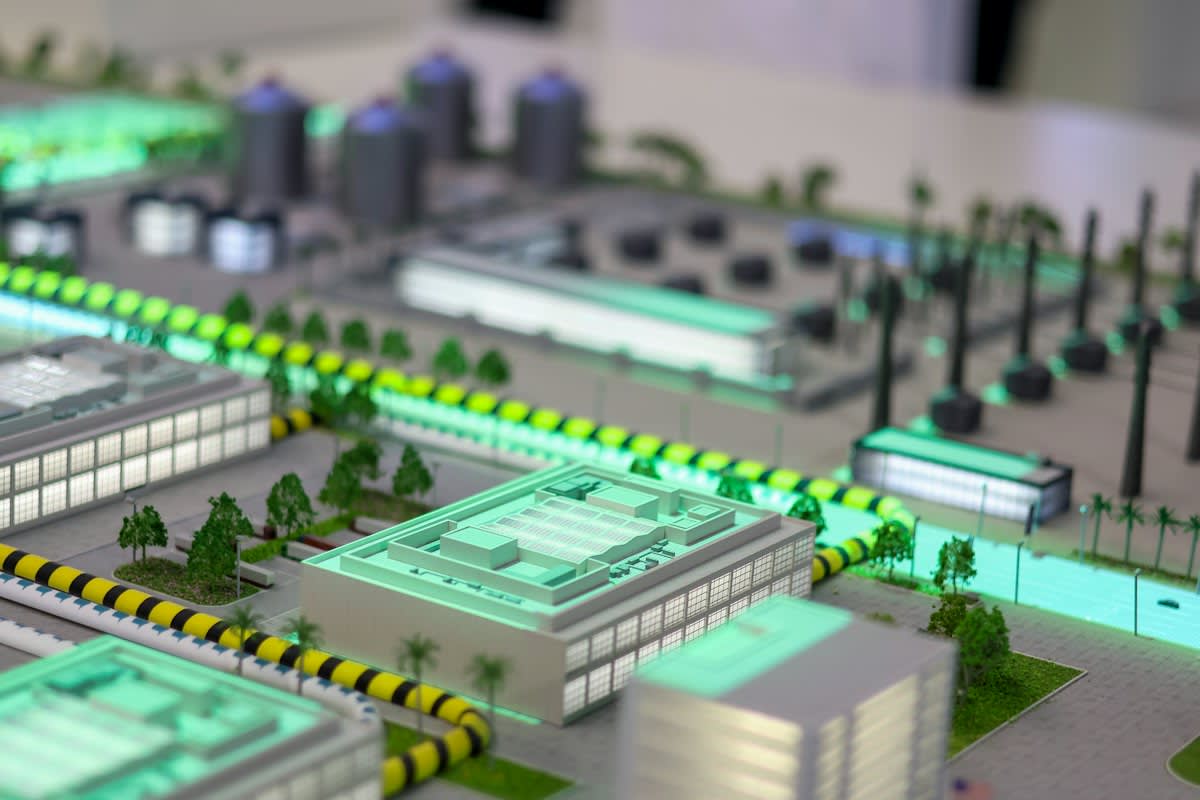
The transition is not without friction. When I first began implementing distributed systems, the biggest fight wasn't with the technology; it was with the legacy mindset of grid operators. Inside the control room, there is a deep-seated fear of 'bi-directional flow'—the idea that a house can send power back into the street. Operators are trained to push energy one way. When you introduce a flexibility mesh, you are asking them to manage a chaotic, living organism rather than a predictable machine. The internal debate often centers on the definition of 'flexible megawatts.' Practitioners know that a megawatt of flexibility in a residential suburb at 6 PM is fundamentally different from a megawatt in an industrial zone at 2 AM. If your software doesn't account for the electrical relevance of the location, your 'resilience' is just a spreadsheet error.
"The Flexibility Mesh starts with the system need, then asks which resources can contribute at that place, time and duration. The resource has to be electrically relevant to that part of the network."— TFIE Strategy Report, The Flexibility Mesh: A Whole-System Architecture for Reliable, Affordable Electrification
Analyzing the Efficiency Gap: Curtailment vs. Generation
One of the most damning arguments against the central plant model is the reality of renewable curtailment. When generation-level performance improves but system-level resilience remains stagnant, we see a paradox where we produce energy we cannot use. In 2025, curtailment increased by 7.8% year-on-year (Source: ACERA, 2026). This isn't a failure of solar panels or wind turbines; it's a failure of the pipes. Without this curtailment, non-conventional renewable energy (NCRE) would have supplied 49.4% of generation instead of 42.4% (Source: ACERA, 2026). By removing the central plant and generating power at the edge, we eliminate the congestion that forces us to throw away gigawatt-hours of clean energy.
| Metric | Centralized Model (Estimated) | Decentralized Mesh (Projected) |
|---|---|---|
| NCRE Generation Share | 42.4% (with curtailment) | 49.4% (optimized) |
| Curtailment Loss | 6,084 GWh (2025) | Near Zero (Local Consumption) |
| Energy Cost (Industrial) | Baseline | Up to 2x (if self-generating alone) |
| Infrastructure Focus | Transmission Lines | Edge Charging/Storage |
However, the financial mathematics of decentralization can be brutal if handled in isolation. We see this clearly in emerging economies where the grid is so unreliable that industry is forced to buy its own security. Large-scale self-generation, while providing continuity, is often prohibitively expensive. In South Africa and Nigeria, self-generation can cost roughly double the price of grid electricity (Source: Climate Strategies, 2026). The key is to move away from 'isolated self-generation' toward 'interconnected community generation.' This allows the industrial heavyweights to share their excess capacity with the surrounding neighborhood, turning a costly necessity into a community asset.

Common Pitfalls in Decentralized Implementation
The most common mistake is focusing on the 'hardware'—the panels and the batteries—while ignoring the 'handshake.' Many cities install solar arrays only to find that the local distribution network cannot handle the surge during peak sunlight hours. This is why the EU is pushing for a 'right to plug' for residents in flats (Source: The Next Web, 2026). If the regulatory framework doesn't allow a resident in an apartment to access the grid's edge, the entire decentralized model collapses into a luxury for homeowners with garages. You cannot build a city-wide system if 40% of your population is locked out of the infrastructure.
- The 'Vanity Megawatt' Trap: Relying on total generation capacity figures rather than nodal flexibility.
- Supply Chain Over-Reliance: Depending on a single country for the semiconductor and raw material inputs required for inverters and batteries (Source: Atlantic Council, 2026).
- The Cost Spiral: Allowing industrial firms to self-generate in silos, which doubles costs rather than integrating them into a local mesh.
- Ignoring Duration: Failing to distinguish between a resource that can provide power for 15 minutes (fast-discharge batteries) versus 12 hours (hydrogen or long-duration storage).
Fact-Check & Accuracy Note
Key claims regarding renewable curtailment (6,084 GWh) and NCRE generation percentages are sourced from ACERA (2026) and Ember Energy/Suárez (2025). The cost of self-generation in Nigeria and South Africa is based on data from The Electricity Hub (2025) and Climate Strategies (2026). The 'Flexibility Mesh' architecture is based on the TFIE Strategy report (2026). Ongoing debate persists regarding the optimal balance between nuclear and renewables for strategic resilience, as seen in Germany's Osterpaket legislation (Source: Atlantic Council, 2026).
Editorial Note
Editorial Note: This guide avoids the common 'climate crisis' narrative to focus on the engineering and economic opportunities of energy autonomy. The goal is to present decentralization as a strategic upgrade in urban resilience rather than a desperate response to disaster.