Tensions mount at Jamia: Classes shift online; AISA alleges assault on students
Source Entity
LAIRENLAKPAM WARLI
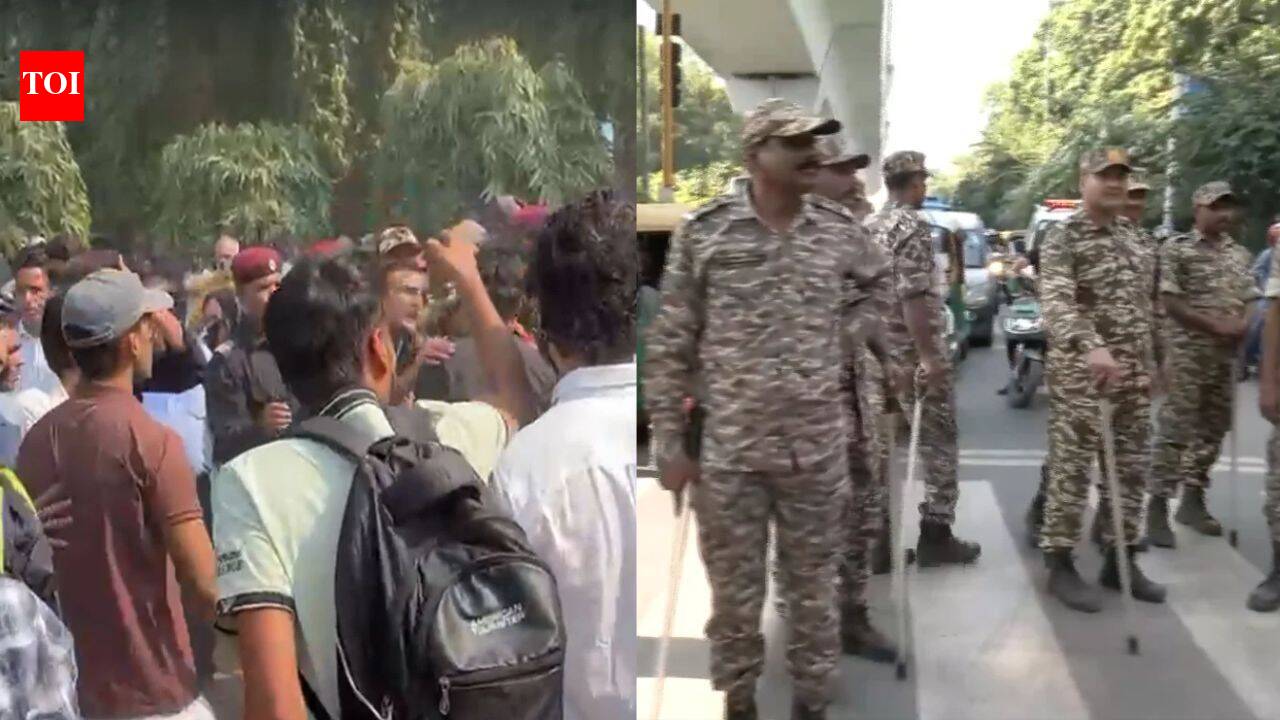
Jamia Millia Islamia has shifted classes online amid a 13-day student protest demanding the restoration of the students' union. The situation has intensified with police detaining several individuals, including Members of Parliament, as the hunger strike continues.
Escalation at Jamia Millia Islamia: A Crisis of Representation
The academic environment at Jamia Millia Islamia (JMI) has reached a critical juncture as the institution shifts to online learning on the 13th day of a persistent student protest. At the heart of this unrest is a fundamental demand: the restoration and democratic election of the Jamia Millia Islamia Students’ Union (JMISU). The transition to virtual classes, while framed as a measure to maintain academic continuity, underscores the depth of the administrative deadlock between university leadership and the student body.
The Anatomy of the Protest
The protest, which has been ongoing since mid-October, is characterized by a hunger strike initiated by five students on October 12. The grievances of the students extend beyond the demand for union elections to include specific administrative actions. Protesters are actively seeking the withdrawal of disciplinary measures leveled against three students and are calling for the resignation or removal of the university’s Chief Proctor and Security Advisor, citing a lack of confidence in the current administrative oversight.
Political Involvement and Police Intervention
The situation took a significant political turn on Friday when Delhi Police intervened, detaining 10 individuals near the university campus. Among those detained was Congress MP Imran Masood, who had arrived to express solidarity with the students facing disciplinary action. The involvement of elected representatives highlights the growing national attention surrounding the incident and reflects the contentious nature of student-led movements within central universities.
Concerns Over Democratic Rights
The detention of Samajwadi Party MP Mohibbullah Nadvi further exacerbated tensions. Reports and social media footage suggest that the MP was manhandled by police while attempting to engage with the protesting students. This incident has sparked a broader debate regarding the rights of public representatives to interact with constituents and the degree of state intervention permissible within a university setting, which has historically served as a space for civic discourse and political expression.
Implications for Campus Governance
This stand-off highlights the recurring friction between university administrations and students regarding the role of student unions. In many Indian central universities, these bodies are viewed as essential for democratic participation and advocacy. When these platforms are suspended or absent, the resulting vacuum often leads to prolonged protests, as seen in the current JMI scenario. The administration’s move to shift to online classes serves as a temporary buffer but does not address the underlying demand for a formal election schedule.
Future Outlook and Resolution
As the hunger strike enters its second week, the health of the participating students remains a primary concern for the university community and observers alike. A resolution will likely require a multi-faceted approach: the administration must find a pathway for dialogue that addresses the specific disciplinary concerns, while the students seek a concrete roadmap for the reinstatement of the JMISU. Without a compromise, the current cycle of detentions and academic disruption threatens to further alienate the student body from the university leadership, potentially impacting the institution's long-term academic climate.
Multiple Citing Sources