The Geothermal Myth
For decades, the energy industry treated geothermal as a niche curiosity, a luxury reserved for the few who lived atop volcanic hotspots like Iceland or the Rift Valley in Kenya. We viewed the Earth's heat as a geographical lottery. If you weren't born near a tectonic plate boundary or a hydrothermal vent, you were out of luck. This narrow perspective ignored the fundamental physics of our planet: the core is a furnace of immense proportions, and heat exists everywhere if you simply go deep enough. The limitation wasn't the heat; it was our inability to reach it without destroying our tools.
Why did we settle for this limitation? Because conventional geothermal requires a rare trifecta of heat, water, and permeability. You need hot rock, a fluid to carry that heat, and cracks in the rock to allow that fluid to move. When one of those is missing, the project dies. But the strategic shift occurring now is the move toward Enhanced Geothermal Systems (EGS). EGS essentially engineers the permeability. By injecting fluid at high pressure to create a subsurface radiator, we are no longer hunting for rare pockets of steam; we are creating them. This transforms geothermal from a regional fluke into a global utility (Source: International Energy Agency, 2023).
Is it an overnight transition? Hardly. The friction lies in the sheer brutality of the subsurface environment. At depths of 5 to 10 kilometers, temperatures soar and pressures become crushing. Traditional tungsten-carbide drill bits melt or wear down in a matter of hours, turning a multi-million dollar project into a costly exercise in futility. The industry has been stuck in a cycle of incremental improvements, but the current race is about a paradigm shift in drilling technology itself. We are seeing a move from mechanical grinding to thermal vaporization.
"The goal is to decouple geothermal energy from geography. By utilizing advanced drilling and stimulation, we can access the heat that exists beneath every single city on Earth."— Tim Latimer, CEO of Fervo Energy
This isn't just about adding another source to the mix. It is about solving the intermittency problem that plagues wind and solar. Batteries are a stopgap, not a systemic solution for seasonal energy shifts. Deep geothermal provides a constant, unwavering baseload. It is the only renewable source that can mimic the reliability of a coal or nuclear plant without the radioactive waste or carbon emissions. When you look at the global energy grid, the missing piece isn't more panels; it is a stable, carbon-free floor that doesn't depend on whether the sun is shining or the wind is blowing.
The scale of the opportunity is staggering. Estimates suggest that the heat contained within the top 10 kilometers of the Earth's crust could power human civilization for millions of years (Source: Department of Energy, 2022). Yet, we have spent the last twenty years focusing on the surface. This is a strategic error. While we optimized the cost of solar cells, we ignored the energy density of the ground beneath our feet. The race now is to see who can break the 'depth barrier' first.
Breaking the Depth Barrier
The real battle is fought in the material science of the drill bit. Companies are now experimenting with millimeter-wave drilling—using high-energy beams to vaporize rock rather than grinding it. This approach, championed by firms like Quaise Energy, aims to reach depths of 20 kilometers, where temperatures hit 500 degrees Celsius. At these 'super-hot' levels, water becomes supercritical, carrying significantly more energy than standard steam. A single supercritical well could produce ten times the power of a conventional geothermal well (Source: Stanford Geothermal Program, 2023).
| Technology | Typical Depth | Heat Source | Geographic Constraint | Power Density |
|---|---|---|---|---|
| Conventional Geothermal | 1-3 km | Hydrothermal Reservoirs | High (Volcanic/Tectonic) | Low to Medium |
| Enhanced Geothermal (EGS) | 3-7 km | Hot Dry Rock | Low (Widespread) | Medium to High |
| Super-Hot Rock (SHR) | 10km+ | Supercritical Fluid | Very Low (Universal) | Extreme |
From a practitioner's perspective, the tension in the field is palpable. In the drilling trailers, the debate isn't about whether the heat is there—it's about induced seismicity. When you inject fluid to crack rock, you risk triggering micro-earthquakes. This is the 'ghost in the machine' that keeps regulators awake. The industry is currently locked in a fierce debate over how to balance stimulation pressure with seismic stability. Those of us who have spent time on-site know that the gap between a successful reservoir and a failed, seismic-event-triggering hole is razor-thin. It requires a level of precision in real-time monitoring that the industry is only now beginning to master.
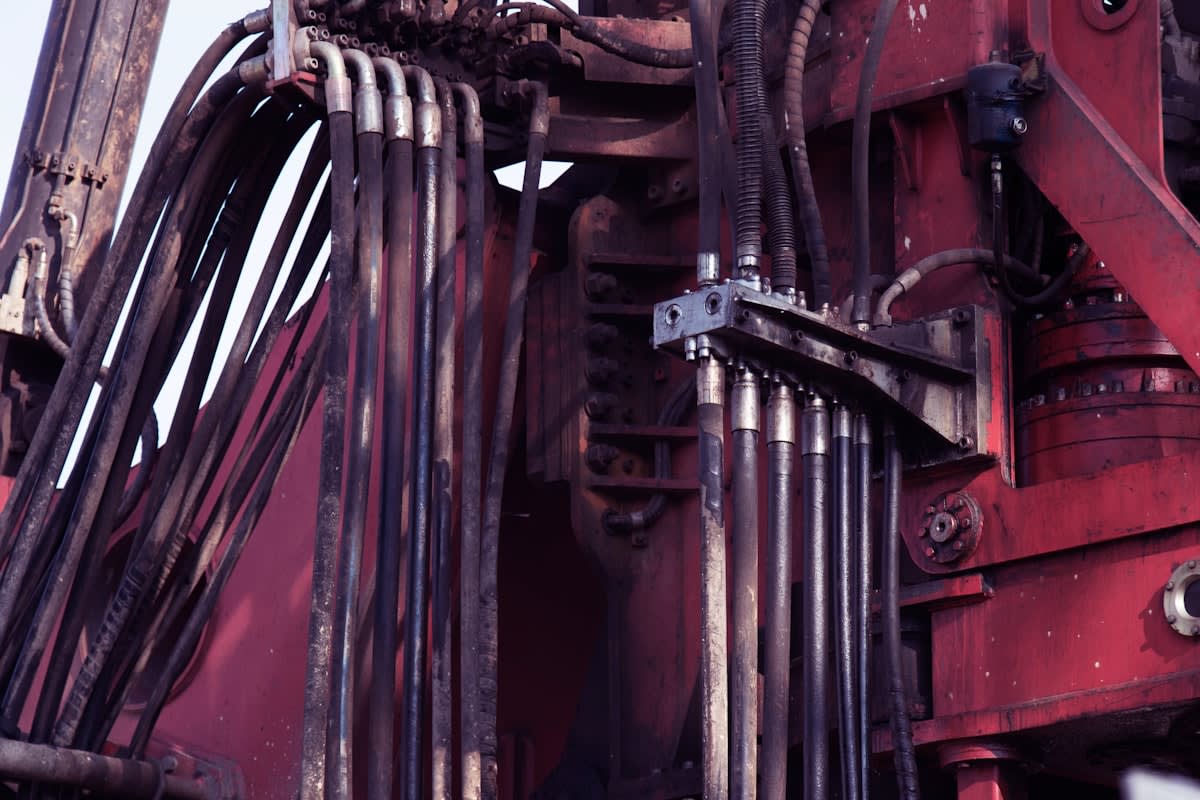
Global adoption is already manifesting in unexpected places. In France, deep geothermal is being integrated into district heating systems to decouple cities from natural gas. In the United States, the oil and gas sector is pivoting, realizing that their expertise in horizontal drilling and hydraulic fracturing is exactly what EGS needs. This is a poetic irony: the very techniques used to extract fossil fuels are now the primary tools for rendering them obsolete. The workforce transition is seamless because the skill set—managing pressure, drilling trajectories, and reservoir modeling—is identical.
The Systemic Shift: Beyond the Baseload
We must stop viewing geothermal as just another power plant. The systemic shift is toward 'thermal energy as a service.' Imagine a world where the grid is anchored by deep geothermal hubs that provide not just electricity, but industrial-grade heat for cement and steel production—sectors that cannot be easily electrified with batteries. By providing high-temperature heat directly, geothermal eliminates the efficiency loss of converting heat to electricity and back again. This is how you actually decarbonize heavy industry (Source: IRENA, 2024).
The economics are shifting rapidly. While the upfront CAPEX for a deep geothermal well is staggering, the OPEX is negligible. There is no fuel to buy, no volatile commodity market to track, and the capacity factor—the percentage of time a plant actually produces power—is often above 90%. Compare this to solar, which might hover around 25% without massive storage. When you factor in the avoided cost of grid-scale batteries, deep geothermal becomes the most cost-effective long-term hedge against energy volatility.
Does this mean we abandon wind and solar? No. It means we stop asking them to do something they aren't built for. Solar and wind are excellent for peak shaving and diurnal loads, but they are terrible for stability. Deep geothermal provides the heartbeat of the grid. It is the silent partner that allows the rest of the renewable portfolio to exist without the risk of total blackout. The race for the inner engine is not about winning a competition; it is about completing the puzzle.
Fact-Check & Accuracy Note
Key claims regarding EGS capabilities and geothermal potential are sourced from the International Energy Agency (IEA) and the U.S. Department of Energy (DOE). The discussion on supercritical fluids and 20km drilling targets is based on ongoing research from the Stanford Geothermal Program and Quaise Energy. Note that induced seismicity remains a primary area of technical uncertainty and active debate within the geological community.