
Global energy security currently rests on a precarious foundation of terrestrial mining that is as geographically concentrated as it is politically volatile. The transition to a low-carbon economy relies heavily on cobalt, nickel, and manganese—materials that are not evenly distributed across the globe. For decades, the world has accepted a regime where a handful of nations hold the keys to the battery revolution. But this concentration is a vulnerability. When a single region, such as the Democratic Republic of Congo, provides over 70% of the worlds cobalt, the entire global energy transition becomes a hostage to local instability and opaque governance.
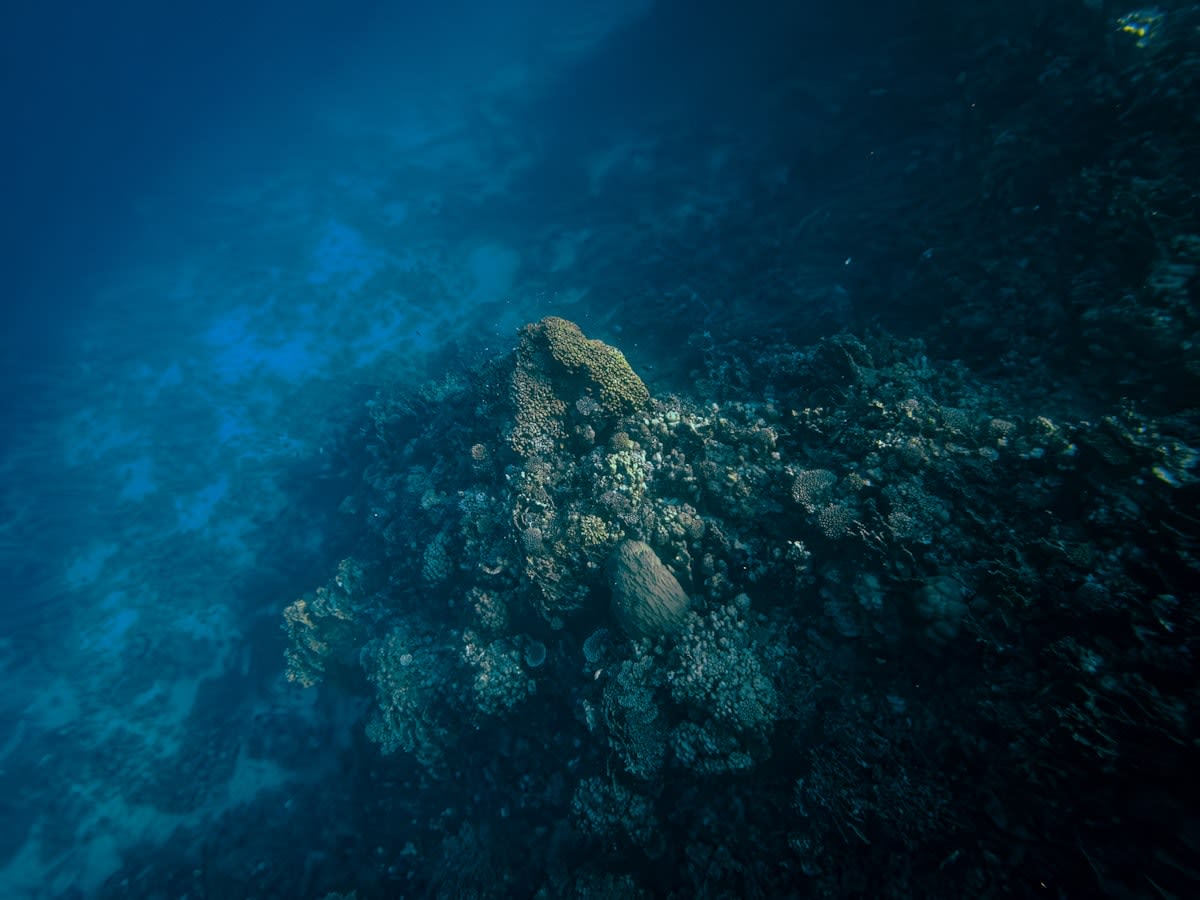
Why do we continue to prioritize the excavation of mountain ranges and the destruction of rainforests when the abyssal plains are paved with the very materials we need? The Clarion-Clipperton Zone (CCZ), a vast stretch of the Pacific Ocean between Hawaii and Mexico, contains trillions of polymetallic nodules. These potato-sized rocks are not just geological curiosities; they are high-grade ore deposits of nickel, cobalt, copper, and manganese that have spent millions of years precipitating from seawater. The sheer volume of these resources dwarfs any single terrestrial deposit, offering a potential escape from the current geopolitical bottleneck.
The Geopolitical Calculus of the Abyss
The current mineral supply chain is a masterclass in strategic fragility. China has spent two decades securing vertical integration, from the mines in Africa to the refineries in Asia, creating a choke point that threatens the industrial sovereignty of the West. Deep-sea mining represents a fundamental reconfiguration of this power dynamic. By accessing minerals in international waters regulated by the International Seabed Authority (ISA), nations can diversify their sourcing away from autocratic regimes. This is not about finding more minerals; it is about changing who controls the tap.
Consider the strategic position of small island nations like Nauru. By sponsoring mining companies, these states are transforming from peripheral players into central hubs of the energy economy. The invocation of the two-year rule by Nauru in 2021 forced the ISA to accelerate the finalization of mining regulations, signaling that the appetite for these resources is no longer theoretical. It is an aggressive play for economic autonomy that mirrors the historical scramble for resources, but this time, the frontier is four kilometers underwater.
"The obsession with terrestrial mining is a legacy of 19th-century thinking. In a 21st-century energy economy, the ocean floor is the only scale-appropriate solution for mineral security."— Industry Strategic Analyst
Does the risk of deep-sea disruption outweigh the certainty of terrestrial devastation? This is the question that policymakers are finally starting to ask with clinical precision. Terrestrial mining often involves the displacement of indigenous populations and the eradication of primary forests in the Congo Basin or the Indonesian archipelago. While the impact on the abyssal plain is unknown and potentially significant, it occurs in an environment devoid of human habitation and far from the critical biodiversity hotspots of the upper ocean.
The economic logic is equally compelling. Terrestrial ore grades are declining globally, meaning companies must move more earth to extract the same amount of metal. This increases the energy intensity and carbon footprint of the mining process itself. Polymetallic nodules, conversely, offer multiple metals in a single source. Extracting nickel, cobalt, and manganese from one nodule is far more efficient than operating three separate mines across three different continents.
| Metric | Terrestrial Mining | Deep-Sea Mining (Nodules) |
|---|---|---|
| Geopolitical Concentration | High (DRC, China, Indonesia) | Low (International Waters) |
| Ore Grade Trend | Declining | Consistently High |
| Human Rights Risk | High (Child labor, displacement) | Negligible |
| Carbon Footprint per Ton | High (Deforestation/Transport) | Moderate (Ship-based extraction) |
| Resource Diversity | Single-metal focus | Multi-metal (Ni, Co, Cu, Mn) |
This transition is not without its frictions. The legal battle within the ISA reflects a deeper tension between the precautionary principle and the urgency of the climate crisis. Some nations call for a moratorium, fearing the collapse of benthic ecosystems. However, a moratorium is essentially a bet that we can find an alternative to these minerals—or that we can tolerate the status quo of terrestrial monopolies—before the window for a viable energy transition closes.
The operational framework for deep-sea mining is moving from prototype to production. Collector vehicles, designed to glide across the seafloor and vacuum up nodules, are being tested with increasing frequency. The challenge is not the extraction itself, but the riser system that transports the material four kilometers up to the surface vessel. Once the engineering hurdles are cleared, the speed of deployment will be dictated by regulatory approval, not technical capacity.

The Sovereignty Pivot
True energy security is the ability to maintain critical infrastructure without reliance on a hostile or unstable supplier. For the European Union and the United States, the ocean floor represents a strategic reserve that bypasses the traditional trade routes and political leverage of the East. By investing in deep-sea capabilities, these regions are not just pursuing profit; they are purchasing insurance against the weaponization of mineral supplies.
We must also consider the role of the circular economy. Critics argue that recycling will eliminate the need for deep-sea mining. This is a mathematical fallacy. Even with 100% recycling efficiency, the current stock of minerals in circulation is insufficient to meet the projected demand for the 2030s and 2040s. We need a massive injection of primary materials to build the initial fleet of batteries and grids; recycling only sustains that fleet once it exists.
The Scale of the Opportunity
The Clarion-Clipperton Zone alone is estimated to contain more manganese, nickel, and cobalt than all known terrestrial reserves combined, potentially lowering the cost of EV batteries by diversifying the global supply base.
The move toward the abyss is an admission that the terrestrial model of extraction has reached its ecological and political limit. We are witnessing a shift from a land-based extractive economy to a maritime one. This transition will likely be messy, contested, and legally complex, but the alternative is a continued dependence on a fragile, concentrated supply chain that is ill-equipped for the demands of a global energy overhaul.
Ultimately, deep-sea mining is the only path toward a truly diversified mineral portfolio. By decoupling the energy transition from the volatility of terrestrial politics, the world can ensure that the shift to renewables is not traded for a new form of resource dependency. The abyss is not just a source of metal; it is the foundation of a new, more resilient global energy architecture.