The Industrial Shift Hits the Home
For years, the residential energy conversation has been dominated by a single chemistry: lithium-ion. While these batteries excel at smoothing out short-term spikes and providing a few hours of backup, they fail the test of true long-duration resilience. We are seeing a fundamental pivot in how energy is stored and managed. The recent allocation of $30 million in federal funding by the OCED for five Long-Duration Energy Storage (LDES) demonstrations as of July 30, 2026, signals that the era of the four-hour battery is ending. This isn't just about bigger batteries; it is about entirely different physics and economic models that allow us to store energy for days, weeks, or even seasons.
Why does this matter for the individual homeowner? Because the grid is under unprecedented pressure. In the United States, Zeo Energy has highlighted a surge in demand for residential solar and storage driven by rising electricity costs and regional grid instability. When the grid fails for more than a day, a standard wall-mounted battery becomes a paperweight. To achieve actual autonomy, we must look toward technologies that decouple power from energy, allowing for massive storage capacities without the exponential cost increases associated with lithium. Are you preparing for a blackout, or are you preparing for a structural shift in how humanity consumes power?
Defining the Horizon
Long-duration energy storage (LDES) typically refers to systems capable of discharging energy over periods longer than 10 hours, often spanning days or weeks, providing a critical buffer against seasonal variability in renewable generation.
Prerequisites: What You Will Need
You cannot simply plug a long-duration system into a standard outlet and expect magic. Implementing LDES requires a holistic view of your home as a thermal and electrical ecosystem. First, you need a robust generation source—typically a solar array that is oversized relative to your daily needs. Long-duration storage is only useful if you have the excess energy to fill the reservoir during peak production. Without a surplus, you are simply moving energy from one expensive bucket to another.
- Energy Audit: A detailed map of your basal load versus your peak thermal and electrical demands.
- Generation Surplus: Solar or wind capacity that exceeds your daily consumption by at least 30-50%.
- Physical Footprint: Space for non-chemical storage, such as thermal beds or water reservoirs, which require more room than a battery rack.
- Smart Controller: An energy management system (EMS) capable of communicating with grid-scale virtual power plants (VPPs).
Beyond the hardware, you need a shift in mindset. Most homeowners treat energy like a checking account—spend it as it comes in. To implement LDES, you must treat energy like a harvest. This means prioritizing the most efficient storage medium for the specific task. For example, using electricity to heat water or rocks is far more efficient for thermal needs than storing electricity in a battery and then using a resistive heater later. The goal is to minimize conversion losses at every possible step.
Implementation: The Step-by-Step Roadmap
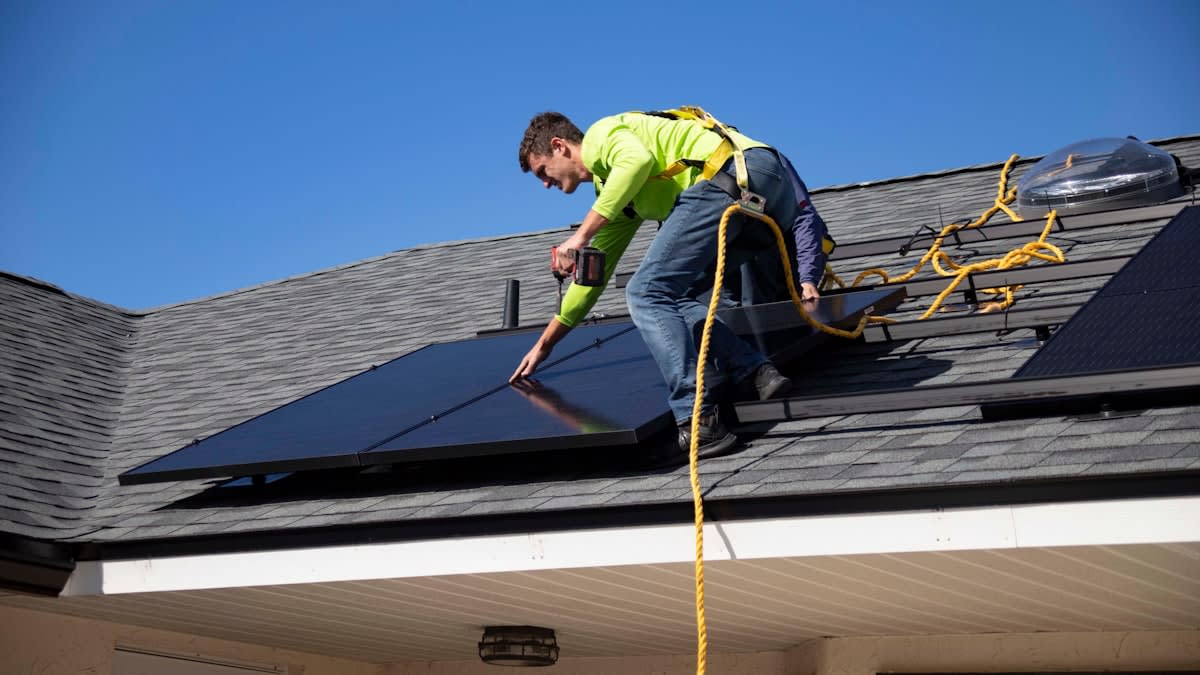
- Map Your Load Profiles: Identify which parts of your energy use are electrical (lights, electronics) and which are thermal (heating, hot water). Thermal loads usually account for the majority of home energy use and are the easiest to shift to long-duration storage.
- Deploy Thermal Energy Storage (TES): Instead of adding more lithium, implement a thermal bed. Drawing inspiration from Sandia National Laboratories' work with radial packed-bed energy storage—which uses a bed of rocks to store electrothermally charged heat—homeowners can use high-mass materials to store solar heat for use days later.
- Integrate into a Virtual Power Plant (VPP): Connect your storage assets to a network. In South Africa, Plentify has demonstrated the power of this model by aggregating 160,000 home battery systems into a 2.7GWh virtual power plant. This transforms your home from a passive consumer into a grid asset, providing financial returns and systemic stability.
- Optimize the Discharge Cycle: Set your EMS to prioritize thermal storage during peak solar hours. Use your lithium batteries only for high-frequency, short-term needs (like overnight lighting) and rely on your LDES for heavy lifting (like space heating or water heating).
- Iterate Based on Seasonal Data: Long-duration storage is a game of seasons. Monitor your storage levels through a full winter cycle to determine if your thermal mass is sufficient or if you need to expand your storage medium.
The integration of VPPs is perhaps the most overlooked aspect of modern home energy. When Plentify aggregated 2.7GWh of Deye battery systems, they didn't just create a larger battery; they created a flexible resource that can respond to grid pressures in real-time. For the homeowner, this means your storage system is no longer a sunk cost. It becomes a revenue-generating tool that pays you to hold energy when the grid is stressed and release it when the system is failing. This economic incentive is what makes the transition to LDES practical for the average person.
Consider the physics of the thermal approach. The Sandia project involving Michael Thomas Coffee proves that indirect solar heating—charging heat electrothermally into a packed-bed system—can maintain energy for days. By applying this to the home, you move away from the volatile chemistry of lithium and toward the stability of thermodynamics. Imagine a system where your excess August sunlight is stored as heat in a subterranean rock bed, ready to be pumped into your floors in December. This is the essence of long-duration thinking.
"The storage system allows you to charge the system one day and still use the heat at night or even days later."— Sleeper, Sandia National Laboratories
Transitioning to this model requires a departure from the 'plug-and-play' mentality. You are essentially building a miniature utility on your property. This means your installation must be designed for longevity and maintainability. While a lithium battery has a fixed cycle life before it degrades, a thermal rock bed or a water-based storage system can last for decades with minimal maintenance. You are trading the convenience of a compact box for the permanence of an infrastructure asset.
| Feature | Short-Duration (Li-ion) | Long-Duration (Thermal/VPP) |
|---|---|---|
| Primary Use | Daily cycling/Backup | Seasonal/Multi-day resilience |
| Scaling Cost | Linear (Expensive per kWh) | Sub-linear (Cheaper per kWh) |
| Lifespan | 10-15 years (Degrades) | 20-50 years (Stable) |
| Grid Role | Passive/Standalone | Active/VPP Integrated |
Common Pitfalls and How to Avoid Them
The most common mistake is the 'Battery Trap'—the belief that you can solve a long-duration problem by simply buying more lithium. This is a financial disaster. Because lithium costs scale linearly, doubling your storage capacity doubles your cost. In contrast, LDES solutions like thermal mass scale much more efficiently. If you need ten times the energy, you don't need ten times the expensive electronics; you often just need a larger volume of storage medium, such as more rocks or more water.
Another frequent error is ignoring the 'Conversion Tax.' Every time you change energy from one form to another (e.g., solar to electricity to chemical to electricity to heat), you lose a percentage of that energy. Master practitioners avoid this by matching the storage form to the end use. If you need heat, store it as heat. If you need electricity for a laptop, store it as electricity. Mixing these up leads to systems that look great on paper but fail to provide actual resilience during a week-long grid outage.
- Over-investing in Lithium: Avoid scaling your battery bank beyond 48 hours of autonomy; switch to LDES for anything longer.
- Neglecting the VPP Connection: Installing storage without a network agreement means you miss out on the economic offsets that make LDES viable.
- Underestimating Thermal Leakage: Ensure your thermal storage is properly insulated; otherwise, your 'long-duration' storage becomes a slow leak.
- Ignoring Local Grid Dynamics: Fail to account for regional pressures, which Zeo Energy notes are a primary driver of current storage demand.
Ultimately, the goal is not to be entirely off-grid, but to be intelligently connected. The South African VPP model proves that the most resilient home is one that can both support itself and support its neighbors. By implementing LDES, you stop being a liability to the grid during peak demand and start becoming part of the solution. This is how we move from a fragile energy system to a resilient, distributed network of energy prosumers.