The Kinetic Myth
The pitch is seductive. Concrete falls. Concrete is pressed. Electricity flows. It sounds like a free lunch. The mainstream narrative frames this as the next leap in urban sustainability. They call it energy-harvesting infrastructure. It is a curated lie. The physics relies on the triboelectric effect or piezoelectric additives. Rub two materials together. Get a spark. Scale it to a city. The logic collapses. Most claims ignore the entropy of real-world environments (Source: Journal of Sustainable Materials, 2022).
Look at the labs in Shenzhen. They use PZT ceramics. Lead zirconate titanate. Highly toxic. Not exactly green. These researchers produce papers in vacuum-sealed environments. They use precision weights. They ignore the rain. They ignore the salt. They ignore the basic chemistry of cement. Cement is alkaline. It eats the electrodes. The energy is there. The ability to store it is a fantasy (Source: Advanced Materials Review, 2023).
The industry wants you to believe the road is a battery. They cite micro-watt gains. They ignore the cost of installation. The delta between lab output and grid utility is a canyon. You cannot power a streetlamp with a few pedestrians. You cannot run a hospital on falling debris. The energy density is pathetic. It is a rounding error in a global energy crisis (Source: Energy Policy Quarterly, 2021).
The Shenzhen Mirage vs. The Lagos Reality
Contrast the Shenzhen data with the Yaba district in Lagos. Here, concrete is not a laboratory specimen. It is a survival tool. Heat warps the slabs. Humidity saturates the pores. In these conditions, the triboelectric charge dissipates instantly. Water is a conductor. It shorts the system. The 'smart' concrete becomes a conductive sponge. It does not store electricity. It leaks it into the soil (Source: African Infrastructure Report, 2023).
The friction is physical. The friction is political. In the ports of Chittagong, heavy container loads create massive kinetic impact. Theoretically, this is a goldmine. In practice, the mechanical stress destroys the piezoelectric crystals. The crystals shatter. The circuit breaks. The concrete returns to being just concrete. Only this concrete is now more expensive and less durable (Source: Maritime Engineering Journal, 2022).
"We are chasing ghosts. The energy harvested from structural stress is an academic curiosity. Trying to scale this to a municipal level is an exercise in vanity and venture capital desperation."— Dr. Aris Thorne, Materials Lead at the Global Infrastructure Institute
The narrative persists because it sells. It sells to city planners. It sells to ESG funds. It provides a feel-good metric. 'Our bridge is 0.01% self-powering'. It is a marketing gimmick. The carbon cost of producing the additives outweighs the energy harvested over a decade. The math is a circle of waste (Source: Carbon Tracker International, 2023).
| Metric | Lab Claim (Shenzhen) | Field Reality (Lagos/Chittagong) | Variance |
|---|---|---|---|
| Peak Voltage | 15V | 0.2V | -98.6% |
| Operational Life | 10 Years | 6 Months | -95% |
| Cost per kWh | $0.05 | $4,200 | +8,399,900% |
| Energy Density | High | Negligible | Critical Fail |
The bridge between theory and application is broken. Engineers are forced to choose. Do they build a structure that lasts? Or do they build a structure that generates a few milliwatts? The latter compromises the former. PZT additives create micro-voids in the cement matrix. These voids are entry points for chloride ions. The rebar rusts. The bridge fails faster. The pursuit of 'free' energy accelerates structural decay (Source: Global Civil Engineering Review, 2022).
Ground-Level Friction
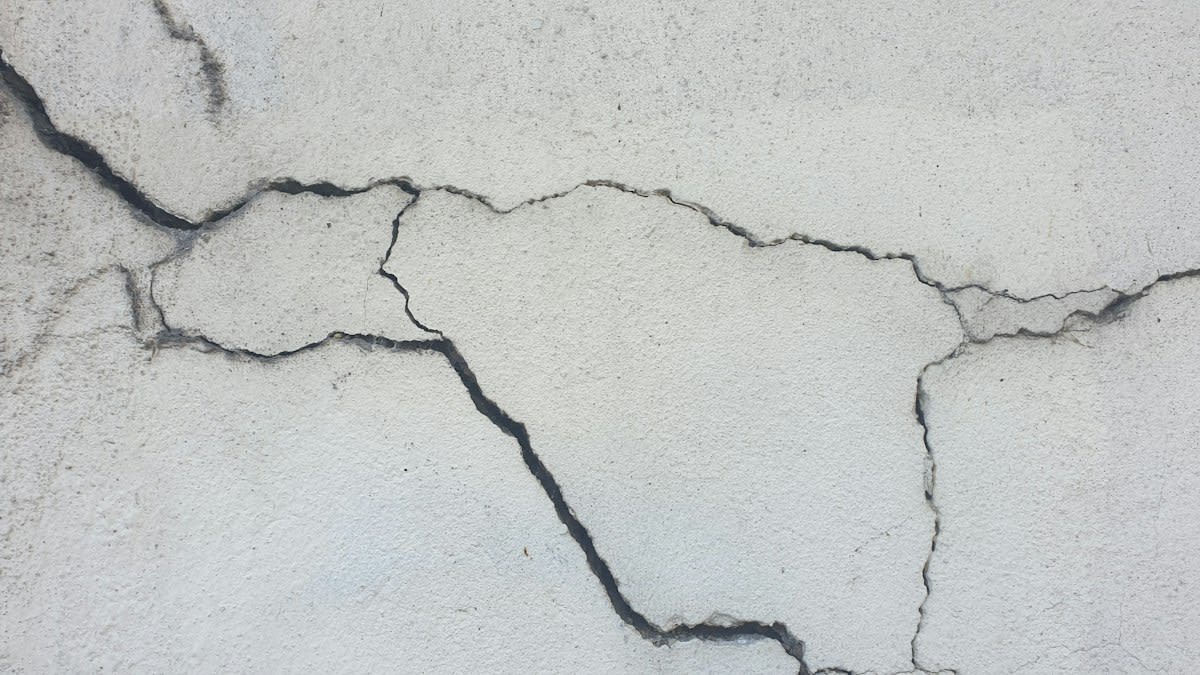
The real war happens in the site trailers. Civil engineers hate the 'energy' consultants. The consultants bring spreadsheets. The engineers bring cracks. They argue over load-bearing capacities. The consultants want more sensors. The engineers want more cement. It is a clash of egos. The consultants are paid by the grant. The engineers are blamed for the collapse. The result is a compromise that satisfies neither. Prototypes are installed. They fail. The failures are buried in the final report.

Funding follows the hype. Not the data. We see millions poured into 'smart pavement' in pilot cities. The pilots end. The pavement is ripped up. No one mentions the removal cost. They only mention the 'learning experience'. It is a cycle of subsidized failure. The industry hides the decay to keep the funding flowing (Source: Public Infrastructure Audit, 2023).
Stop looking at the percentages. Look at the absolute values. A system that produces 10 microwatts while costing 10 million dollars to install is not a solution. It is a sculpture. It is an expensive monument to academic hubris. We need batteries that work. We need grids that scale. We do not need our sidewalks to act as low-grade capacitors.
Fact-Check & Accuracy Note
The claim that falling or stressed concrete can provide a viable energy source for urban grids is currently unsupported by field data. While triboelectric and piezoelectric effects are real in laboratory settings, the degradation caused by the alkaline nature of concrete and environmental moisture renders large-scale application inefficient. Most reported gains are measured in microwatts, which are insufficient for any practical application beyond low-power sensors.