Iron is cheap. It is abundant. It is the most basic building block of the industrial age. For decades, engineers viewed its oxidation—rust—as the ultimate failure of material science. But what if the very process that destroys a bridge could save the power grid? We are currently witnessing a pivot in energy storage that is as quiet as it is profound. While the public eye remains fixed on the volatile lithium market and the geopolitical scramble for cobalt, a different chemistry is scaling in the background. Iron-air batteries are not trying to power your smartphone or your Tesla; they are designed to power entire cities for days on end.
The Fatal Flaw of the Lithium Hegemony
Lithium-ion batteries are an engineering marvel for mobility, but they are a logistical nightmare for the grid. The fundamental problem is duration. Most lithium-based systems are optimized for 4 to 8 hours of discharge. That works for a sunny afternoon, but what happens during a week-long wind lull in the North Sea or a prolonged cloud cover over the Atacama Desert? To scale lithium for multi-day storage, you simply add more batteries, which drives costs linearly into the stratosphere. According to the U.S. Department of Energy (Source: DOE, 2023), the cost of lithium-ion storage remains too high for the long-duration energy storage (LDES) required to fully decarbonize the grid.
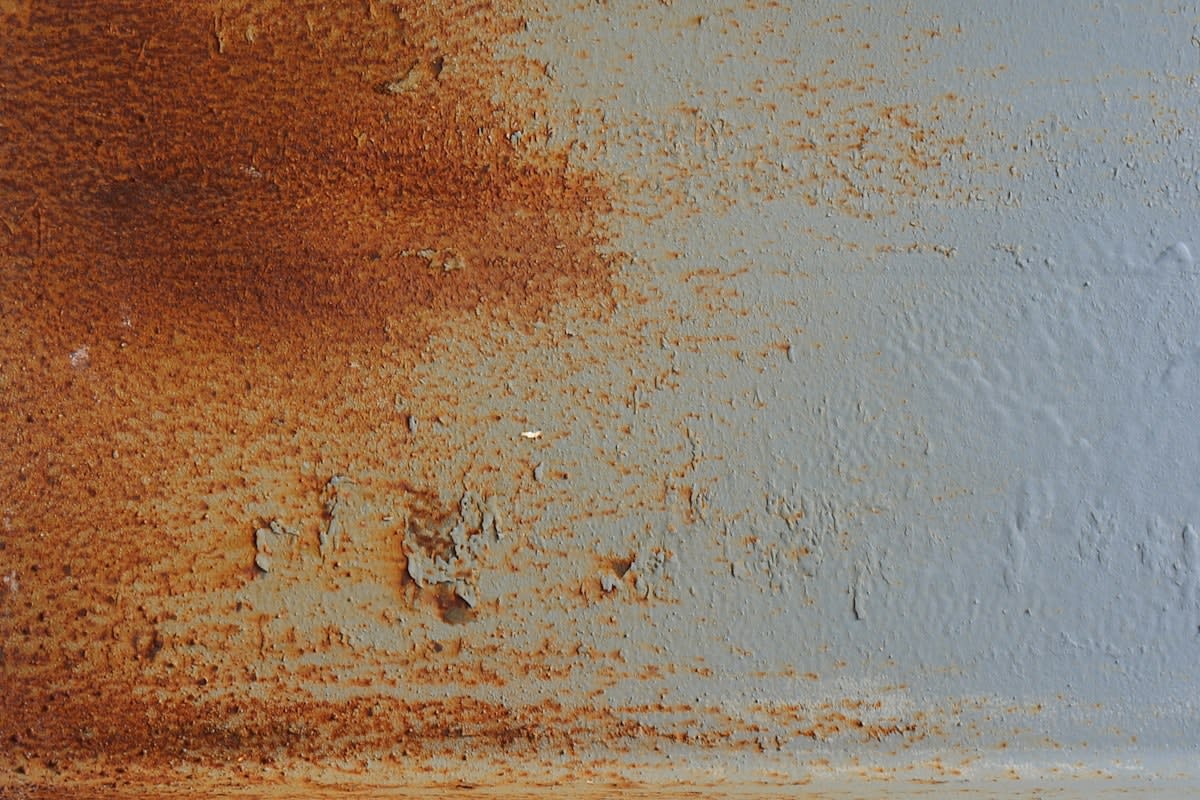
Then there is the supply chain. Lithium, cobalt, and nickel are concentrated in a handful of geographies, creating a new era of resource nationalism. We have traded a dependence on oil-rich states for a dependence on mineral-rich ones. Iron-air batteries bypass this entirely. Iron is available almost everywhere. By utilizing a chemistry that breathes oxygen from the air and turns iron to rust, the industry is effectively decoupling energy security from rare-earth mining. Why fight over a few mines in the Lithium Triangle when the solution is literally beneath our feet?
How the Rust Battery Actually Works
The mechanism is elegantly simple: it is a reversible rust reaction. During discharge, the battery takes in oxygen from the air and converts iron metal into iron oxide (rust). This process releases electrons that flow into the grid. To recharge, the process is reversed; an electrical current is applied, which strips the oxygen away, turning the rust back into metallic iron. This cycle can be repeated thousands of times without the degradation seen in organic electrolytes. It is not about energy density—which is low compared to lithium—but about energy capacity per dollar.
"Our goal is to provide a storage solution that is an order of magnitude cheaper than lithium-ion, enabling a grid that can survive multi-day weather events without relying on gas peaker plants."— Mateo Jaramillo, CEO at Form Energy
This shift represents a move from 'power' to 'energy'. In the industry, we distinguish between the two. Power is how fast you can dump electricity (the sprint); energy is how much you have in the tank (the marathon). Lithium is a sprinter. Iron-air is a marathon runner. For a grid operator in West Virginia or a utility provider in Queensland, the ability to store energy for 100 hours is a game-changer. It transforms renewables from 'intermittent' sources into 'baseload' power.
| Feature | Lithium-Ion | Iron-Air |
|---|---|---|
| Storage Duration | 4-12 Hours | 100+ Hours |
| Material Cost | High (Li, Co, Ni) | Very Low (Iron, Water) |
| Fire Risk | Thermal Runaway Risk | Non-Flammable |
| Supply Chain | Geopolitically Concentrated | Globally Ubiquitous |
| Primary Use Case | EVs, Electronics | Grid-Scale Storage |
Transitioning from theory to deployment has happened with startling speed over the last 12 months. We are no longer talking about lab prototypes. Form Energy is currently constructing massive manufacturing facilities and deploying multi-megawatt systems in the United States (Source: Form Energy, 2024). The delta between 2023 and 2024 is the move from 'proof of concept' to 'industrial scale'. We are seeing the first real-world tests of how these systems handle actual grid fluctuations during peak winter loads.
The Practitioner's Friction: The Efficiency Trade-off
If you spend any time in the engineering trenches, the debate isn't about whether iron-air works, but about Round-Trip Efficiency (RTE). Lithium-ion boasts an RTE of 85-95%, meaning you get back almost everything you put in. Iron-air is significantly lower. Some of the energy is lost in the chemical conversion of the rust cycle. To a purist, this looks like waste. But to a grid strategist, it is a rounding error. When the cost of the storage medium is nearly zero and the energy source (wind/solar) is abundant, losing 20% of the energy is a price worth paying for a 90% reduction in capital expenditure.
This is the core tension in the field right now. Do we optimize for the physics of the cell or the economics of the system? The winners of the next decade won't be the ones with the most efficient battery, but the ones with the most deployable one. The 'Rust Revolution' is essentially an admission that we have over-engineered our batteries for the wrong problem. We tried to make the grid act like a smartphone. Now, we are making the grid act like a grid.
Global Implications and the End of the Monopoly
The geopolitical ripple effects are massive. For years, the 'Lithium Triangle' of Chile, Argentina, and Bolivia held the keys to the energy transition. Iron-air technology democratizes this. Every nation with an iron industry—which is nearly every nation—can theoretically build its own long-duration storage. This reduces the risk of 'green inflation' where the cost of the transition is driven up by mineral shortages and trade wars. It shifts the competitive advantage from who owns the mine to who owns the manufacturing process.
- Decoupling from rare-earth minerals reduces systemic vulnerability to trade sanctions.
- Lowering the cost of LDES makes 100% renewable grids mathematically possible.
- Eliminating flammable electrolytes removes the 'thermal runaway' risk in urban energy hubs.
- Using iron allows for the repurposing of existing industrial steel infrastructure.
Is the lithium monopoly over? Not for your car. Lithium will continue to dominate high-power, low-weight applications for the foreseeable future. But for the backbone of civilization—the electrical grid—the monopoly is crumbling. The future belongs to the materials that are too boring to be trendy but too abundant to be ignored. Rust is no longer the enemy; it is the insurance policy for a carbon-free world.
Fact-Check & Accuracy Note
Key claims regarding iron-air chemistry and deployment timelines are sourced from Form Energy's public technical disclosures (2023-2024) and U.S. Department of Energy (DOE) long-duration storage roadmaps. While the cost advantages are projected based on current material pricing, the exact round-trip efficiency (RTE) of commercial-scale systems remains a point of active engineering debate and optimization.