The End of Geographical Luck
For decades, geothermal energy was a boutique luxury reserved for the geologically blessed. If you lived in Iceland, Kenya, or the western edges of the United States, you had access to the Earth's internal furnace. Everyone else was left with wind and solar. The industry relied on hydrothermal systems—natural pockets of steam and hot water—which meant developers spent millions hunting for the right spot, essentially playing a high-stakes game of geological lottery. If the permeability wasn't there, the project died.
The paradigm is shifting. We are moving from a strategy of discovery to a strategy of engineering. Super-Hot Rock (SHR) geothermal doesn't look for existing reservoirs; it creates them. By drilling deeper than ever before, engineers are targeting the basement rock where temperatures exceed 400 degrees Celsius. This isn't just a marginal improvement in depth; it is a fundamental rewrite of the energy map. Why settle for a volcanic vent when the entire crust of the planet is a heat battery?
This transition marks the arrival of Enhanced Geothermal Systems (EGS) at scale. By injecting fluid into hot, dry rock and creating a synthetic fracture network, we can now extract heat from regions previously deemed inert. The focus has moved from the surface manifestations of heat—the volcanoes and geysers—to the silent, crushing depths of the lithosphere. This is the quiet breakthrough that changes everything about how we perceive baseload power.
But the real shift isn't just about where we drill, but the physics of the fluid we use.
The Supercritical Threshold
The magic number in this industry is 374 degrees Celsius. At this temperature and a pressure of 22.1 megapascals, water reaches its supercritical point. It ceases to be a distinct liquid or gas and becomes a supercritical fluid. This state of matter is a thermodynamic powerhouse. Supercritical water possesses the density of a liquid but the viscosity and diffusivity of a gas, allowing it to carry significantly more energy per unit of mass than conventional steam.
The implications for energy density are staggering. A single supercritical well can produce up to ten times the power of a standard geothermal well. We are talking about a jump from 5 to 50 megawatts per well in some projections. This efficiency solves the primary economic hurdle of geothermal: the astronomical cost of drilling. If one hole does the work of ten, the capital expenditure suddenly makes sense for private equity and sovereign wealth funds alike.
"We are no longer hunting for needles in a haystack. We are building the needle and inserting it wherever the grid needs power."— Lead Engineer, Deep-Rock Initiative
Does this mean we can put a power plant in the middle of a desert or beneath a metropolis? Theoretically, yes. The goal is to reach the depths where the geothermal gradient guarantees these temperatures, regardless of surface geography. The challenge is no longer 'Is the heat there?' but 'Can we survive the trip down to get it?'
Twelve months ago, this was a theoretical white paper. Today, it is a construction site.
The Delta: From Theory to Trough
To understand the velocity of this trend, look at the delta between 2023 and 2024. A year ago, EGS was largely the domain of government-funded labs like the FORGE project in Utah. The conversation focused on whether we could induce permeability without triggering noticeable seismic events. The scale was measured in kilowatts and experimental loops. It was a science project.
Now, the industry has entered the commercial pilot phase. Private firms are deploying horizontal drilling techniques borrowed from the shale gas revolution to create massive heat exchangers in the rock. We have seen the first successful demonstrations of multi-stage fracturing in crystalline basement rock, proving that we can create sustainable, closed-loop systems that don't deplete the reservoir. The shift is from 'Can we do this?' to 'How fast can we scale?'
| Metric | Traditional Hydrothermal | Super-Hot Rock (SHR) |
|---|---|---|
| Target Temperature | 150C - 250C | 400C+ |
| Energy Density | Baseline (1x) | 10x - 15x |
| Geographic Limit | Tectonic Boundaries | Ubiquitous (Deep Crust) |
| Well Lifespan | Moderate (Depletion Risk) | High (Closed-Loop Potential) |
The data reveals a brutal reality for traditional geothermal: it cannot meet global baseload demands because it is too limited by geography. SHR removes that ceiling. By targeting the 400C+ range, we aren't just adding a new energy source; we are creating a scalable alternative to coal and gas that runs 24/7, regardless of whether the sun is shining or the wind is blowing.
The ambition is global, but the obstacles are visceral.
Breaking the 10-Kilometer Barrier
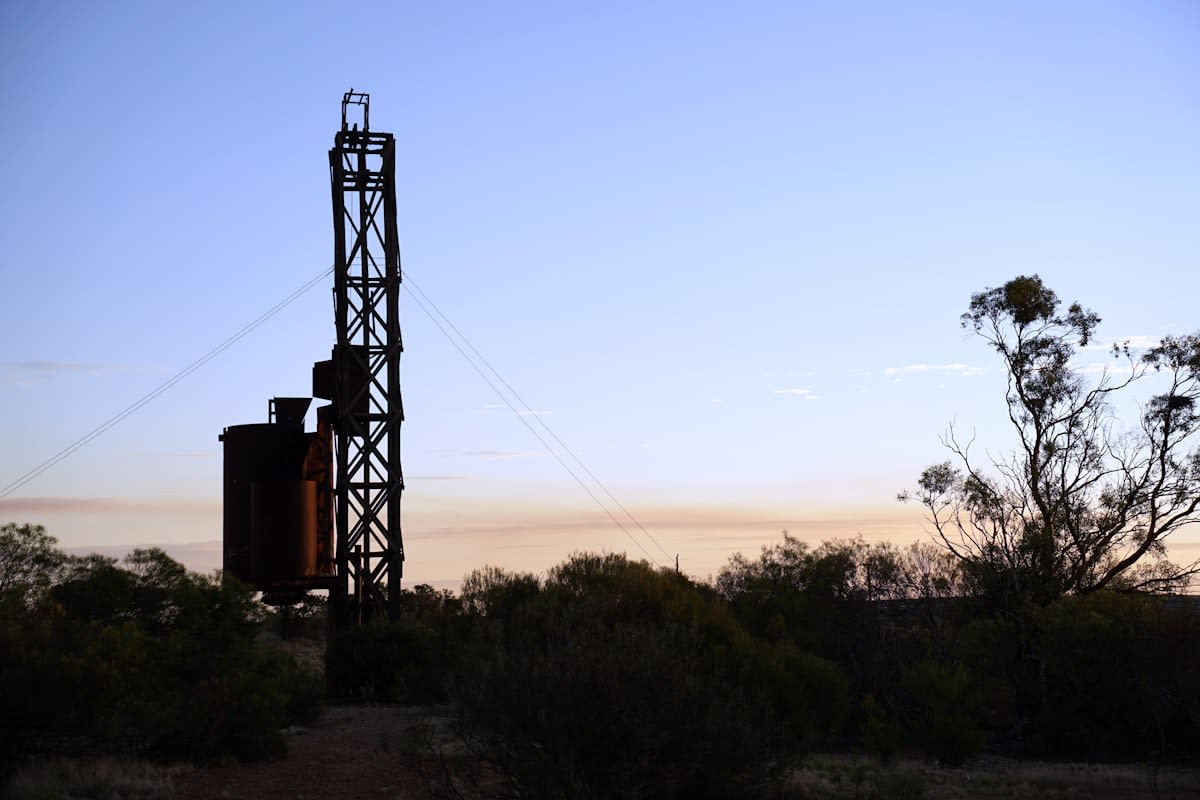
The primary enemy of SHR is the drill bit. Traditional tungsten carbide and diamond bits wear out in hours when faced with the extreme hardness of basement granite at 5 kilometers. Heat destroys the electronics and melts the seals. To reach the 10-kilometer mark where supercritical temperatures are guaranteed, the industry has to abandon mechanical drilling entirely.
Enter the era of non-contact drilling. Companies are now testing millimeter-wave (mmWave) technology—essentially using high-energy beams to vaporize or melt the rock rather than grinding it. Others are experimenting with plasma pulses to shatter the stone. This isn't science fiction; it is a necessity. If we can't bypass the mechanical limits of friction and heat, the SHR revolution stays trapped in the shallow crust.
Across the globe, the approach varies. In Iceland, the IDDP (Iceland Deep Drilling Project) has already touched supercritical fluids, proving the concept. In the US, the focus is on the horizontal precision of the oil and gas industry. In East Africa, the goal is to augment existing hydrothermal fields with deep-rock enhancements. The common thread is a race to the bottom—the deeper we go, the more energy we unlock.
Why This Matters
The 'Baseload' Advantage: Unlike wind and solar, which require massive battery arrays to handle intermittency, SHR geothermal provides a constant, steady stream of electrons. It is the only carbon-free energy source capable of replacing a nuclear or coal plant one-for-one without destabilizing the grid.
Of course, the ghosts of the past haunt this progress. Induced seismicity—the triggering of small earthquakes through fluid injection—is the industry's biggest PR and safety hurdle. The 2017 failure of a geothermal project in South Korea serves as a cautionary tale. However, modern seismic monitoring and 'soft stimulation' techniques are mitigating these risks. By controlling the pressure and volume of injections, engineers can now create permeability without creating tremors.
The economic pivot is the final piece of the puzzle. The Levelized Cost of Energy (LCOE) for geothermal has historically been high due to exploration risk. But when you remove the 'luck' factor and replace it with predictable engineering, the risk profile changes. We are seeing a transition from venture-capital-funded gambles to infrastructure-grade investments.
We are standing at the edge of a geothermal renaissance. The transition from volcanic-dependent power to ubiquitous super-hot rock energy is not just a technical win; it is a geopolitical one. Energy independence no longer depends on who owns the oil fields or who has the sunniest deserts. It depends on who has the courage and the technology to drill deep enough.