The End of the Hydrocarbon Monopoly
For a century, global power flowed through the pipelines and tankers of the oil era. Sovereignty was defined by the ability to secure the Strait of Hormuz or manage the volatility of OPEC. Today, that map is being incinerated. We are witnessing a fundamental transition from a fuel-intensive energy system to a material-intensive one. While oil is burned and gone, minerals like lithium, cobalt, and neodymium are the permanent infrastructure of the new economy. This shift changes the nature of strategic vulnerability from a recurring flow problem to a foundational stock problem.
Why does this matter now? In the last twelve months, the conversation has shifted from a general fear of scarcity to a precise calculation of processing capacity. A year ago, the world focused on where the minerals were located in the ground. Today, the focus is on where the chemicals are refined. It is one thing to dig a hole in the ground in Australia or Chile; it is quite another to turn that raw ore into battery-grade lithium hydroxide. This distinction is the new frontline of global economic competition.
The Material Multiplier
The mineral-intensity of an electric car is roughly six times higher than that of a conventional internal combustion engine vehicle. This isn't a simple swap of energy sources; it is a total reconfiguration of the global supply chain.
This transition creates a paradox of abundance. The Earth has enough lithium and cobalt to power the transition, but the industrial capacity to process these materials is dangerously concentrated. We are moving from a world of 'energy security' to 'material security.' The winners of this era will not be those who simply own the mines, but those who master the chemistry of the refinery. This is the pivot that is redrawing the map of global power.
But the map is shifting faster than the mines can be dug, and the bottleneck is moving upstream.
The Processing Bottleneck: Where Power Actually Resides
Raw ore is a commodity; refined material is a strategic asset. China recognized this distinction decades ago, investing heavily in the mid-stream processing of rare earth elements (REEs) and battery minerals. While the US and Europe focused on high-tech end-products, the East secured the chemistry. Currently, China controls approximately 60% to 90% of the global refining capacity for several critical minerals. This creates a choke point that is far more potent than any maritime strait.
| Mineral | Primary Extraction Region | Primary Processing Control | Strategic Role |
|---|---|---|---|
| Lithium | Australia, Chile | China (~65%) | Battery Anodes |
| Cobalt | DR Congo | China (~75%) | Battery Stability |
| Rare Earths | China, USA | China (~85%) | Permanent Magnets |
| Graphite | China, Mozambique | China (~90%) | Battery Anodes |
Does this mean the rest of the world is locked out? Not necessarily. The last six months have seen an explosion of 'mid-stream' investment in North America and the EU. The US Inflation Reduction Act is a prime example, offering massive tax credits for minerals processed within the US or by free-trade partners. This is a deliberate attempt to break the processing monopoly by subsidizing the construction of domestic refineries. The goal is to decouple the supply of raw materials from the monopoly of the refiner.
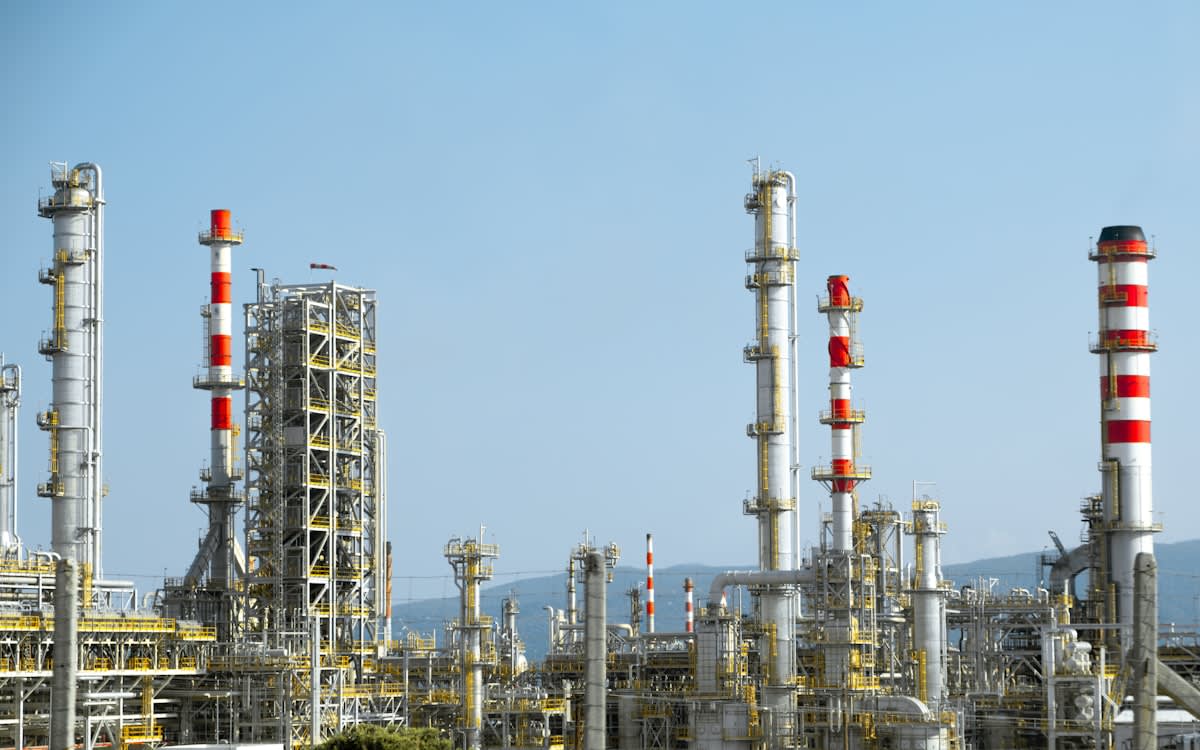
This race to build refineries is a high-stakes game of industrial chicken. Building a refinery takes years and billions in capital, but the technology is evolving rapidly. If a country invests in today's lithium processing technology and a new, more efficient method emerges in two years, those assets become stranded. The risk is no longer just geopolitical; it is technological. The pivot is as much about R&D as it is about diplomacy.
While the industrial giants clash over refineries, a new class of 'resource sovereigns' is emerging in the Global South.
The Rise of the New Resource Sovereigns
The Democratic Republic of Congo (DRC) provides a stark case study. Holding roughly 70% of the world's cobalt, the DRC is no longer a passive observer in the energy transition. We are seeing a surge in 'resource nationalism,' where governments demand more than just royalties. They want the value-add to happen on their soil. Indonesia's ban on raw nickel exports is the blueprint. By forcing companies to build smelters locally, Indonesia transformed itself from a raw material exporter into a critical node in the global battery supply chain.
"The era of simply extracting wealth from the ground and shipping it overseas is over. The new mandate for resource-rich nations is value-addition or no access."— Strategic Analyst, Global Resource Forum
This shift empowers nations that were previously marginalized in the oil-centric world. Chile and Australia are leveraging their lithium reserves to negotiate better trade terms and technology transfers. This isn't about creating a new 'mineral OPEC,' although the temptation exists. Instead, it is about industrialization. These nations are using their geological luck to force a leapfrog in their own domestic industrial capabilities.
However, this path is fraught with volatility. The price of lithium, for instance, saw a violent correction in the last year, dropping significantly from its 2022 peaks. This volatility makes long-term infrastructure investment risky. When prices crash, the incentive to build local refineries vanishes, leaving resource-rich nations back at square one. The challenge for these new sovereigns is to manage price cycles while maintaining their push for industrialization.
As the Global South asserts its power, the Global North is pivoting from 'de-risking' to a strategy of 'friend-shoring'.
Resilience Through Diversification
The strategic response to the mineral pivot has evolved rapidly. Twelve months ago, the primary goal was 'de-risking'—simply trying to reduce the percentage of materials coming from a single source. Today, the strategy is 'friend-shoring.' This involves building integrated supply chains among trusted political allies. The Minerals Security Partnership (MSP) is the institutional manifestation of this trend, coordinating investment to ensure that the minerals of the future are not used as geopolitical leverage.
- Circular Economy Integration: Scaling battery recycling to reduce the need for virgin mining by 2035.
- Material Substitution: Investing in sodium-ion batteries to reduce dependence on lithium and cobalt.
- Deep-Sea Mining Exploration: Exploring the Clarion-Clipperton Zone for polymetallic nodules.
- Direct Lithium Extraction (DLE): Implementing new technologies to extract lithium from brine faster and with less water.
Recycling is the ultimate hedge. If the world can master the circular economy, the geopolitical power of the mine owner diminishes. We are seeing the first industrial-scale recycling plants emerge in Europe and North America, designed to recover 95% of the cobalt and nickel from old EV batteries. This transforms the 'choke point' from a geological location to an urban one—the city becomes the mine of the future.
Projected Demand Growth for Critical Minerals (2023-2030)
Executive Insight
+18.4%
YTD Growth
The transition is not without its friction. The rush to secure minerals often clashes with environmental and social governance (ESG) standards. The tension between the 'green' goal of the energy transition and the 'brown' reality of mining is palpable. However, the emerging trend is toward 'responsible sourcing,' where blockchain and digital passports are used to track a mineral's journey from a Congolese mine to a German car factory. Resilience is being built not just through volume, but through transparency.
The Final Analysis: A New Equilibrium
We are not heading toward a new era of conflict, but toward a new era of interdependence. The oil era was characterized by a few superpowers controlling the flow of a single commodity. The mineral era is more fragmented, more complex, and fundamentally more diverse. Power is now distributed across those who extract, those who refine, and those who recycle. This diffusion of power creates a more resilient global system, provided that the transition is managed through partnership rather than coercion.
The 'Great Mineral Pivot' is more than a shift in supply chains; it is a shift in the philosophy of power. The ability to adapt, to innovate in chemistry, and to build equitable partnerships with the Global South will define the next century. The map has been redrawn. The old choke points are fading, and the new ones are being built in the laboratories and refineries of a world that has finally realized that the future is not liquid, but solid.