The End of the Concrete Cathedral
For half a century, nuclear power was defined by the mega-project. We built cathedrals of concrete and steel, pouring tens of billions of dollars into single points of failure that took a decade or more to commission. These monolithic structures demanded a centralized grid—a rigid, fragile network that funneled power from one massive source to millions of distant users. It was an architecture of efficiency, but it lacked agility. One technical glitch or a single security breach could plunge an entire province into darkness. The model is now breaking.
Enter the Small Modular Reactor (SMR). These are not just smaller versions of the old giants; they represent a fundamental shift in philosophy. By capping capacity at roughly 300 MWe per module, these reactors move the primary complexity from the construction site to the factory floor. Instead of managing a chaotic outdoor build subject to weather and local labor whims, components are precision-engineered in controlled environments and shipped via rail or barge. The result is a plug-and-play energy source that can be scaled upward as demand grows, rather than betting the house on a single, massive installation.
What has changed in the last twelve months? The conversation has shifted from theoretical viability to contractual reality. A year ago, SMRs were largely treated as a promising white paper exercise, a 'someday' technology for a decarbonized future. Today, we are seeing the 'Delta' in real-time: a surge in binding agreements and regulatory breakthroughs. Governments are no longer asking if SMRs work; they are arguing over who gets the first production slots from the factories. The urgency is driven by a realization that the existing grid cannot handle the volatile load of renewables without a steady, carbon-free baseline.
The Core Shift
Modularization is the 'Tesla-fication' of nuclear energy. By treating a reactor as a product rather than a project, the industry is attempting to move down the cost curve through repetitive manufacturing rather than bespoke engineering.
A Global Map of Decentralization
The momentum is not confined to any single border. In East Asia, China has already pushed the envelope with the deployment of high-temperature gas-cooled reactors, proving that the modular approach can move from blueprint to electrons faster than anywhere else. They aren't just building power plants; they are building a blueprint for energy independence that bypasses the need for massive grid expansions. Why build a thousand miles of high-voltage lines when you can place the power source directly next to the industrial park?
Across the Atlantic, Poland and other Central European nations are eyeing SMRs as a strategic escape hatch from their reliance on imported fossil fuels. For these countries, the modular approach mitigates the financial risk that previously made nuclear power a political third rail. Instead of a 20-year gamble on a giant plant, they can deploy units incrementally. This allows for a phased transition where the revenue from the first module helps fund the construction of the second.
North America is witnessing a similar pivot, particularly in Canada, where SMRs are being positioned as the heartbeat of remote industrial hubs. In the frozen north, where extending the central grid is economically impossible, modular reactors offer a lifeline. They provide not just electricity, but high-grade industrial heat for mining and hydrogen production. This is the true 'grid breakaway'—the creation of autonomous energy islands that can operate independently of a national network.
"We are moving from an era of energy dependence on a fragile center to an era of energy sovereignty at the edge. The SMR is the tool that makes this possible."— Global Energy Strategist
Does this mean the central grid is dead? Not entirely, but its role is changing. It is evolving from a mandatory lifeline into a backup synchronization layer. As more industrial clusters adopt SMR-powered microgrids, the systemic risk of a total blackout diminishes. If one node fails, the others remain powered. This is resilience by design, a stark contrast to the 'all-or-nothing' nature of 20th-century power distribution.
| Feature | Traditional Nuclear | Small Modular Reactors (SMR) |
|---|---|---|
| Construction Site | Bespoke / On-site | Factory-assembled |
| Capital Risk | Extreme (Billions upfront) | Manageable (Incremental) |
| Deployment Time | 10-15 Years | 3-5 Years |
| Grid Requirement | High-Voltage Centralized | Distributed / Microgrid capable |
| Capacity | 1,000+ MWe | Under 300 MWe |
The Economics of the Assembly Line
The financial logic here is simple: learning by doing. In traditional nuclear, every plant is essentially a prototype. Engineers encounter the same problems over and over, solving them on-site with expensive, improvised fixes. SMRs flip this script. When you build the 50th reactor in a factory, you aren't guessing; you are executing a perfected process. This transition from 'project' to 'product' is where the real cost collapse happens.
Industry data suggests that the 'Nth-of-a-kind' cost reductions could be staggering. While the first few units are expensive, the scaling effect of factory production is expected to drive down capital expenditures by 20% to 40% over the next decade. This makes nuclear power competitive not just against coal or gas, but against the combined cost of wind and massive battery storage arrays.
Projected SMR Deployment Growth (2024-2035)
Executive Insight
+18.4%
YTD Growth
But the economic win isn't just about the cost of the reactor. It is about the cost of the infrastructure. Traditional plants require massive cooling water sources and colossal transmission lines. SMRs, particularly those using gas or molten salt cooling, can be placed in arid regions or deep inland. This eliminates the multi-billion dollar price tag associated with grid expansion, allowing power to be generated exactly where it is consumed.
Is the regulatory environment keeping pace? This is the primary bottleneck. Most nuclear regulations were written for the giants. Approving a factory-built module requires a shift in how safety is certified. Instead of certifying the site, regulators must certify the design. We are seeing the first cracks in this old wall, with agencies in the US and Canada beginning to streamline the approval process for standardized designs.
Powering the Unreachable
The most provocative application of this technology is the complete decoupling from the national grid. Imagine a data center, a desalination plant, or a steel mill with its own dedicated SMR. This creates a symbiotic relationship where the industrial site is no longer a burden on the public grid but a self-sufficient entity. In some cases, these sites could even feed excess power back into the grid during peak demand, turning industrial consumers into energy providers.
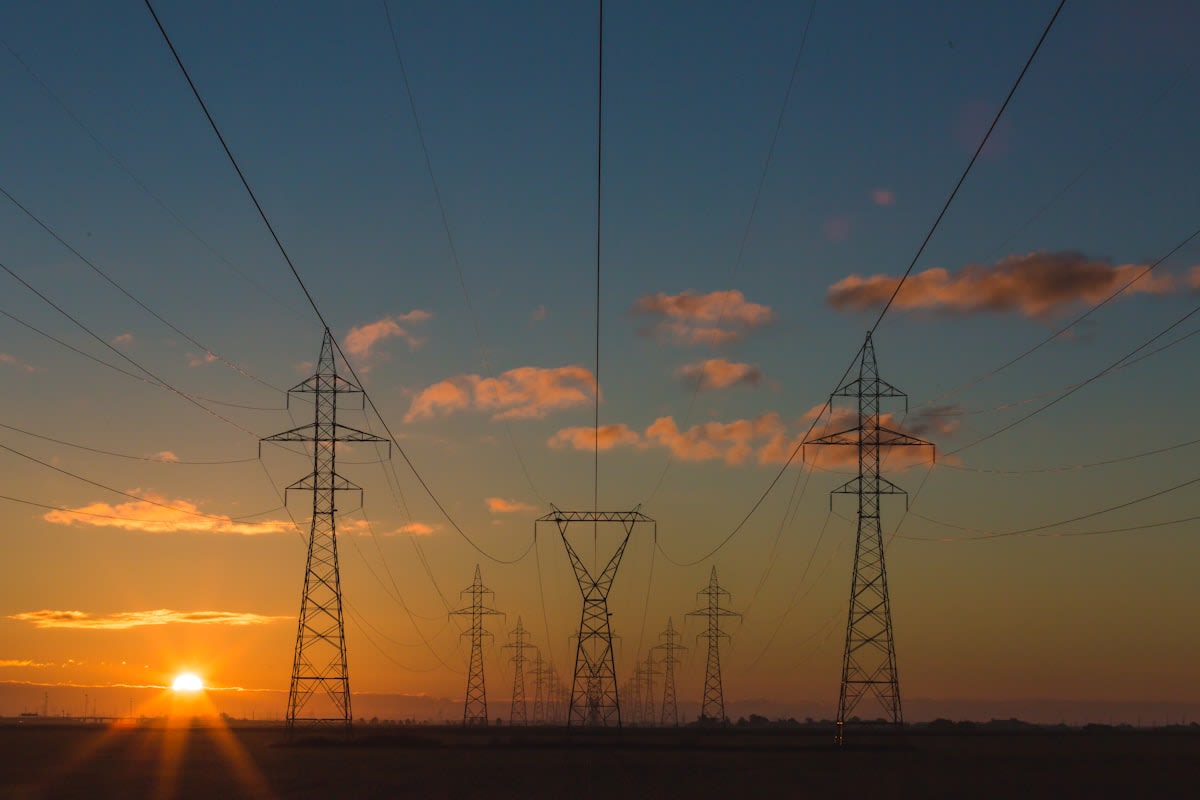
This autonomy is a critical adaptation for a world facing more frequent climate-driven grid failures. When a hurricane or wildfire knocks out a centralized transmission line, a city powered by a cluster of SMRs doesn't go dark. The localized nature of the power source means that the distance between generation and consumption is measured in meters, not miles. The vulnerability of the long-distance wire is simply engineered out of the system.
We are witnessing the birth of the energy archipelago—a series of powerful, independent nodes linked by a thin, supporting web. This is the opposite of the 20th-century hub-and-spoke model. It is a redundant, organic system that mirrors the internet's packet-switching architecture. If one node is compromised, the system reroutes. If one node needs an upgrade, it is swapped out for a new module without interrupting the others.
The transition will not happen overnight, but the trajectory is clear. The era of the monolithic power plant was a product of a different age—an age of predictability and massive state-led infrastructure. Today's world demands agility, scalability, and resilience. By shrinking the reactor and scaling the factory, we are not just changing how we make electricity; we are changing the very structure of modern civilization's life-support system.