
The August Pivot: From Load to Asset
For years, the narrative surrounding electric vehicles (EVs) focused on the burden they placed on the grid. We asked if the wires could handle the load and if the transformers would blow during the evening rush. That conversation is officially dead. As we move through August 2026, the industry has pivoted toward a far more lucrative reality: the Grid Flip. We are no longer looking at EVs as passive energy consumers, but as active, distributed power plants capable of stabilizing entire cities. Why settle for a car that just takes power when you can own a piece of critical infrastructure that sells it back?
The scale of this shift is becoming tangible. General Motors has recently highlighted a scenario where 250,000 V2G-capable EVs could feed the grid, provided the owners receive appropriate compensation. This isn't just a theoretical exercise in sustainability; it is a hard-nosed economic play. In 14 different U.S. electricity markets, a single V2G-capable vehicle could be worth between $680 and $2,750 per year. This transforms the EV from a depreciating asset into a revenue stream, fundamentally altering the total cost of ownership calculations for the average driver.
The Economic Trigger
The financial incentive is the primary catalyst. When a car can pay for its own insurance or monthly financing through grid services, adoption curves accelerate beyond what any government subsidy could achieve.
But the flip isn't just about the money in the driver's pocket; it is about the survival of the grid itself. The integration of volatile renewables like wind and solar requires massive amounts of flexible storage to prevent crashes. By leveraging the millions of batteries already sitting in driveways, utilities can create a buffer that absorbs excess energy during the day and injects it back during peak demand. This is the essence of the energy transition: moving from a rigid, centralized system to a fluid, distributed one.
The Technical Engine: Bidirectional Flow and Grid Stability
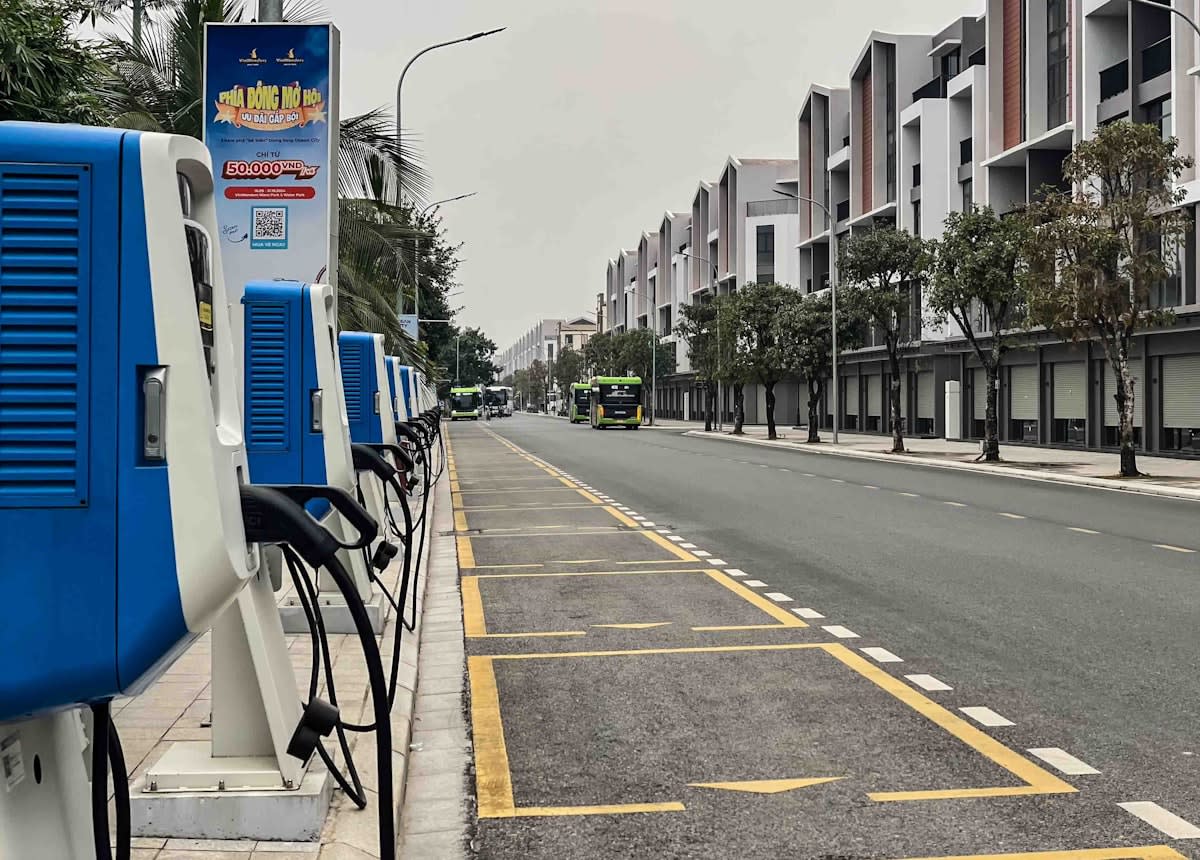
To understand how this works, we have to look past the plug. Bidirectional charging is the linchpin. It enables energy to flow both ways—from the grid to the battery and from the battery back to the building or the wider network. Companies like Compleo Charging are emphasizing that this tech does more than just move kilowatt-hours. It provides reactive power supply, which is essential for stabilizing the AC grid. By controlling this flow, V2G systems can correct voltage fluctuations in real-time, preventing the kind of instability that leads to brownouts.
Then there is the concept of redispatch. Distribution System Operators (DSOs) and Transmission System Operators (TSOs) use redispatch as a critical tool to manage congestion or overload. When a specific part of the grid is overwhelmed, V2G-enabled fleets can be triggered to discharge, easing the pressure on the physical infrastructure. This effectively turns a fleet of cars into a virtual shock absorber for the city's electricity, reducing the need for expensive and disruptive hardware upgrades to the physical wires.
However, this precision requires a level of coordination that the industry is still perfecting. As noted in recent research from MDPI, uncoordinated charging and discharging can actually worsen the problem, leading to increased voltage deviation and phase imbalance. The difference between a grid-saver and a grid-breaker comes down to the control settings and the reliability of the communication between the vehicle and the operator. We are moving from simple chargers to sophisticated energy management systems.
| Function | Traditional EV Charging | V2G Bidirectional Charging |
|---|---|---|
| Energy Flow | One-way (Grid to Car) | Two-way (Grid to Car & Car to Grid) |
| Grid Impact | Increases Peak Demand | Reduces Peak Demand via Discharge |
| Owner Value | Cost Center (Electricity Bill) | Revenue Center (Grid Compensation) |
| Grid Role | Passive Load | Active Stability Support (Reactive Power) |
This shift in functionality is bridging the gap between mobility and energy. The car is no longer just a tool for transportation; it is a node in a larger, intelligent network. This convergence allows for a more efficient consumption of self-generated solar power in homes and businesses, ensuring that not a single watt of green energy is wasted.
Global Perspectives: From China's Arbitrage to Bangladesh's DERs
The V2G revolution is not a Western phenomenon; it is a global scramble for energy resilience. In China, the focus has shifted toward range optimization and energy arbitrage. Users are increasingly purchasing electricity during off-peak periods when it is cheap and discharging it back into the grid during peak hours to capture a profit. This creates a fascinating tension: while V2G provides income, it also accelerates battery degradation. The cost of using a BEV battery as a storage tool must be weighed against the arbitrage revenue.
Interestingly, data suggests that when V2G benefits are high, users actually prefer vehicles with longer ranges. This isn't necessarily because they are driving further, but because a larger battery provides more capacity for grid interaction, thereby increasing potential earnings. The battery is being viewed less as a fuel tank and more as a financial portfolio.
Meanwhile, in South Asia, the landscape is evolving through Distributed Energy Resources (DER). In Bangladesh, the sector is taking shape driven by industrial rooftop solar. While not exclusively V2G, this movement toward decentralized power mirrors the V2G philosophy. By integrating industrial solar with storage and smart management, these regions are leapfrogging traditional centralized grid models in favor of a more resilient, fragmented architecture.
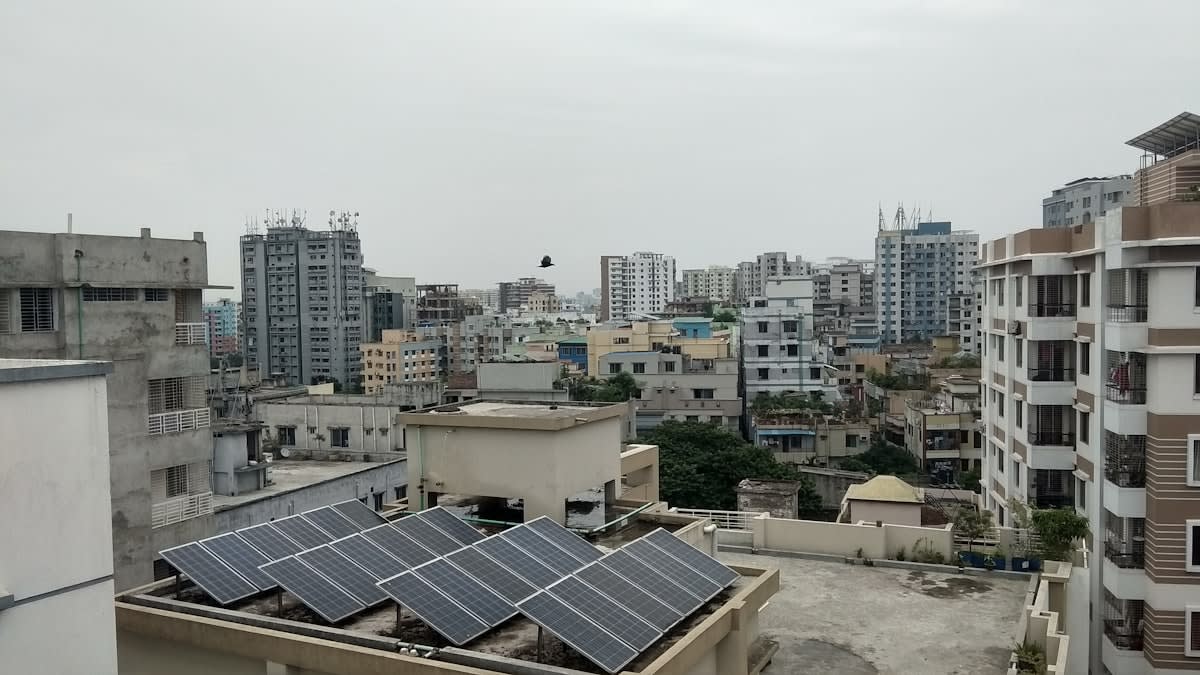
These diverse regional approaches highlight a universal truth: the era of the monolithic power plant is ending. Whether it is a fleet of GMs in the US, a network of range-optimized BEVs in China, or solar-powered factories in Bangladesh, the goal is the same: localized control and maximized efficiency.
The Virtual Power Plant (VPP) and the Scalability Hurdle
The ultimate evolution of this tech is the Virtual Power Plant (VPP). By aggregating thousands of EVs into a single entity, a VPP can support renewable integration and reduce the curtailment of wind and solar energy. When the wind blows too hard at 3 AM, a VPP can signal thousands of cars to charge simultaneously, soaking up the excess. When the sun sets and demand spikes, the VPP breathes that energy back into the system.
But scalability is where the dream meets the dirt. A pilot project with one vehicle and one charger is a far cry from a cross-brand ecosystem. For VPPs to work, we need total interoperability. A Ford, a Tesla, and a BYD must all be able to communicate with the same grid operator using the same protocols. Without this, we end up with fragmented silos of energy that cannot effectively balance the grid.
There are also locational constraints to consider. Discharging power from a congested or carbon-intensive part of the grid provides far less value than discharging in a region where the alternative is firing up a peaking gas plant. The value of V2G is not uniform; it is highly dependent on where the car is parked and the marginal emissions of that specific node in the network.
"Pilot success with one vehicle–EVSE pair is insufficient evidence of cross-brand scalability. The real test is field interoperability across the entire automotive spectrum."— MDPI Research Analysis
As we move from pilot demonstrations to standard implementation, the focus is shifting toward cybersecurity and response accuracy. When your car becomes a part of the national energy infrastructure, it also becomes a potential attack vector. Ensuring that a VPP cannot be weaponized to crash the grid is now as important as the chemistry of the battery itself.
The Horizon: Resilience over Crisis
We have spent a decade fearing the transition to electric mobility. We worried about the mines, the chargers, and the grid. But V2G flips the script. It turns a potential liability into a massive strategic advantage. By transforming millions of vehicles into a distributed battery, we are building a grid that is not just greener, but fundamentally more resilient. This is no longer about avoiding a crisis; it is about seizing an opportunity to redesign how humanity manages energy.
The transition will not be seamless. Battery degradation remains a point of contention, and the regulatory frameworks for energy arbitrage are still being written. Yet, the momentum is undeniable. When the financial incentive reaches $2,750 per year per vehicle, the market will force the hand of the regulators. The grid flip is happening, and the car in your driveway is the most important piece of the puzzle.