
For decades, the nuclear industry operated on a theology of scale. The goal was always bigger: more megawatts, larger containment domes, and staggering capital investments that only the wealthiest nation-states could stomach. This gigawatt-scale approach created a high barrier to entry, effectively locking out smaller economies and tethering energy security to a handful of global superpowers. But the tide is turning. We are witnessing a fundamental pivot toward Small Modular Reactors (SMRs), and the shift is less about the physics of the core and more about the physics of finance and geopolitics. By shrinking the footprint and the price tag, SMRs are transforming nuclear power from a centralized state monument into a deployable industrial product.
Why does this shift matter now? Because the traditional nuclear model failed the stress test of the 21st century. Massive projects like Vogtle in the US or Flamanville in France became cautionary tales of cost overruns and decade-long delays. The industry realized that building a bespoke nuclear plant is essentially like building a cathedral—every single one is a unique, artisanal project prone to systemic failure. SMRs flip the script by moving construction from the field to the factory. When you manufacture a reactor in a controlled environment and ship it via rail or barge, you eliminate the chaos of on-site civil engineering and the unpredictability of local labor markets.
The End of the Energy Monolith
The strategic allure of SMRs lies in their ability to integrate into existing grids without requiring a total overhaul of national infrastructure. Traditional plants require massive transmission upgrades to move power from a remote site to a city. SMRs, defined by the International Atomic Energy Agency (IAEA) as reactors producing up to 300 MWe per unit (Source: IAEA, 2022), can be sited at the edge of industrial hubs or replace aging coal plants using the same turbines and cooling systems. This isn't just a technical convenience; it is a liberation strategy for countries that cannot afford to rebuild their entire electrical architecture.
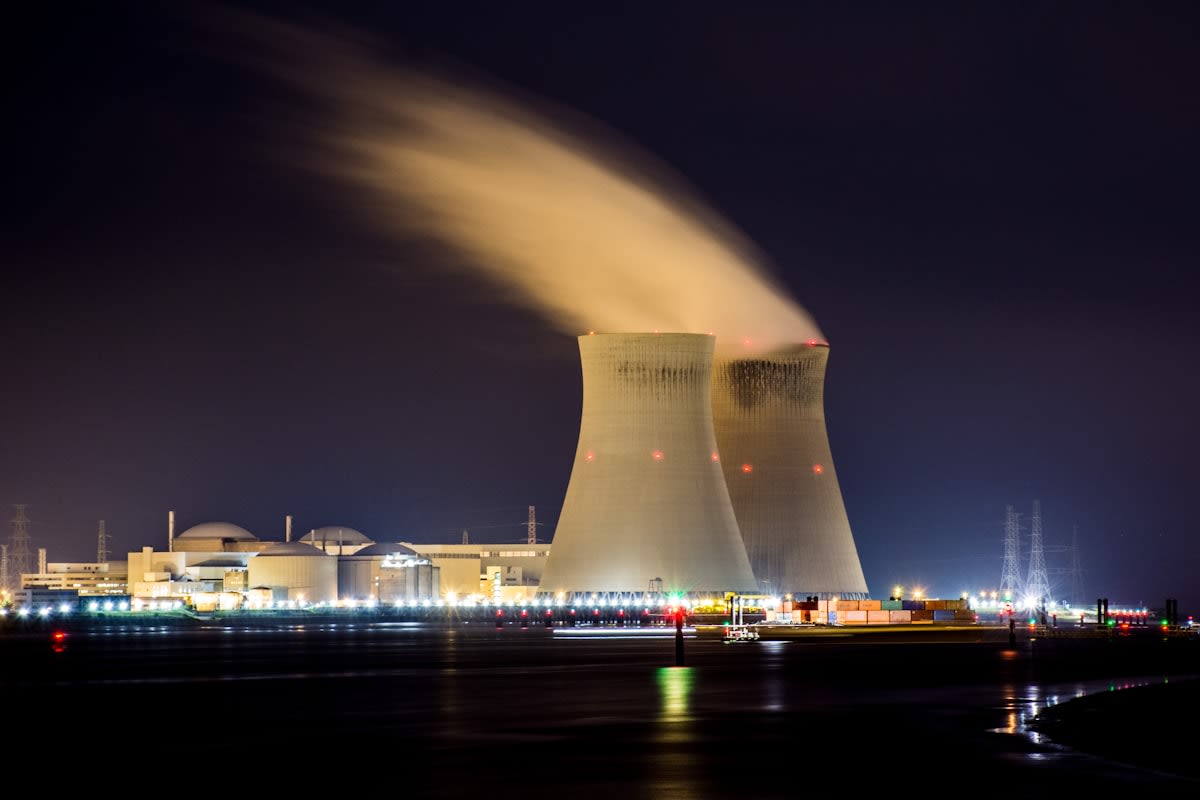
This modularity introduces a concept I call 'incremental sovereignty.' Instead of betting a significant portion of a national GDP on a single, massive reactor that might not come online for fifteen years, a government can deploy one module, begin generating revenue, and then add subsequent modules as demand grows. This reduces the 'bet-the-farm' risk that has historically paralyzed energy ministers in emerging markets. It transforms the nuclear transition from a binary leap of faith into a scalable investment strategy.
"The shift toward modularity is not just a design choice; it is an economic imperative. The goal is to move nuclear power from a project-based industry to a product-based industry, where learning rates actually drive costs down over time."— World Nuclear Association, Industry Outlook Report
However, the real friction isn't in the engineering—it is in the regulatory framework. Most nuclear regulators were built to oversee gigawatt-scale plants. They demand a level of documentation and safety redundancy that is overkill for a 100MW module. I have spent years talking to engineers in the field who describe the 'regulatory wall' as the single greatest threat to SMR viability. They are fighting a battle against a mindset that views any deviation from the 1970s-era light-water reactor model as an unacceptable risk. The debate internally is fierce: do we regulate the technology or the outcome?
Geopolitical Re-Alignment: The New Power Map
When energy production is decentralized, the geopolitical leverage shifts. Historically, the 'nuclear club' exported not just technology, but long-term political dependency. If a nation buys a massive reactor from a superpower, they are tethered to that power for fuel, maintenance, and waste management for sixty years. SMRs potentially diversify this supply chain. With the rise of competing designs from North America, Europe, and Asia, smaller nations can now play vendors against each other, selecting the module that best fits their specific grid and political alignment.
| Feature | Traditional Large-Scale Nuclear | Small Modular Reactors (SMR) |
|---|---|---|
| Capacity | 1,000+ MWe | Up to 300 MWe |
| Construction Site | On-site bespoke build | Factory-fabricated modules |
| Capital Risk | Extreme (Billions upfront) | Moderate (Phased investment) |
| Grid Requirement | High-voltage heavy infrastructure | Flexible / Distributed integration |
| Deployment Time | 10-20 years | 3-7 years (projected) |
Look at Poland or the Baltic states. These regions are aggressively pursuing SMRs not because they lack the ambition for large plants, but because they need a rapid exit from fossil fuel dependency without risking national bankruptcy. By deploying SMRs, they are essentially buying an insurance policy against energy blackmail. The ability to site these reactors near industrial clusters also enables the production of high-temperature process heat for hydrogen production or desalination, adding a layer of economic utility that traditional plants, located far from cities, simply cannot provide.

We are seeing a mirror image of the computing revolution. Large-scale nuclear was the 'mainframe' era—centralized, expensive, and controlled by a few. SMRs are the 'PC' or 'Cloud' era of energy. They allow for a distributed architecture where power is generated closer to the point of consumption. This reduces transmission losses and increases the resilience of the grid against physical or cyber attacks. If one module goes offline for maintenance, the others continue to run; if one large plant trips, an entire province goes dark.
- Decoupling from superpower energy dependency through vendor diversification.
- Lowering the financial threshold for nuclear entry in emerging economies.
- Integration of nuclear heat into industrial processes (Hydrogen, Desalination).
- Enhanced grid resilience via distributed generation nodes.
- Reduction of construction timelines through factory-standardized manufacturing.
The contrarian view is that SMRs will never achieve the economies of scale necessary to compete with wind and solar plus storage. But this ignores the 'firm power' problem. Renewables are intermittent; nuclear is constant. The value of an SMR isn't just the cost per kilowatt-hour, but the cost of reliability. In a world where AI data centers and green steel plants require 24/7 carbon-free power, the 'premium' for nuclear reliability becomes a strategic asset. The map is being redrawn not by who has the most sunlight or wind, but by who can deploy stable, carbon-free baseload power the fastest.
Projected SMR Market Penetration vs Traditional Nuclear (2025-2040)
Executive Insight
+18.4%
YTD Growth
Ultimately, the Sovereignty Switch is about control. For the first time in half a century, the technical and financial barriers to nuclear energy are falling. This will lead to a more fragmented, but more resilient, global energy landscape. Nations will no longer have to choose between energy insecurity and total dependence on a foreign superpower. They can build their own capacity, module by module, securing their future on their own terms.
Fact-Check & Accuracy Note
This analysis relies on data from the International Atomic Energy Agency (IAEA) regarding SMR capacity definitions and the World Nuclear Association's frameworks for modular economics. The projected deployment timelines and market penetration figures are based on current industry trajectories and announced projects in North America and Eastern Europe. Ongoing debates persist regarding the actual 'first-of-a-kind' costs and the speed of regulatory harmonization across different jurisdictions.
Editorial Note
Editorial Note: This article adopts a Strategic Analyst persona to examine the systemic geopolitical shifts caused by SMRs, intentionally avoiding the typical 'climate crisis' narrative to focus on the opportunity of energy sovereignty and industrial adaptation.