
The Quiet Decoupling from Lithium
For a decade, the narrative of the energy transition was written in lithium. We accepted the trade-offs—geographically constrained supply chains, energy-intensive graphite extraction, and the constant shadow of thermal runaway—because lithium-ion batteries (LIBs) offered an unmatched energy density for mobile applications. But the requirements for the global energy grid are fundamentally different from those of a smartphone or a passenger car. Grid operators do not need a battery that can fit in a pocket; they need massive, safe, and durable systems that can discharge power over hours or days, not minutes.
The pivot is happening now. In the last twelve months, we have seen a decisive move toward zinc-based chemistries, not as a niche experiment, but as a strategic hedge against the vulnerabilities of the lithium supply chain. The shift is driven by a realization that the current lithium-ion infrastructure, while efficient, relies on graphite anodes derived from non-renewable resources through highly polluting processes (Source: ChemSusChem, 2023). As nations scramble for energy sovereignty, the abundance and stability of zinc are becoming an irresistible draw.
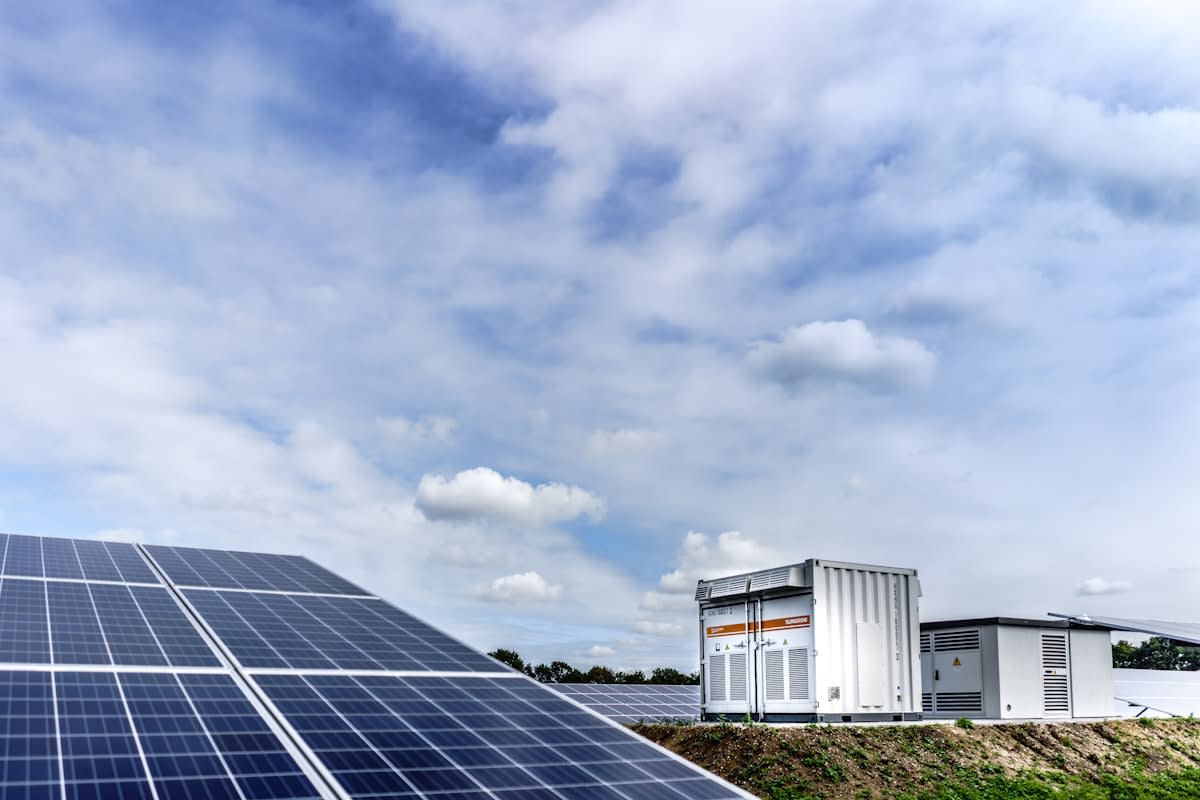
Why the sudden urgency? Look at the numbers. Eos Energy Enterprises, a key player in zinc-based storage, reported a staggering 351% year-over-year revenue increase in the second quarter of 2026, reaching $68.8 million (Source: PR Newswire, 2026). This isn't just a bump in sales; it is a signal that utility-scale procurement is shifting. When a company tightens its full-year revenue guidance to $300 million to $350 million in a volatile market, it suggests that the industrial appetite for zinc is no longer theoretical—it is operational.
The AI Catalyst: Powering the GPU Boom
The rise of generative AI has introduced a new variable into the energy equation: the GPU power spike. Data centers are no longer steady-state loads; they are dynamic environments where AI workloads create massive, rapid fluctuations in power demand. Traditional Uninterruptible Power Supplies (UPS) based on lithium are struggling to keep pace with these dynamic shifts without sacrificing safety or longevity.
Enter the nickel-zinc solution. In November 2025, ZincFive launched the BC 2 AI nickel-zinc battery cabinet, specifically engineered for AI-centric UPS deployments (Source: OpenPR, 2026). This system is designed to handle the rapid power spikes associated with GPU workloads while providing a level of safety and reliability that lithium-ion struggles to match in high-density data center environments. The market for data center UPS investment is projected to reach $30.74 billion by 2031, with a compound annual growth rate of 13.69% (Source: OpenPR, 2026).
"Zinc chemistry sidesteps parts of the lithium supply chain that have drawn export-control and tariff attention, which is a structural argument that has less to do with any single quarter than with where utilities are willing to place multi-year procurement commitments."— Analysis of Market Dynamics, PR Newswire (2026)
This strategic shift is about more than just chemistry; it is about geopolitics. By utilizing zinc, developers are bypassing the tariffs and export controls that currently plague the lithium and cobalt markets. For a utility company signing a twenty-year contract, the risk of a trade war is a far greater threat than a slightly lower energy density.
The Technical Frontier: Beyond the Basic Cell
The technical evolution of zinc storage is moving in three distinct directions: flow batteries, nickel-zinc hybrids, and aqueous zinc-ion systems. Zinc-bromine flow batteries (ZBFB), which utilize two compartments separated by a microporous membrane, are seeing a CAGR of 32.14% for the forecast period of 2022-2029, with a projected market value of $710.18 million by 2029 (Source: Data Bridge Market Research, 2024).
Simultaneously, academic research is solving the longevity issues that once plagued zinc. Recent breakthroughs in iodine-doped layered vanadium oxides and the use of MXene cathodes are enhancing the kinetics of Zn2+ storage, leading to more durable and fast-charging batteries (Source: Journal of Solid State Electrochemistry, 2026). We are seeing the emergence of potassium ammonium vanadate with rich oxygen vacancies to ensure stability, moving zinc from a 'cheap alternative' to a 'high-performance competitor' (Source: ACS Nano, 2022).
| Feature | Lithium-Ion (LFP) | Zinc-Based Systems |
|---|---|---|
| Primary Use Case | EVs, Short-term Storage | Grid-scale, Long-duration, AI UPS |
| Supply Chain Risk | High (Geographically Constrained) | Low (Abundant Materials) |
| Safety Profile | Thermal Runaway Risk | Inherently Safer/Non-flammable |
| Market Trajectory | Mature/Saturating in Grid | Rapid Growth (32.14% CAGR for Flow) |
Is this the end of lithium? Hardly. Lithium Iron Phosphate (LFP) remains the preferred choice for many power and energy storage batteries due to its high energy density and established cycle life (Source: MDPI, 2026). However, the grid is diversifying. We are moving toward a hybrid architecture where lithium handles the fast, short-burst needs and zinc manages the heavy, long-duration lifting.
The Practitioner's Reality: Friction on the Ground
If you talk to the engineers actually deploying these systems in the field, the debate isn't about theoretical chemistry—it's about the balance of plant. In the industry, there is a constant tension between 'energy density' and 'system-level cost.' A lithium battery might be smaller, but once you add the massive cooling systems and fire-suppression infrastructure required to keep it safe at scale, the footprint advantage vanishes. Practitioners are increasingly debating whether the operational overhead of lithium is worth the space savings when zinc can be deployed with far simpler safety requirements.
There is also the 'discharge duration' friction. For a microgrid in a remote region, a battery that can discharge consistently over 10 hours is infinitely more valuable than one that delivers massive power for two hours and then dies. This is where Eos Energy's zinc-based systems are winning; they are positioned specifically for these longer discharge durations, targeting utility-scale and commercial applications where lithium's cost-curve becomes prohibitive (Source: PR Newswire, 2026).
Mapping the Economic Horizon
The financial trajectory for non-lithium storage is steep. MarkNtel Advisors projects that the storage market—depending on the definition of the balance of plant—could grow from $7.8 billion in 2024 to approximately $29.98 billion by 2030, representing a compound annual growth rate of around 25% (Source: PR Newswire, 2026). This growth is not happening in a vacuum; it is a direct response to the instability of the global battery separator market, which was valued at $8 billion in 2025 and is expanding rapidly to meet the needs of diverse chemistries (Source: OpenPR, 2026).
Projected Storage Market Growth (MarkNtel Advisors)
Executive Insight
+18.4%
YTD Growth
As we look toward 2030, the 'Zinc Surge' represents a broader trend of industrial maturation. We are moving away from a one-size-fits-all approach to energy storage. The future grid will be a mosaic: lithium for the cars, zinc for the data centers and the cities, and perhaps sodium-ion for the low-cost residential sectors. The pivot away from lithium isn't a failure of the technology, but a victory for systemic resilience.
Fact-Check & Accuracy Note
Key claims regarding Eos Energy's revenue growth and the ZincFive BC 2 AI launch are sourced from PR Newswire and OpenPR (2026). Market CAGR for Zinc-Bromine flow batteries is attributed to Data Bridge Market Research (2024). Technical data on Zn2+ storage kinetics is sourced from the Journal of Solid State Electrochemistry and ACS Nano. Note: There remains ongoing industry debate regarding the exact market valuation of 'storage systems' versus 'balance of plant,' as noted by the discrepancy between MarkNtel Advisors and other forecasters.