
Most urban gardening advice focuses on the aesthetic of the harvest. That is a mistake. To build a true Caloric Fortress, you must pivot your focus from the plant to the soil. We are not merely growing vegetables; we are engineering an ecosystem. The goal is a closed-loop system where waste is non-existent and nutrient density is maximized through biological synergy. This approach isn't experimental; it is a miniaturization of regenerative agriculture practices currently being analyzed in regions like Poland, Germany, and Belarus, where the focus has shifted toward restoring ecosystem functions rather than just maintaining yields.
Why does this matter in a space smaller than a standard bedroom? Because the systemic pressures of unsustainable farming—those that strain soil ecosystems and deplete plant-available nutrients—exist even in potting soil. When we rely on synthetic inputs, we break the biological chain. By implementing a regenerative framework, we treat the under-100-square-foot plot as a living organism. This requires a shift in mindset: you are no longer a gardener, but a steward of microbial life and a manager of nutrient cycles.
Defining the Goal
Regenerative agriculture is not just 'organic.' It is a holistic approach that actively restores soil health, biodiversity, and water cycles to enhance overall ecosystem resilience.
Prerequisites: The Fortress Foundation
Before you plant a single seed, you must secure the infrastructure of your nutrient loop. You cannot achieve zero-waste if you are importing bagged soil every spring and throwing away organic scraps every evening. The fortress requires three primary inputs: a dedicated organic matter collection system, a water capture strategy, and a biological substrate. Whether you are working on a concrete terrace in Tokyo or a small courtyard in Berlin, the physics of nutrient cycling remain the same.
- Organic Waste Stream: A consistent source of kitchen scraps and brown matter (cardboard, dried leaves).
- Water Capture: A system to capture precipitation, mimicking the biophysical process optimizations used in regenerative farms.
- Biological Substrate: High-quality compost or living soil rich in microbial diversity.
- Spatial Map: A blueprint of your 100 square feet to optimize light and moisture flow.
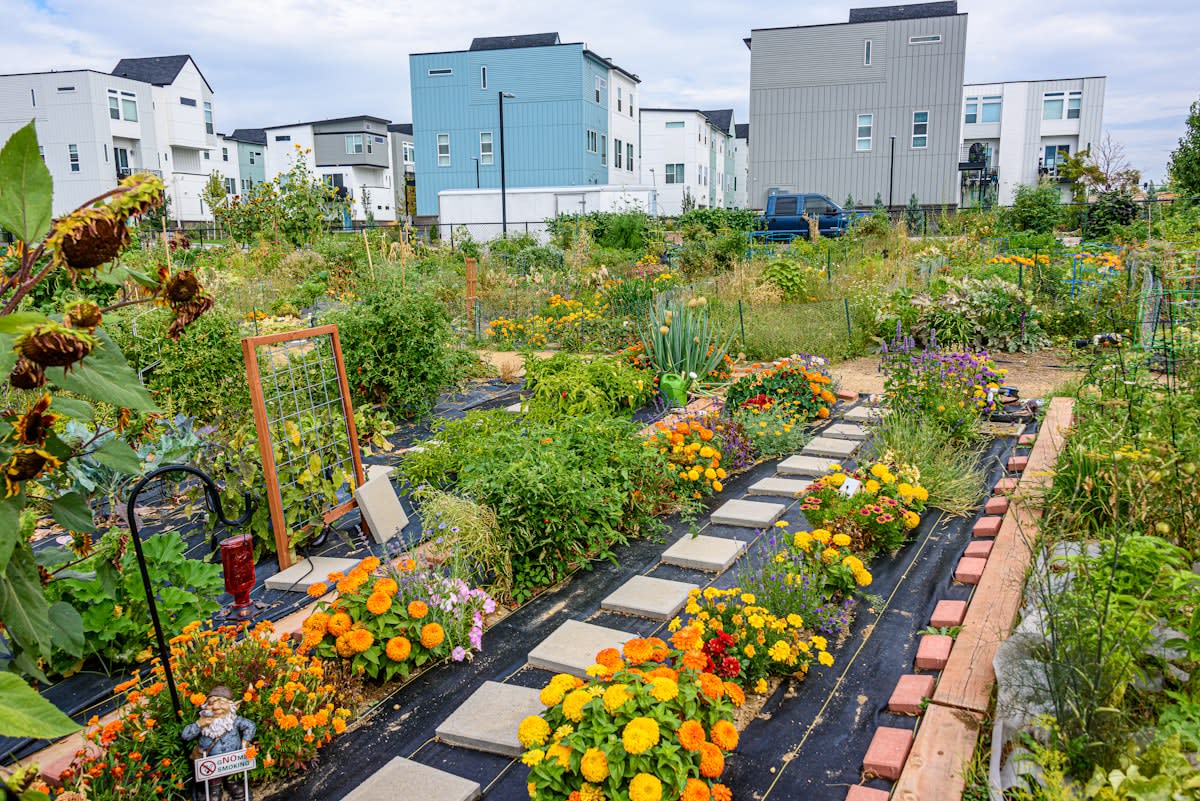
Once these prerequisites are met, you can begin the engineering phase. The transition from a traditional garden to a Caloric Fortress happens in the details of how you manage your inputs. You must stop viewing fertilizer as a product you buy and start viewing it as a process you manage.
Step-by-Step Engineering Guide
- Map the Biophysical Flow: Design your spatial configuration to optimize naturally occurring processes. Place your compost bin and water collection at the highest point of your plot to allow gravity to assist in nutrient distribution. Mimic the regenerative practices seen in Poland and Germany by designing for the capture of precipitation and the efficient recycling of organic matter.
- Establish the Microbial Base: Avoid sterile potting mixes. Instead, inoculate your soil with local organic matter. The goal is to foster biological diversity. A diverse soil microbiome acts as a buffer against pests and ensures that nutrients are biologically available to the plants rather than locked in the soil.
- Implement the Small-Dose Fertilization Protocol: This is the most critical technical shift. Rather than one large application of fertilizer at the start of the season, apply organic fertilizers in smaller, more frequent doses. Research into regenerative farm management suggests that smaller applications (e.g., 20 t/ha every 2 years instead of 40 t/ha every 4 years) are far more effective for maintaining nutrient availability and closing nutrient loops. Scale this to your plot: apply a thin layer of compost or organic tea every few weeks rather than a heavy mulch once a year.
- Close the Nutrient Loop: Every scrap of organic matter must return to the soil. Use a vermicompost or Bokashi system to process kitchen waste into high-potency fertilizer. This eliminates waste and ensures that the minerals extracted from your food return to the earth to feed the next generation of crops.
- Diversify the Canopy: Plant in polycultures. Mix nitrogen-fixing legumes with heavy-feeding greens. This reduces the pressure on soil ecosystems and prevents the nutrient depletion common in high-yield monocultures.
Executing these steps requires patience. You are not just growing food; you are rebuilding a degraded biological system. The shift from 'high-yield pressure' to 'ecosystem restoration' is what separates a hobby garden from a Caloric Fortress. When you apply the small-dose fertilization rule, you are supporting soil microbial health, which in turn makes the plants more resilient to environmental stress.
"Regenerative agriculture differs from other sustainability-oriented farming approaches by placing the regeneration of ecosystem functions at the centre."— MDPI Research on Regenerative Practices
But a fortress cannot exist in total isolation. While your 100 square feet provide the caloric base, the broader resilience of your food system depends on external networks. We are seeing a global trend toward strengthening local food supply chains. In the United States, for instance, the American Food Supply Chain Resiliency Act aims to create regional food hubs and permanent infrastructure to help small and mid-sized producers access local markets.
Integrating your small-scale system into these regional hubs transforms your plot from a personal project into a node of community resilience. By sharing seeds, composting knowledge, or surplus harvests with a local hub, you contribute to a decentralized food web that is far less vulnerable to systemic shocks than the traditional industrial chain.

Technical Comparison: Traditional vs. Regenerative Micro-Farming
| Metric | Traditional Urban Gardening | Regenerative Caloric Fortress |
|---|---|---|
| Fertilization Strategy | Large, infrequent synthetic doses | Small, frequent organic doses |
| Waste Management | Linear (Scraps to landfill) | Closed-loop (Scraps to soil) |
| Soil Focus | Medium for plant growth | Living ecosystem to be restored |
| Spatial Logic | Aesthetic/Convenience | Biophysical process optimization |
| Goal | Immediate yield | Long-term adaptive capacity |
The data is clear: the traditional model of 'input-output' is failing. When we push for high yields without regenerating the soil, we inevitably strain the ecosystem. The regenerative model, as seen in the comparative assessments of Poland, Germany, and Belarus, proves that aligning cultivation with natural biophysical processes creates a more stable and productive system over time.
Common Pitfalls to Avoid
The most common failure in small-scale systems is the 'Over-Fertilization Trap.' Many beginners believe that more nutrients equal more growth. In reality, occasional large applications of organic fertilizer can be less effective than regular, smaller doses. Overloading the soil can disrupt the microbial balance and lead to nutrient runoff, defeating the purpose of a zero-waste system.
Another frequent error is neglecting the water cycle. A Caloric Fortress must capture and recycle water. Relying solely on municipal taps ignores the opportunity to optimize precipitation capture, a key intervention in regenerative spatial configuration. If you aren't capturing the rain that falls on your 100 square feet, you are leaking energy and resources from your system.
Finally, avoid the obsession with a single 'super-crop.' The drive for high yields of one specific vegetable often leads to depleted plant-available nutrients. Diversity is your insurance policy. By rotating crops and maintaining a wide biological variety, you ensure that no single nutrient is stripped from the soil, maintaining the long-term adaptive capacity of your miniature landscape.