
Beyond the Glass Box
For years, the vertical farm was the poster child for urban agriculture—a sterile, LED-lit promise of efficiency. But the industry is hitting a wall. These isolated systems, while impressive, often operate as linear extensions of the same wasteful logic they claim to replace: inputs go in, produce comes out, and the systemic waste remains unaddressed. The real shift happening right now is the transition toward Circular Agri-Food Hubs. Unlike the vertical farm, these hubs don't just grow food; they act as metabolic organs for the city, absorbing urban waste streams and converting them into high-value agricultural inputs.
Why is this happening now? The delta between 2024 and 2026 reveals a desperate pivot toward resilience over mere aesthetics. We are seeing a move away from 'agritech for the sake of tech' and toward what is being termed Smart Circular Sustainability (SCS). This framework doesn't seek incremental improvements in yield; it demands a fundamental restructuring of production systems to be intelligent, adaptive, and predictive. It is no longer about how many heads of lettuce we can stack in a warehouse, but how we can integrate digital innovation with circular economy (CE) strategies to mitigate risk and resource depletion.
The Strategic Pivot
The shift is from 'efficiency' (doing the same thing faster) to 'resilience' (building a system that can survive a shock).
Look at the immediate pressures in Israel as a case study for this urgency. In 2024, conflict-driven labor gaps crippled approximately 70% of poultry operations in the southern corridor. This wasn't just a logistical hiccup; it was a systemic failure. The result was a sharp 13% increase in fruit and vegetable imports, totaling 227,000 metric tons, as the country scrambled to source apples, onions, and garlic from China, Costa Rica, and the Netherlands. When the supply chain snaps, the vulnerability of linear, labor-dependent systems becomes blindingly obvious.
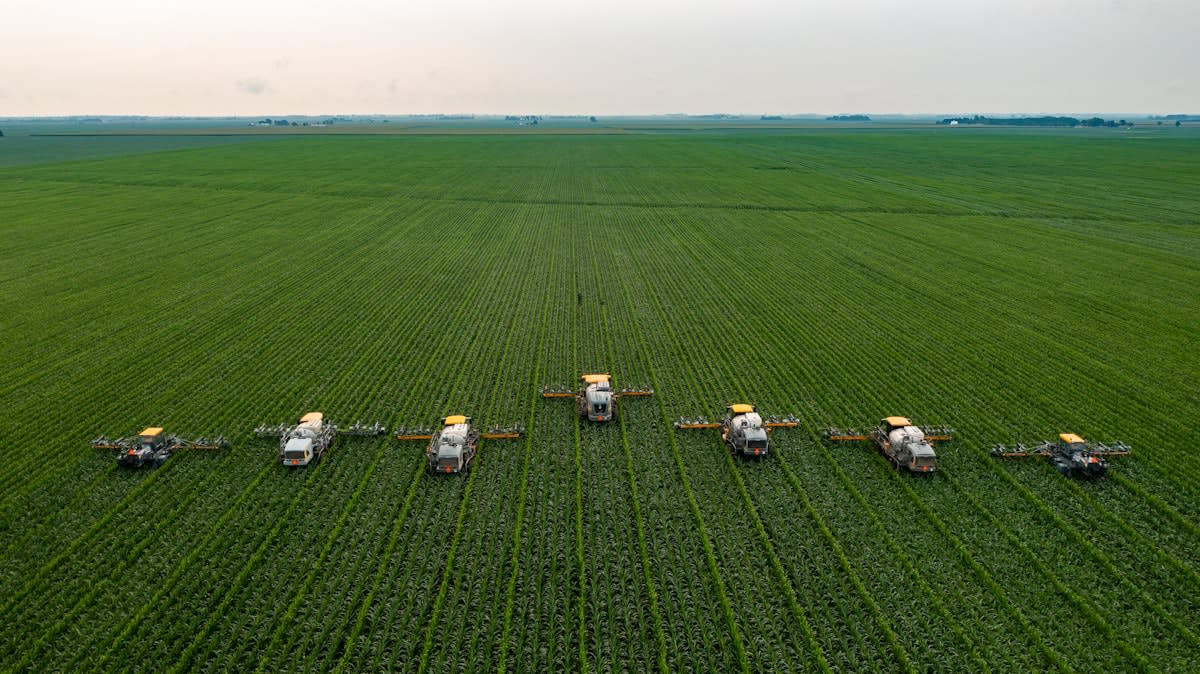
The institutional response in Israel signals a global trend toward the securitization of food. In June 2024, the ministry was rebranded as the Ministry for Agriculture and Food Security. This is a critical semantic shift. By elevating food security to a strategic priority, the state is now channeling reconstruction grants specifically toward automation and protected cultivation infrastructure. The goal is to narrow the income gap between the center and the periphery while insulating the food supply from geopolitical volatility. This is the 'security' side of the circular hub: reducing dependence on external imports through internal, automated resilience.
But resilience isn't just about robots; it's about the nutrients. For too long, urban centers have functioned as nutrient sinkholes. In Europe, Northern America, Northern Africa, and Western Asia, the vast majority of human nutrient excretion is simply discharged into collective sewer systems. We are effectively flushing the building blocks of our future food supply into the ocean. This is what scholars call the 'metabolic rift'—a planetary-scale disconnection where nutrients are extracted from the soil, consumed in the city, and never returned to the earth.
"Profit leaves scars on the planet. The question is how we reconstruct the human metabolic exchange from soil to atmosphere."— John Bellamy Foster, analyzing the metabolic rift
Circular Agri-Food Hubs aim to heal this rift. By treating urban sewage and agro-industrial waste not as liabilities but as assets, these hubs create a closed loop. The logic is simple: if the nitrogen and phosphorus are already in the city, why import synthetic fertilizers from halfway across the globe? The challenge is no longer technical—we know how to recover nutrients—it is political and infrastructural. We are moving toward a model where the city is not a consumer of the countryside, but a partner in a symbiotic exchange.
| Feature | Linear Vertical Farming | Circular Agri-Food Hubs |
|---|---|---|
| Primary Goal | Yield Optimization | Systemic Resilience |
| Nutrient Source | Synthetic/Imported | Recovered Urban Waste |
| Waste Management | Externalized | Internalized (Valorized) |
| Economic Model | Capital Expenditure Heavy | Resource Recovery Driven |
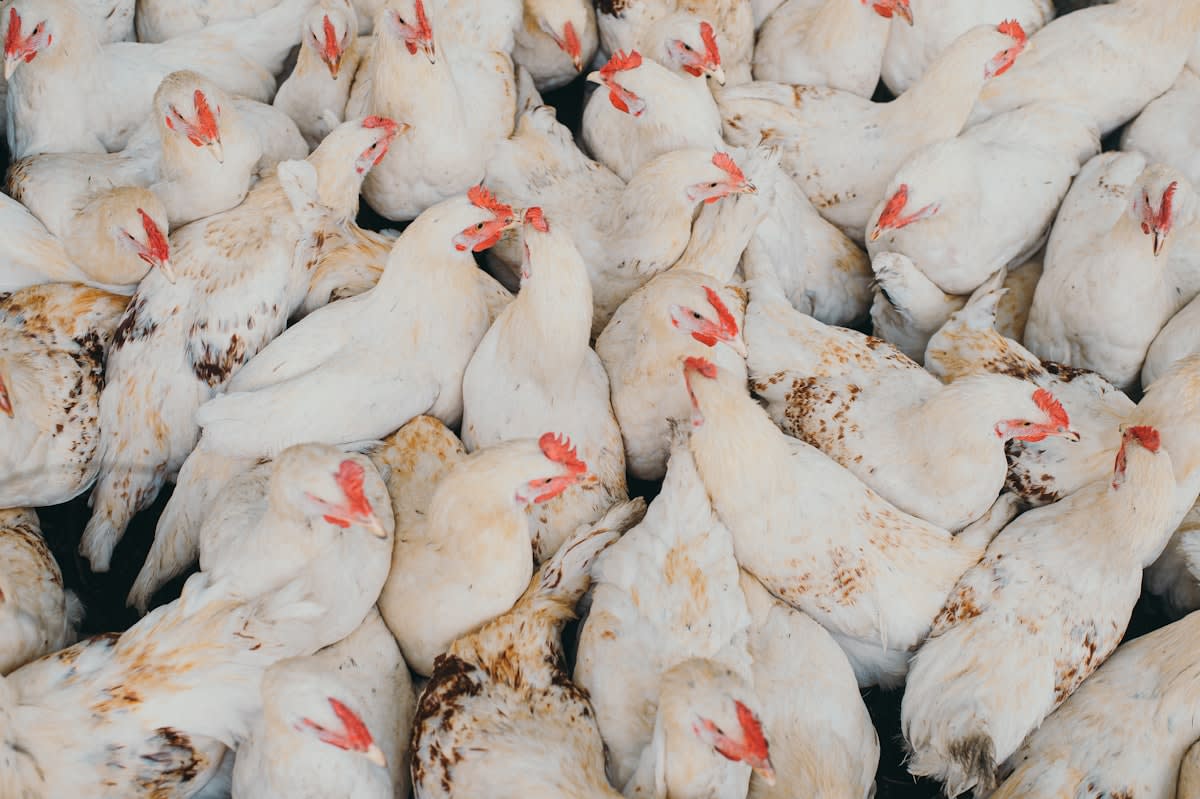
This transition is most visible in the poultry industry, which is currently undergoing a transformation toward Smart Circular Sustainability (SCS). The global poultry sector is besieged by climate change, epidemic diseases, and resource depletion. The old way was to scale up and hope for the best. The new way integrates CE strategies with digital tools to create a predictive environment. By optimizing resource use and reducing waste at the source, these systems are evolving from simple farms into intelligent, adaptive nodes of production.
What does this look like in practice? It means using digital innovation to bridge the gap between risk management and environmental conservation. Instead of reacting to a disease outbreak or a feed shortage, SCS hubs use predictive analytics to adjust resource flows in real-time. It is a shift from a reactive posture to a proactive one, ensuring that the economic performance of the farm does not come at the cost of animal welfare or environmental degradation.
The movement extends far beyond the high-tech hubs of the Global North. In Ibero-America, specifically within the Amazon region, there is a growing focus on the circular economy of nut production. Rather than simply exporting raw materials, there is a push toward the valorization of agro-industrial waste. This means turning the by-products of nut processing into value-added products, ensuring that the economic benefit stays within the local ecosystem while reducing the environmental footprint of production.
This regional approach proves that circularity isn't just a luxury for wealthy cities. In the Amazon, circularity is a tool for forest preservation. By maximizing the value of every single part of the crop, producers can maintain their livelihoods without needing to clear more land. It is a direct counter-narrative to the degradation drivers often seen in the region, proving that economic viability and ecological restoration can coexist when the linear 'extract-and-discard' model is abandoned.
Finally, we must address the ownership of these systems. The rise of 'public-common partnerships' is creating a new blueprint for food sovereignty. We are seeing a resurgence of council farms and agroecological initiatives where the community, not just the corporation, owns the means of production. These partnerships move food systems into the 'commons,' ensuring that the benefits of circularity—lower costs, higher nutrient density, and environmental health—are distributed equitably.
Can we really end urban food waste? The evidence suggests that we can, but only if we stop treating waste as a problem to be hidden and start treating it as a resource to be harvested. The transition from the vertical farm to the Circular Agri-Food Hub is more than a technological upgrade; it is a philosophical shift. We are finally beginning to realize that the city is not separate from the farm—it is the farm.