
The August Acceleration
The first week of August 2026 has signaled a tipping point in how the world views the genetic blueprint of its food. While the previous decade focused almost exclusively on maximizing yield per hectare through synthetic inputs and standardized seeds, we are witnessing a sudden, synchronized pivot toward biodiversity. This isn't a fringe movement of hobbyist gardeners. It is a strategic realignment involving international NGOs, corporate giants, and state-level agricultural shifts. From the launch of comprehensive heirloom catalogues in Asia to the integration of regenerative barley in European beer production, the objective has shifted from maximum output to maximum resilience.
Compare this current moment to the landscape of early 2025. Twelve months ago, regenerative agriculture was largely a marketing buzzword used to justify a premium price tag on organic produce. Today, the delta is clear: the conversation has moved from the labels on the packaging to the very biology of the seed. We are no longer just talking about how we farm, but what we farm. The urgency is driven by a realization that high-yield varieties, while productive in stable conditions, are fragile in the face of volatile climate patterns. Ancient grains and indigenous crops are being repositioned not as relics of the past, but as the essential technology for a precarious future.
Why now? The convergence of corporate sustainability mandates and a shift in consumer psychology has created a commercial window for heirloom crops. When a global entity like Heineken begins paying premiums for regenerative yields, the economic risk of abandoning high-yield seeds diminishes for the average farmer. This creates a feedback loop where biodiversity becomes a hedge against both environmental collapse and market volatility.
Mapping the Genetic Archive
In the Philippines, the pivot is taking the form of rigorous documentation. On August 5, 2026, Naturland and Global Seed Savers Philippines unveiled a landmark catalogue documenting 37 traditional and heirloom crops. This is more than a list; it is a genetic insurance policy. By codifying these varieties, the organizations are creating a blueprint for food sovereignty that allows local farmers to decouple their livelihoods from the expensive, proprietary seed cycles managed by multinational corporations. The move acknowledges a simple truth: the local environment knows best which crops can survive its specific pressures.
The strategic importance of these 37 crops lies in their adaptability. Unlike the genetically narrow high-yield varieties that require precise cocktails of fertilizers and pesticides to thrive, these heirloom crops have co-evolved with the local soil and pests. This reduces the farmer's overhead and eliminates the dependency on external chemical inputs. It turns the farm from a factory into an ecosystem. This shift in the Philippines mirrors a broader global trend where the 'efficiency' of the Green Revolution is being re-evaluated as a long-term liability.
"The future of agriculture lies in rediscovering our past. Indigenous crops that nourished communities for generations now offer the most sustainable, climate-smart solutions for tomorrow."— Inspired by the vision of Siphiwe Sithole, African Farming
The Resilience Engine of the Global South
Across Africa, the movement is gaining momentum through practitioners like Siphiwe Sithole, who is actively reconnecting farmers and consumers with indigenous crops. This effort, highlighted in reports from August 3, 2026, is not merely about cultural preservation. It is about unlocking new markets. Indigenous grains often possess nutritional profiles that far exceed their modernized counterparts, creating a high-value niche in the global health-food market. By reviving these crops, African farmers are transitioning from commodity price-takers to specialty product-makers.
These crops serve as biological shock absorbers. When a drought hits or a new pest emerges, the genetic diversity within ancestral seeds ensures that at least some portion of the crop survives. High-yield monocultures, by contrast, often suffer total failure because every plant is genetically identical. This makes the pivot to heirloom grains a matter of national security for regions where food stability is precarious. The goal is a thriving rural economy built on biodiversity rather than one dependent on imported chemical packages.
The Genetic Trade-off
The core tension in modern farming is Yield vs. Resilience. High-yield seeds optimize for the 'best-case scenario,' while heirloom seeds optimize for 'survival across all scenarios.'
Corporate Integration and the UK Experiment
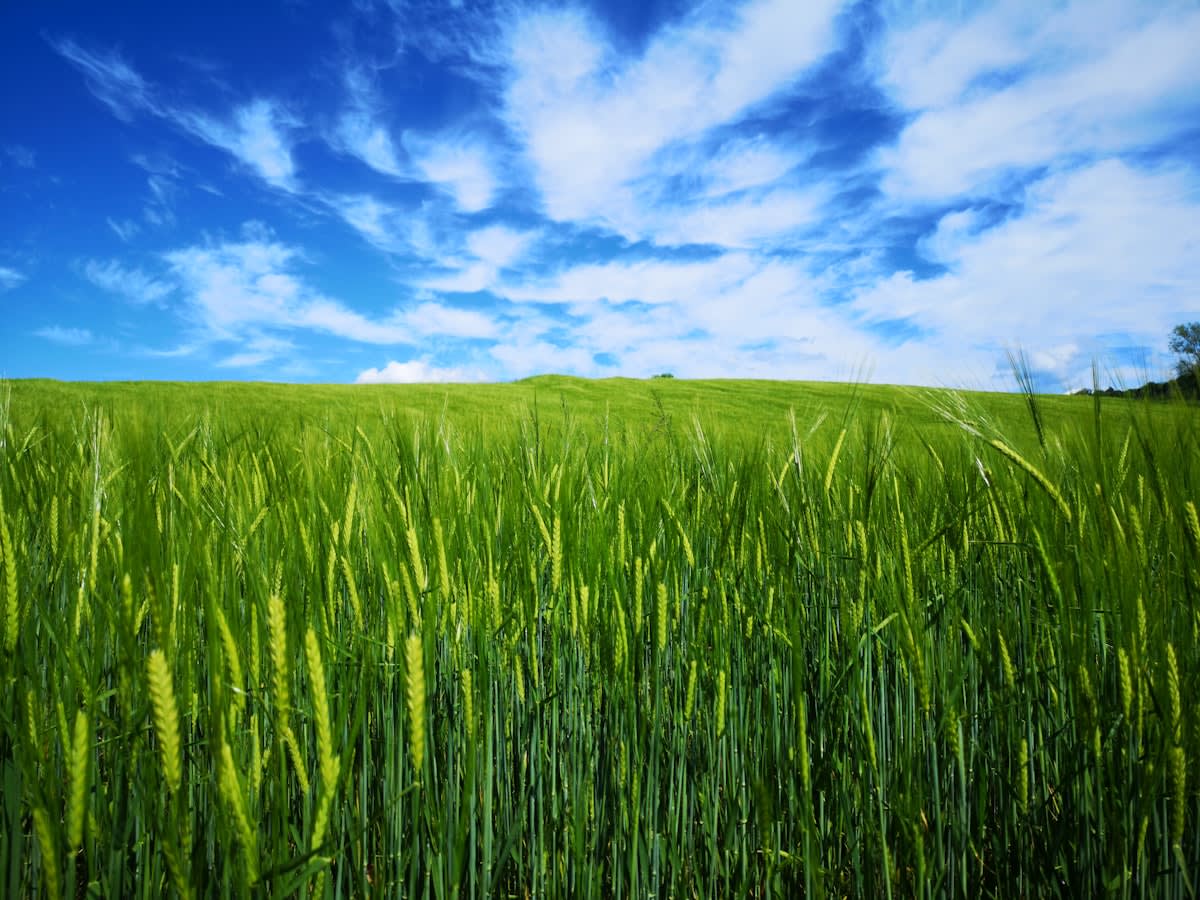
The most surprising catalyst in this trend is the entry of global corporate supply chains. On August 4, 2026, Heineken launched a regenerative farming programme in the UK, aiming to make these practices part of mainstream beer production. The company is not just asking farmers to change; it is paying them a premium on regenerative barley yields. This solves the primary hurdle of the heirloom pivot: the transition risk. Farmers are often hesitant to abandon high-yield seeds because the initial dip in productivity can be financially ruinous. By providing a financial bridge, Heineken is effectively subsidizing the transition to biodiversity.
The partnership with Soil Capital allows for the measurement of over 30 indicators, including soil health, water management, and carbon retention. This data-driven approach transforms 'ancient farming' into a precision science. It proves that regenerative methods—which often rely on the hardier, more diverse seed varieties—can actually enhance the long-term viability of the land. When the world's largest brewers start valuing soil health over raw tonnage, the incentive structure for the entire agricultural sector shifts.
The Consumer Equation: Beyond the Green Halo
The demand for these crops is being fueled by a complex shift in consumer behavior. Recent research from Purdue University, published August 5, 2026, reveals that the market for regenerative and heirloom products is no longer a monolith. Consumers are splitting into distinct segments with different drivers. While some are driven by pure ideology, a significant portion of the market is now balancing environmental benefits with economic reality. This suggests that the heirloom pivot will only succeed if it can move beyond the 'luxury' bracket and become affordable for the average shopper.
| Consumer Segment | Market Share | Primary Driver | Price Sensitivity |
|---|---|---|---|
| Principled Supporters | 30% | Soil Health & Biodiversity | Low |
| Balanced Supporters | 27% | Affordability + Environment | Moderate |
| Practical Supporters | Unknown | Profitability & Price | High |
The 'Balanced Supporters' segment, making up 27% of the market, is the most critical for scaling. These consumers seek a narrative where the product is both beneficial for the farmer and affordable for the shopper. This explains why the pivot to ancient grains is focusing so heavily on 'climate-smart' resilience rather than just 'organic' purity. If heirloom crops can be framed as a way to stabilize food prices by reducing reliance on expensive chemical inputs, they will capture the mass market.
The 'Principled Supporters' (30%) provide the initial venture capital for these movements, paying the premiums that allow farmers to experiment. However, the transition to a global standard requires the 'Balanced' and 'Practical' segments to see heirloom grains not as a specialty item, but as a superior, more reliable version of the food they already eat. The narrative is shifting from 'save the planet' to 'secure the food supply.'
The New Agricultural Order
We are entering an era of agricultural pluralism. The binary choice between 'industrial' and 'traditional' is collapsing. Instead, we are seeing a hybrid model where corporate scale is used to distribute ancestral genetics. The initiatives in the Philippines, Africa, and the UK are different expressions of the same realization: the monoculture experiment has reached its limit. The next phase of agricultural evolution is not about creating a new, 'super-seed' in a lab, but about liberating the diversity that already exists in the soil.
This pivot is a calculated move toward resilience. By diversifying the genetic base of our food system, we are reducing the systemic risk of a single blight or weather event wiping out a global staple. The quiet abandonment of high-yield seeds is not a retreat into the past; it is a sophisticated adaptation to a volatile present. The seeds of the ancestors are becoming the infrastructure of the future.