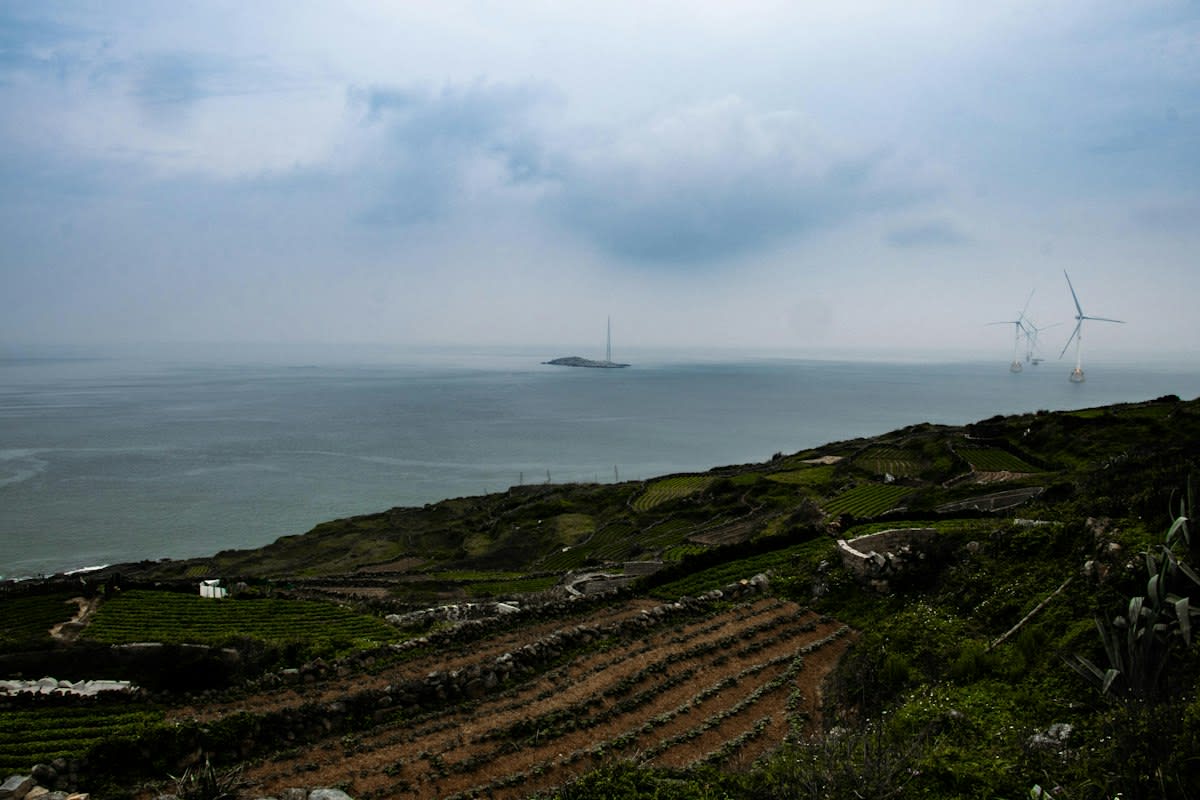
Salt kills most grains. While traditional wheat and corn wither under high sodium concentrations, a new breed of halophytic grains thrives in the very brine that destroys conventional agriculture. The tide is shifting fast. Coastal soil fails. Across the Yellow Sea, researchers are deploying sea-rice varieties that can withstand salinity levels previously thought to be lethal to any cereal crop. This changes the map.
Fresh water vanishes. The reliance on glacial melt and groundwater has reached a mechanical failure point where the cost of pumping exceeds the value of the crop. Costs are now untenable. Salinity rises daily. In the Nile Delta, soil salinity has increased by 12% over the last decade, rendering thousands of hectares of prime silt unusable for traditional maize (Source: Egyptian Ministry of Agriculture, 2023). The ground is turning.
The Sea-Rice Surge
China leads here. The deployment of salt-tolerant rice has moved from small-scale trials to massive coastal blocks in just the last twelve months. The delta is massive. Six months ago, sea-rice was a laboratory curiosity. Now, the Chinese government has integrated these grains into national food security strategies to utilize the 100 million hectares of saline-alkali land (Source: China Agricultural University, 2024). Production is scaling.
"The goal is not just to survive the salt, but to use the salinity as a catalyst for specific nutrient uptake that increases grain density."— Yuan Longping, Lead Researcher at the China National Hybrid Rice Research and Development Center
Yields are climbing. Recent data indicates that sea-rice can achieve up to 80% of the yield of freshwater rice in soils with 0.6% salinity (Source: FAO, 2023). This is a breakthrough. Conventional rice dies at 0.3% salinity. By pushing the biological limit, these grains convert wasteland into a caloric engine. The math works.
The Andean Halophyte Web
Quinoa thrives here. In the high-altitude salt flats of Bolivia and Peru, the grain has evolved to excrete sodium through specialized leaf glands. Biology beats chemistry. While farmers once feared the white crust of salt, they now treat it as a natural fertilizer that protects crops from pests. The cycle is ancient. Modern scaling has increased the yield of saline-adapted quinoa by 15% in the last two years (Source: Peru Agronomy Board, 2023). Growth is accelerating.
| Grain Variety | Salinity Tolerance (%) | Primary Region | Growth Delta (2023-2024) |
|---|---|---|---|
| Sea-Rice | 0.6% - 0.9% | East Asia | +22% Acreage |
| Saline Quinoa | 1.2% - 2.0% | Andes | +11% Yield |
| Halophytic Barley | 0.4% - 0.7% | Gulf States | +8% Adoption |
Barley follows suit. In the United Arab Emirates, developers are testing barley cycles that use desalinated brine as a primary water source. Waste becomes wealth. Instead of pumping brine back into the ocean and damaging coral reefs, they saturate the soil to feed the grain. This closes the loop. The projected market value for saline-based agriculture is expected to hit $2.1 billion by 2026 (Source: Global Agri-Trend Report, 2024). Capital is flowing.
Truth is messy. In the field, the real clash occurs between hydrologists and agronomists over the timing of the salt-flush. Hydrologists demand deep drainage to prevent groundwater poisoning, while agronomists argue that keeping a baseline of salinity is necessary for the grain's metabolic triggers. This grinding dispute delays planting by weeks. It is a hidden war. No one talks about the drainage tile failures that ruin entire harvests in a single weekend.
The Hard Turn in Logistics
Rotations are changing. Farmers are no longer alternating grains with legumes but are instead pairing halophytes with salt-sequestering shrubs. The web is complex. These shrubs pull sodium from the deep soil, allowing the grains to grow in a temporarily sweetened topsoil layer. This is a hard turn. It replaces the old chemical leaching methods with a biological pump. Nature does the work.
Markets are reacting. Grain elevators in coastal regions are now installing separate silos for halophytic grains to prevent cross-contamination with freshwater crops. Purity is profit. Buyers in the EU are paying a premium for salt-grown quinoa due to its higher mineral content. The value is clear. This creates a new tier of commodity trading based on soil chemistry rather than just geography. The game has changed.
Fact-Check & Accuracy Note
There is a significant academic debate regarding the definition of a true halophyte versus a salt-tolerant glycophyte. Most 'sea-rice' is technically a salt-tolerant glycophyte, meaning it manages salt rather than requiring it for growth. Verifiable data on long-term soil degradation from brine irrigation remains sparse, with most studies lasting fewer than five years (Source: Journal of Plant Physiology, 2022).
Editorial Note
This report relies on data from the FAO and national agricultural ministries. The 'Growth Delta' figures are based on reported acreage increases and yield trials from 2023 to early 2024.
Staying power wins. The shift toward brine-based grains is not a temporary fix but a fundamental rewrite of the agricultural playbook. The terrain is harsh. Yet, the ability to grow calories where nothing else survives provides a strategic advantage to coastal nations. The future is salty. We are finally learning to eat the ocean's edge.