
Hanoi fights brine-soaked soil. Global agricultural productivity growth hit its lowest rate in 50 years (Source: Newswise, 2026). This decline marks a break from decades of growth fueled by the aggressive application of land, fertilizer, and machinery. The current model relies on adding more inputs to get more output, a method that is now yielding diminishing returns for the global food system. This systemic failure forces a move toward localized, high-precision adaptation to survive environmental stressors.
Vietnam currently faces a severe salinity crisis in the Mekong Delta. To combat this, the country has partnered with Dutch experts to implement solutions tested at SALTA's facility in Friesland (Source: Agroberichten Buitenland, 2026). At this site, crops are subjected to five different salinity levels to determine exact response thresholds. This data allows farmers to move away from blind input application and toward targeted soil-management practices. The goal is to understand how growth stages and water quality interact with salt concentrations to prevent total crop failure.

The Dutch-Vietnamese partnership focuses on a combination of bio-stimulants, cover crops, and compost to mitigate salt damage (Source: Agroberichten Buitenland, 2026). These tools are not generic fixes but are tailored to the specific drainage and climate of the Mekong region. By sharing knowledge between international experts and local farmers, the project aims to raise awareness about the severity of salinisation. The focus has turned toward demonstrating suitable adaptation approaches that can be replicated across different provinces.
The Input Trap
Global farms are trapped in a cycle of resource exhaustion. New data from Virginia Tech's 2026 Global Agricultural Productivity (GAP) Report indicates that farmers are producing more only by increasing the use of land and chemicals (Source: Newswise, 2026). This trend increases costs for consumers, leading to higher prices for food, clothing, and pharmaceuticals. The gap between resource input and actual yield growth is widening, signaling that the industrial age of agriculture has reached a ceiling.
"Global agricultural productivity growth is slowing... farmers are producing more by adding more inputs like land, fertilizer, and machinery - a trend that threatens the long-term sustainability of global agriculture."— Tom Thompson and Jessica Agnew, Virginia Tech Global Agricultural Productivity Initiative
This productivity slump is not uniform across the globe, creating a stark delta between industrial hubs and emerging precision hubs. While the West struggles with the legacy of heavy machinery and oil-stained tractors, regions in Asia are experimenting with leaner models. The focus is moving from quantity of input to the quality of the interaction between the seed and the soil. This change is driven by the reality that land is finite and chemical runoff has reached a breaking point.
In Lucknow, India, the Athrav Agricure project provides a counter-narrative to the global slump. By using Israeli-based technology and advanced nutrition formulations, they have conducted field trials with over 1,000 farmers (Source: The Tribune, 2026). The results show a significant reduction in the need for excessive inputs, proving that productivity can rise without a corresponding increase in resource use.
| Region | Primary Strategy | Key Metric | Source |
|---|---|---|---|
| Mekong Delta | Salinity Testing (5 levels) | Local Adaptation | Agroberichten Buitenland, 2026 |
| Lucknow, India | Precision Nutrition | 30-40% Input Cost Reduction | The Tribune, 2026 |
| Global | Input Expansion | Lowest Growth in 50 Years | Newswise, 2026 |
| Nepal | Agrobiodiversity | Climate Resilience | OnlineKhabar, 2026 |
The Indian data is particularly aggressive in its efficiency gains. Athrav Agricure reports that their formulations enable farmers to reduce input costs by 30% to 40% while simultaneously enhancing overall agricultural productivity by up to 25% (Source: The Tribune, 2026). This represents a total reversal of the global trend described by Virginia Tech. Instead of more inputs for more output, they are achieving more output with significantly fewer inputs.
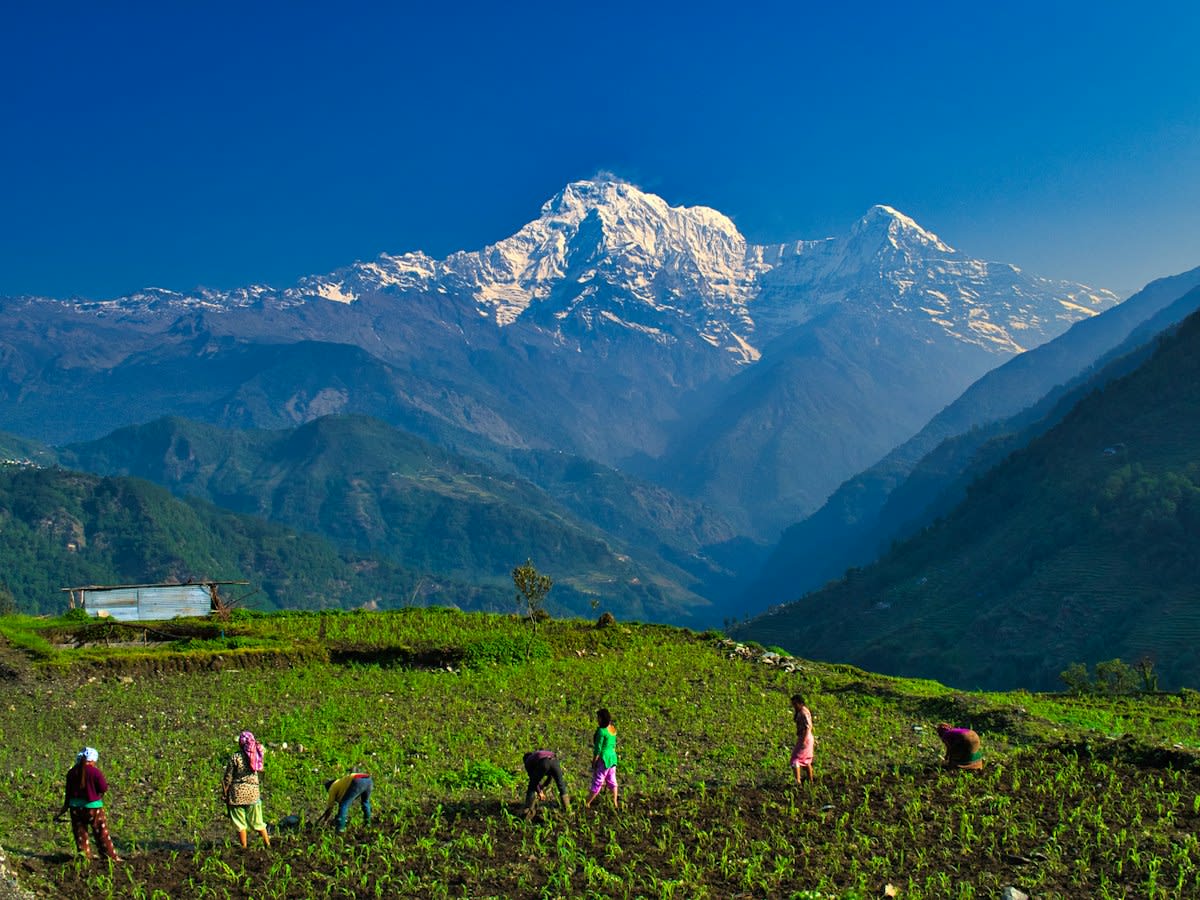
Across the border in Nepal, the approach is based on biological diversity rather than chemical precision. The focus here is on regenerative agriculture that places agrobiodiversity at the center of the system (Source: OnlineKhabar, 2026). By cultivating a variety of crops and livestock adapted to the mountains and plains, Nepali farmers are building a buffer against unpredictable weather and declining soil health. This diversity acts as a form of natural insurance.
The friction on the ground is often palpable. In the Mekong Delta, a Dutch engineer with a zinc-heavy sensor may argue for a specific compost mix, while a local farmer, staring at dust-choked horizons, worries about the immediate cost of the transition. The debate is no longer about whether the climate is changing, but about who pays for the adaptation. The tension lies between the theoretical precision of a lab in Friesland and the brine-soaked reality of a farm in Vietnam.
The Failure Point
The primary failure point in these initiatives is the assumption of uniformity. As noted in the SALTA research, the impact of salt on crops depends on a complex mix of variety, growth stage, soil, water quality, and drainage (Source: Agroberichten Buitenland, 2026). Consequently, a salinity level that destroys a crop on one farm may be manageable on another. When international experts apply a one-size-fits-all solution, the results are often disastrous, leading to wasted investment and lost harvests.
- Over-reliance on single-crop varieties increases vulnerability to climate shocks (Source: OnlineKhabar, 2026).
- Increasing land and fertilizer use fails to sustain productivity growth (Source: Newswise, 2026).
- Generic salinity mitigation ignores local soil and drainage variations (Source: Agroberichten Buitenland, 2026).
To avoid these pitfalls, the trend is moving toward hyper-local data. The use of five different salinity levels in the Dutch tests is an attempt to map the specific breaking points of various crop varieties. This granularity is the only way to combat the global productivity slump. Without it, farmers continue to pour expensive, oil-stained machinery and chemicals into soil that can no longer absorb them.
The delta between the old and new models is clear. The old model was a global hammer; the new model is a local scalpel. Whether it is the biodiversity of Nepal or the precision nutrition of Lucknow, the goal is the same: decoupling growth from resource depletion. The success of these projects will determine if the fifty-year productivity low is a temporary dip or a permanent ceiling.
Editorial Note
The Virginia Tech GAP report serves as a warning. When productivity growth slows while input costs rise, the result is an economic squeeze that hits the most vulnerable farmers first (Source: Newswise, 2026).
Fact-Check & Accuracy Note
All statistics regarding the Mekong Delta are based on the September 2026 report from Agroberichten Buitenland. Productivity data for India is sourced from The Tribune (October 2026). Global productivity metrics are based on the 2026 GAP Report via Newswise.