Watch: Massive fire at Saudi Aramco sites targeted in Houthi missile, drone strikes
Source Entity
AASTHA JHA
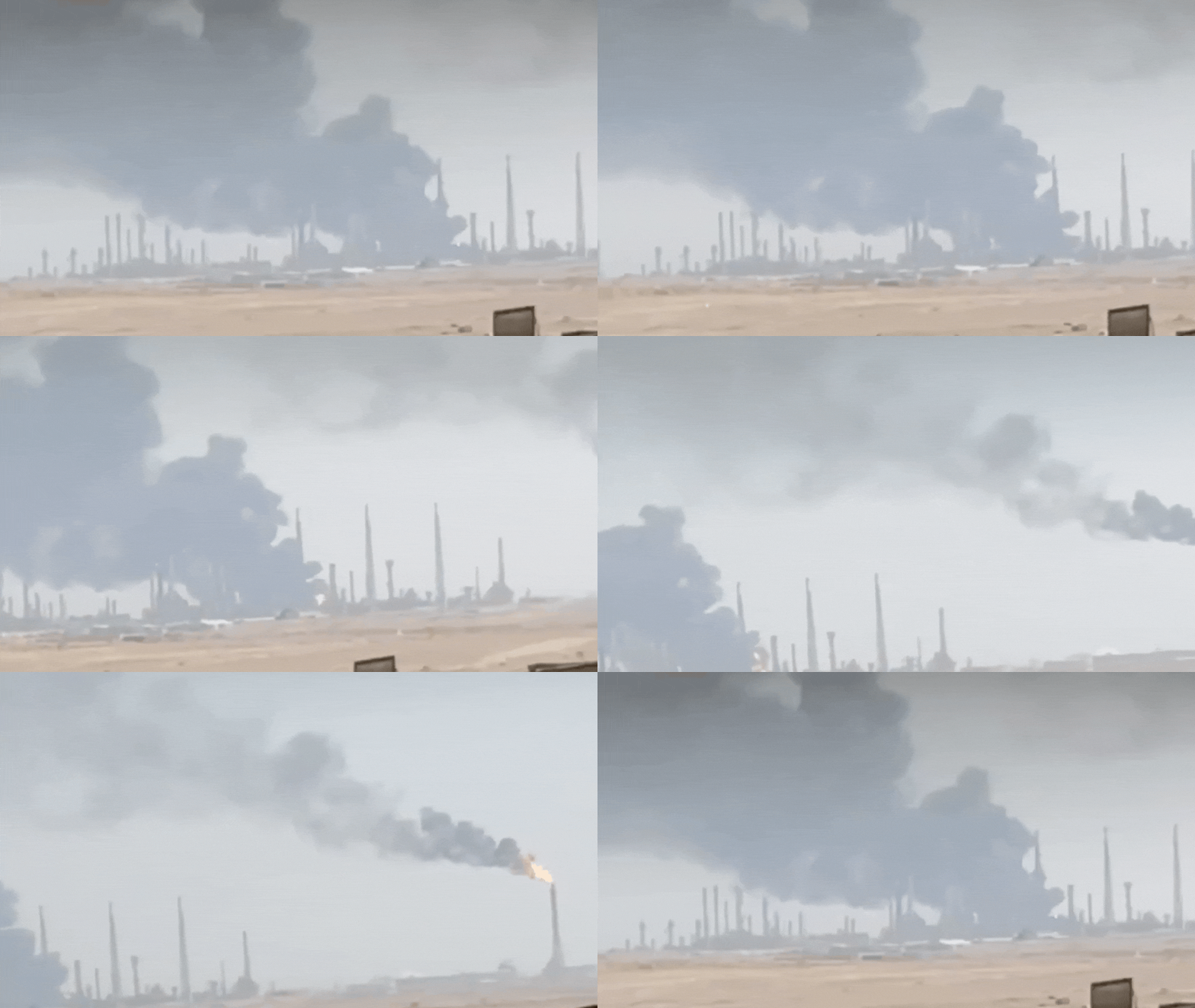
Houthi forces launched a coordinated drone and missile attack on Saudi Aramco facilities in Riyadh and the Khurais area, causing significant fires. The group claims the assault is a direct retaliation for ongoing Saudi-led coalition airstrikes in Yemen.
Escalation in the Arabian Peninsula: Aramco Facilities Hit
Recent reports confirm a significant escalation in regional hostilities as Yemen’s Iran-aligned Houthi movement successfully targeted Saudi Aramco facilities in Riyadh and the Khurais region. The strikes, executed via a combination of ballistic missiles and unmanned aerial vehicles (drones), have resulted in major fires at these critical energy sites. This tactical offensive represents a high-profile breach of Saudi security infrastructure, highlighting the evolving capabilities of non-state actors in modern asymmetric warfare.
The Houthi Strategic Rationale
The Houthi military spokesperson, Brigadier General Yahya Saree, explicitly linked these strikes to a retaliatory framework. According to the Houthi leadership, the operation was a direct response to a surge in activity by the Saudi-led coalition, which reportedly conducted nearly 60 airstrikes and missile attacks against Sanaa and other Houthi-controlled territories within a 24-hour period. By targeting the economic backbone of Saudi Arabia—its oil infrastructure—the Houthis are signaling a shift toward 'cost-imposition' strategies designed to make the ongoing conflict unsustainable for Riyadh.
Impact on Global Energy Markets
The choice of Khurais and Riyadh as targets is strategically significant. Khurais is home to one of the world's largest oil fields, and its vulnerability serves as a stark reminder of the fragility of global energy supply chains. When critical infrastructure in Saudi Arabia is compromised, it often triggers immediate volatility in global oil markets. This incident underscores how regional geopolitical disputes in the Middle East can rapidly translate into global economic shocks, forcing international stakeholders to account for the heightened risk profile of energy production in the region.
Asymmetric Warfare and Technological Proliferation
The ability of the Houthi forces to coordinate a multi-pronged strike involving both drones and ballistic missiles suggests a high level of technical sophistication. This development reflects a broader trend of technological proliferation where smaller, non-state groups gain access to advanced weaponry capable of penetrating sophisticated air defense systems. The success of this operation suggests that traditional kinetic defense measures are being severely tested by these hybrid tactics, which utilize low-cost drones to overwhelm or bypass more expensive interceptor systems.
Future Implications and Regional Stability
As the conflict between the Saudi-led coalition and Houthi forces continues, the risk of further strikes on vital infrastructure remains elevated. The failure to secure a lasting ceasefire suggests that these tit-for-tat exchanges are likely to persist, creating a cycle of violence that complicates diplomatic efforts for peace in Yemen. Future trends suggest that both sides will continue to test the limits of their respective military doctrines, increasing the probability of collateral damage to regional economic stability and civilian security.
Conclusion
In summary, the attack on Saudi Aramco facilities marks a dangerous intensification of the Yemeni conflict. By directly impacting Saudi Arabia's industrial heartland, the Houthi movement has underscored its intent to expand the scope of the war beyond Yemeni borders. As international observers monitor the situation, the focus remains on whether these strikes will necessitate a recalibration of security strategies or if they will further entrench the parties in a prolonged, destructive cycle of regional confrontation.