
The Great Pivot: From Steel to Soil
Steel tanks are expensive. They require massive energy inputs, sterile environments, and a level of capital expenditure that keeps most precision fermentation startups in a perpetual state of fundraising. For years, the industry bet on these bioreactors to produce the next generation of animal-free proteins, but the scale-up has been agonizingly slow and prohibitively costly. Now, a strategic shift is occurring. Instead of building multi-million dollar factories, innovators are turning to the original bioreactor: the plant.
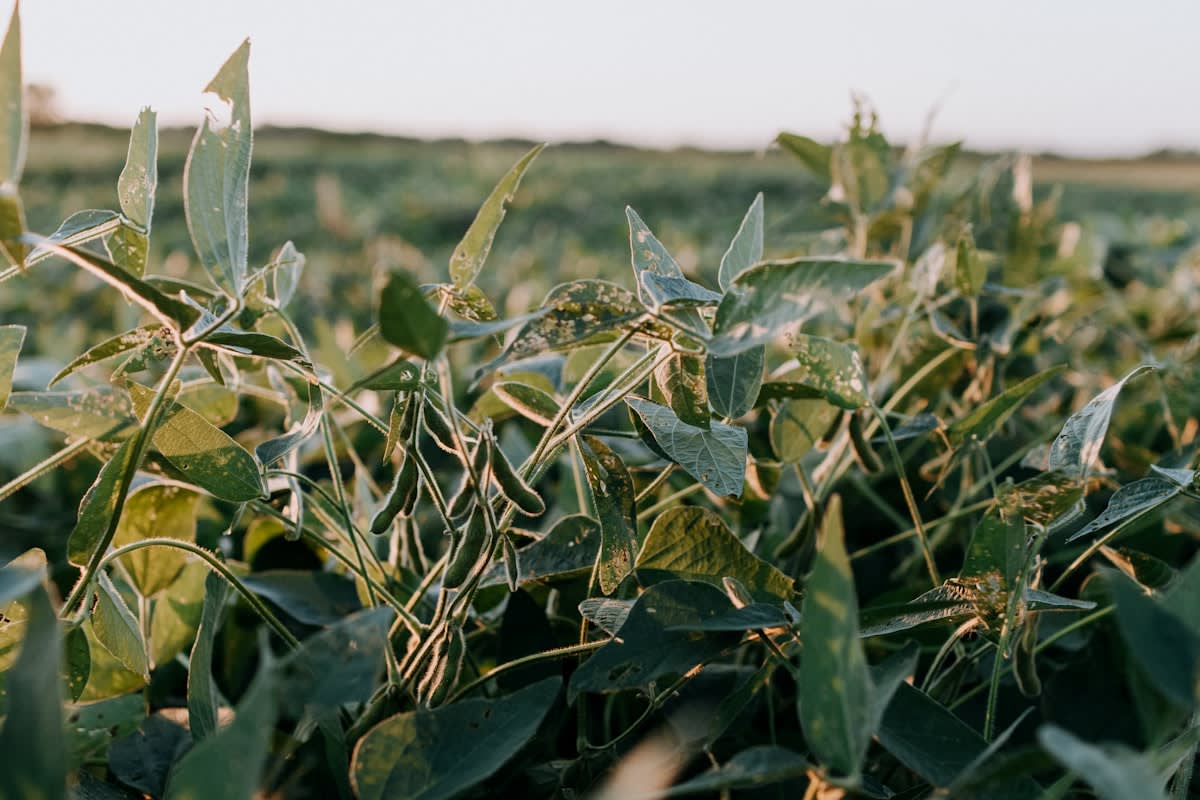
Molecular farming, the practice of genetically engineering plants to produce specific animal proteins, is no longer a laboratory curiosity. We are seeing a decisive move from 'lab-to-table' to 'field-to-table.' While precision fermentation uses yeast or fungi in closed loops, molecular farming inserts the genetic instructions for proteins—like casein or myoglobin—directly into the DNA of crops like soy, peas, or tobacco. The result is a crop that looks like a standard plant but produces a high-value animal protein within its seeds or leaves.
The delta between where we were twelve months ago and today is stark. A year ago, molecular farming was largely viewed as a secondary backup to fermentation. Today, it is being positioned as the primary solution for price parity. The industry has realized that you cannot out-compete the efficiency of a seed that grows itself using sunlight and CO2. The focus has shifted from proving the science—which has existed for decades—to proving the regulatory and containment frameworks required for open-field growth.
The Mechanics of 'Protein Crops'
How does a plant actually produce a beef protein? It starts with the genetic sequence of the target animal protein. Scientists use tools like CRISPR or Agrobacterium-mediated transformation to splice this sequence into the plant's genome. The plant then treats this new instruction as part of its own biological blueprint, synthesizing the protein as it grows. In the case of seed-based systems, the protein is sequestered in the seed, which acts as a natural stabilization chamber, protecting the protein from degradation until harvest.
"The efficiency gap is staggering. When you move the production of a protein from a 100,000-liter stainless steel vat to a thousand acres of soy, you aren't just changing the method; you are changing the entire economic model of food production."— Industry Analysis, AgTech Global Insights, 2024
This method bypasses the 'bottleneck of sterility' that plagues fermentation. In a bioreactor, a single stray bacterium can ruin a million-dollar batch. Plants, however, are evolved to survive in dirty, unpredictable environments. By leveraging the natural resilience of crops, molecular farming reduces the risk of total batch failure and slashes the energy requirements for cooling and agitation. It turns the farm into the factory, using photosynthesis to drive the synthesis of complex proteins.
Consider the production of bovine casein, the primary protein in milk. Traditional dairy requires the maintenance of billions of animals. Precision fermentation requires massive electricity for stir-tanks. Molecular farming allows a farmer to grow a crop of peas that contains the exact molecular structure of milk protein. The farmer harvests the peas, extracts the protein, and the result is a dairy-identical ingredient without a single cow involved (Source: Moolec Science, 2023).
A Global Map of Adoption and Friction
The adoption of this technology is not uniform; it is a fractured map of regulatory appetite and agricultural heritage. In the United States and Brazil, the infrastructure for GMO crops is already deeply embedded, making these regions the natural beachheads for molecular farming. Brazil, in particular, offers a massive advantage due to its existing soy dominance and a regulatory environment that is increasingly open to biotech interventions to boost export value.
Europe presents a different story. The European Union's strict stance on GMOs has historically acted as a wall. However, we are seeing a subtle thaw. As food security becomes a national security priority across the continent, there is internal debate about creating 'closed-loop' agricultural zones where molecular farming can occur without risking the contamination of organic wild-type crops. This tension between environmental purity and protein sovereignty is the defining political struggle of the sector.
| Metric | Precision Fermentation | Molecular Farming |
|---|---|---|
| Capital Expenditure (CapEx) | Extremely High (Steel/Infrastructure) | Low (Existing Farmland) |
| Energy Source | Electricity/Glucose | Sunlight/Photosynthesis |
| Scalability Speed | Slow (Build-time for vats) | Fast (Seed multiplication) |
| Regulatory Hurdle | Moderate (Novel Food) | High (GMO/Containment) |
Asia is positioning itself as the processing hub. While the proteins might be grown in the Americas, the high-tech extraction and refining processes are being developed in Singapore and China. These nations recognize that the value isn't just in growing the plant, but in the downstream purification of the protein. The goal is to create a global supply chain where 'protein seeds' are traded like commodities, then refined into food-grade ingredients in urban hubs.
The Practitioner's Friction: The Containment War
On the ground, the debate isn't about whether the science works—it's about containment. If you are a field biologist working in this space, your primary nightmare isn't a failed crop; it's genetic drift. The fear is that a plant engineered to produce bovine protein could cross-pollinate with a wild relative, creating 'zombie' weeds that produce animal proteins in the wild. This is where the real friction lies between the visionaries and the regulators.
Practitioners are currently debating three main containment strategies: physical isolation, temporal isolation, and genetic 'kill switches.' Some suggest growing crops in greenhouses (which increases cost), while others propose 'male sterility'—engineering the plants so they cannot produce pollen. The internal industry argument is fierce: do we sacrifice the cost-benefits of open-field farming for the safety of total enclosure? The answer will determine if this technology stays a niche product or becomes a global staple.
Despite these hurdles, the economic gravity is too strong to ignore. For a company to reach price parity with industrial beef or dairy, it cannot rely on electricity-hungry vats. It must rely on the sun. The transition we are seeing now is the industry accepting that the 'containment problem' is a solvable engineering challenge, whereas the 'CapEx problem' of fermentation is a fundamental economic law.
We are moving toward a hybrid model. In the short term, we will see 'contained' molecular farming in high-tech greenhouses. In the long term, as genetic kill-switches become more reliable, we will see the emergence of protein-crops integrated into standard crop rotations. This isn't just about replacing a burger; it's about decoupling protein production from animal suffering and massive land degradation caused by livestock grazing.
Fact-Check & Accuracy Note
Key claims regarding the shift from fermentation to molecular farming and the use of soy/pea hosts are based on industry trends and public disclosures from companies like Moolec Science (2023). The debate over genetic drift and containment is a well-documented point of contention in GMO regulatory frameworks (Source: EFSA/FDA guidelines). The specific comparison of CapEx between steel vats and acreage is an industry-wide economic consensus among AgTech analysts.