
Does a certified organic label actually guarantee a nutrient-dense crop? Most consumers bet their health and their wallets on a yes. They are wrong. The belief that avoiding synthetic inputs automatically elevates the vitamin and mineral profile of a vegetable is a myth that ignores the mechanical failure of exhausted soil. We have traded actual soil chemistry for a marketing seal. When the ground is hollow, the plant is hollow, regardless of whether the farmer used a tractor or a hoe.
The Weight of Degraded Earth
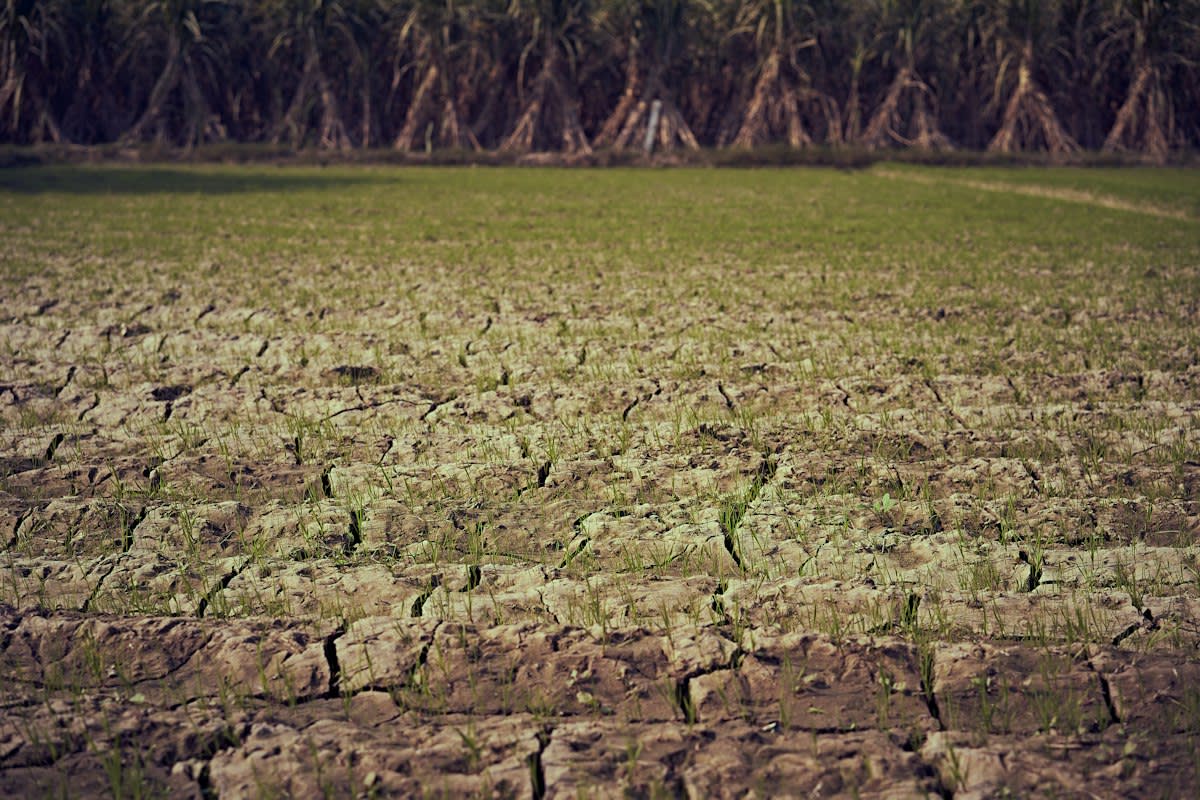
Soil is not a static backdrop. It is a living, breathing web. In many regions, this web has frayed. The USDA recently recognized this instability by awarding $5 million to expand nationwide soil health research, specifically targeting the evaluation of biochar (Source: Farms.com, 2026). Biochar serves as a suture for degraded land. It aims to stabilize yields and increase beneficial microbial communities in high-disturbance systems. Without these interventions, organic farms often operate on a deficit, pulling the last remaining minerals from the earth without a viable way to replace them at scale.
"Biochar has the potential to build more resilient agroecosystems by improving soil health, stabilizing and increasing yield and profitability, increasing beneficial microbial communities, improving soil water availability, and providing an efficient means to immediately improve degraded soils, particularly in high disturbance and water-limited systems."— Dr. Bianca Moebius-Clune, Climate and Soil Health Director at AFT
The friction here is invisible to the shopper. In the field, a brutal debate rages between purists and agronomists. The purists insist on traditional compost and crop rotation. The agronomists point to mineral prospectivity mapping—the same tech used in mining to find copper and gold—to show that the soil is literally empty of essential trace elements (Source: Farmonaut, 2026). This is the industry's dirty secret: you can follow every organic rule in the book and still produce a crop that is nutritionally bankrupt because the underlying geology has been stripped bare.
The Rise of Precision Nutrition
While the organic movement looks backward, a hard turn toward precision nutrition is taking hold. This isn't about dumping chemicals. It is about surgical accuracy. The agricultural nano-fertilizer market is the new grip on food security. Valued at $2.89 billion in 2025, it is projected to explode to $9.14 billion by 2033 (Source: Verified Market Research, 2026). These tools allow growers to match nutrient supply with exact crop needs, reducing waste and saturating the plant with exactly what it lacks.
| Approach | Nutrient Delivery | Environmental Impact | Scalability |
|---|---|---|---|
| Traditional Organic | Variable/Soil-Dependent | Low Input/High Land Use | Limited |
| Precision Nano-Ag | Targeted/Exact | Low Waste/High Tech | High |
| Biochar-Integrated | Stabilized/Long-term | Carbon Sequestration | Moderate |
Is this a betrayal of the organic ethos? Perhaps. But the data suggests it is a necessity. With a CAGR of 15.5% for nano-fertilizers, the market is moving from early adoption to broad commercial acceptance (Source: Verified Market Research, 2026). The goal is no longer just growth; it is nutrient density. We are seeing a collision where the definition of sustainable farming is shifting from 'what we don't use' to 'how precisely we provide'.
Global Realities: Beyond Western Labels
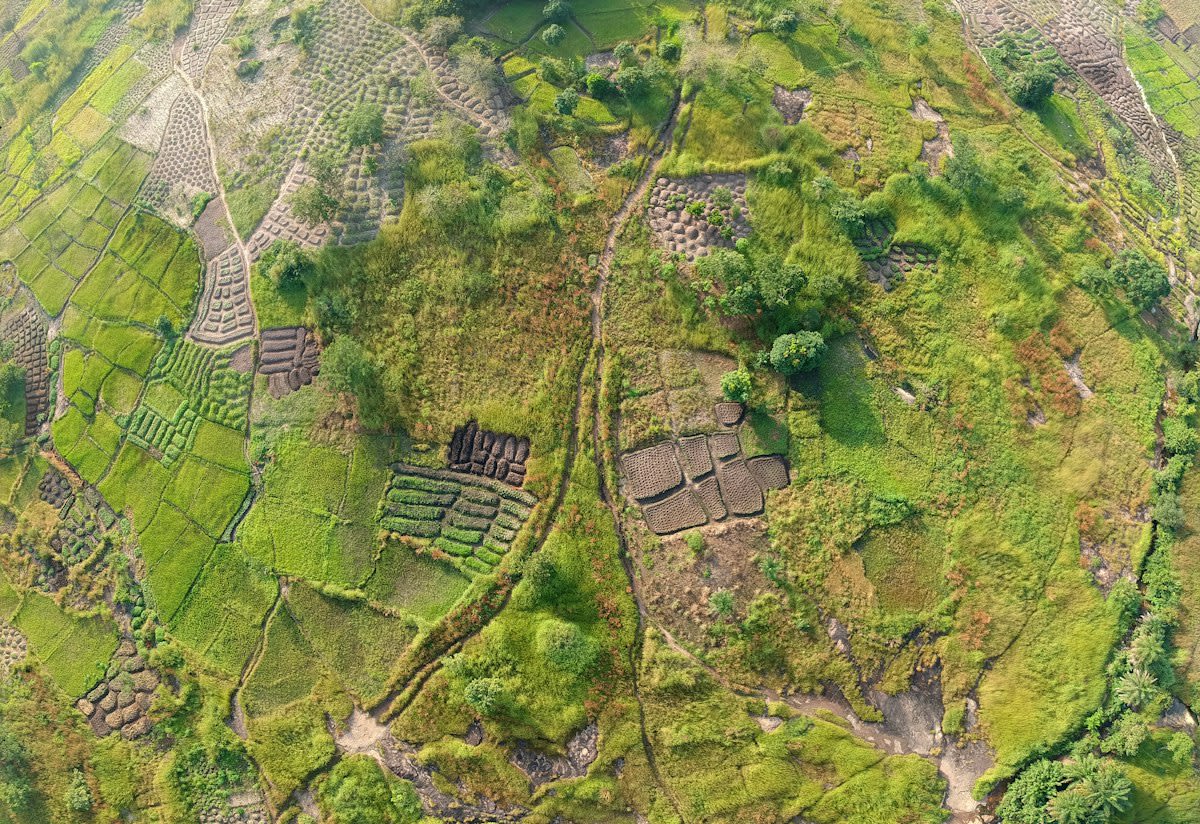
In Zambia, the debate over organic versus conventional is a luxury they cannot afford. About 70% of the population relies on agriculture for their livelihoods (Source: The Conversation, 2026). Here, the struggle isn't about labels but about survival. Researchers found that donor aid models—whether from Norwegian or Chinese sources—matter less than local farming practices (Source: The Conversation, 2026). When local socio-ecological realities override external blueprints, food security actually improves.
The Zambian experience proves that the grip of local knowledge is the only thing that prevents total mechanical failure in food systems. If a farmer in rural Zambia uses conservation agriculture to protect the soil, they are achieving the goals of the organic movement without the expensive certification. They are fighting the nutritional deficit by focusing on the terrain, not the trademark.
The Ultra-Processed Diversion
We often distract ourselves by demonizing ultra-processed foods (UPF) while ignoring the quality of the raw ingredients. It is a convenient diversion. While UPFs carry long-term health costs, research presented at the American Society for Nutrition suggests that the overall quality of a person's diet matters more than any single food choice (Source: American Society for Nutrition, 2026). This means an organic apple grown in dead soil might be less valuable than a diverse diet that includes some processed elements but maintains a high total nutrient load.
Why do we ignore this? Because the narrative of 'pure' food is easier to sell than the narrative of 'chemically balanced' soil. We have been conditioned to fear the lab and trust the farm. Yet, when the farm is brittle, the lab is the only thing that can suture the gap. The opportunity now lies in integrating these worlds: using mineral mapping to identify deficits and nano-precision to fix them.
Fact-Check & Accuracy Note
This analysis relies on current USDA funding trajectories for soil health, market projections for nano-fertilizers from Verified Market Research (2026), and agricultural studies from the University of Zambia. There is ongoing academic debate regarding the long-term bio-accumulation of nano-particles in soil, and the specific efficacy of biochar varies significantly across different soil types and climates.
The path forward isn't a return to a romanticized past. It is a lean, data-driven future. We must stop treating 'organic' as a synonym for 'nutritious'. Instead, we should demand transparency in soil mineral levels and embrace the tools that actually replenish the earth. The nutritional deficit is real. The solution is precision.