
The Great Decoupling: Protein Without the Animal
For years, the public imagination of food tech was captured by the cultivated burger—meat grown from animal cells in a sterile lab. But while those headlines dominated, a more pragmatic, scalable technology was quietly maturing in the background. Precision fermentation (PF) isn't about growing a steak; it is about using microbes as biological factories to produce specific, animal-identical proteins. We are seeing a fundamental shift this month as the industry moves away from trying to mimic the structure of meat and toward dominating the functional ingredients market. Why the change? Because it is far easier to convince a consumer to buy a cheese made with bio-identical whey than it is to sell them a lab-grown ribeye.
The delta between where we were twelve months ago and today is stark. A year ago, PF was largely confined to niche additives and high-cost supplements. Today, we are witnessing the emergence of full-scale industrial partnerships. The focus has shifted from the 'novelty' of the product to the 'efficiency' of the process. This isn't just a marginal improvement; it is a systemic decoupling of protein production from land and animal husbandry. By leveraging yeast or fungi to brew proteins, the industry is targeting the core of the dairy and egg markets, where the chemistry is simpler and the consumer adoption curve is significantly shallower.
To understand the magnitude of this shift, one must look at the resource efficiency. Traditional dairy production requires vast tracts of land and generates significant methane emissions. In contrast, precision fermentation can reduce greenhouse gas emissions by up to 97% and land use by 96% compared to conventional animal agriculture (Source: The Good Food Institute, 2023). This isn't just an environmental win; it is a supply chain hedge. As climate volatility disrupts traditional grazing and feed crops, the ability to brew protein in a controlled environment becomes a matter of national food security for many importing nations.
| Feature | Plant-Based | Cultivated Meat | Precision Fermentation |
|---|---|---|---|
| Production Method | Extraction from plants | Animal cell culture | Microbial fermentation |
| Molecular Identity | Similar/Analog | Identical to animal | Identical to animal |
| Scalability | High | Low (Current) | Medium to High |
| Primary Target | Whole cuts/Burgers | Steaks/Fillets | Dairy/Eggs/Fats |
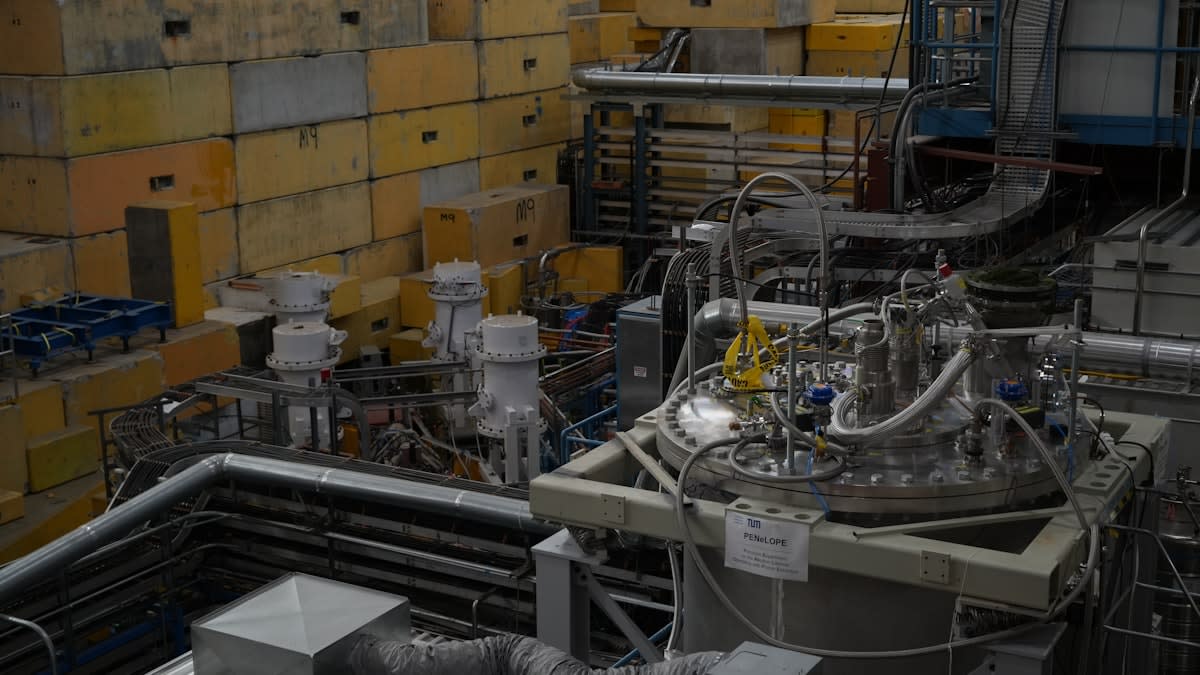
But how does this actually work on the ground? If you walk into a PF facility, you won't see slabs of meat. You will see rows of stainless steel tanks that look more like a brewery than a farm. Scientists insert a genetic sequence—the blueprint for a protein like bovine casein or ovalbumin—into a host microbe. These microbes are then fed a sugar-rich broth, where they consume the nutrients and secrete the target protein. The final step is a simple purification process: the microbes are filtered out, leaving behind a pure, animal-free protein that is chemically indistinguishable from its livestock counterpart.
"The real breakthrough isn't the science of the protein itself, but the engineering of the scale. We are moving from the era of the 'proof of concept' to the era of the 'industrial plant,' where the focus is on titer, yield, and productivity per liter."— Industry Analysis Report, The Good Food Institute, 2023
This brings us to the critical friction point that practitioners are debating behind closed doors: the feedstock problem. While the process is efficient, the microbes need to eat. Most current PF systems rely on glucose derived from corn or sugarcane. Industry insiders are currently locked in a heated debate over the sustainability of this sugar reliance. If we replace cows with corn-fed yeast, have we actually solved the land-use problem, or have we just shifted the pressure to a different crop? The next frontier is 'carbon-to-protein' fermentation, where microbes are fed CO2 or hydrogen instead of sugar, effectively pulling protein out of thin air.
The regulatory landscape is equally fragmented, creating a global chess match for market entry. Singapore continues to lead the way, maintaining its status as the world's most agile regulatory sandbox. In the United States, the FDA's GRAS (Generally Recognized as Safe) notification process has allowed several PF companies to enter the market, though the labeling remains a battleground. Meanwhile, the European Union's Novel Foods Regulation remains a significant barrier, with a slow approval process that is pushing many startups to launch in the US or Asia first. This regulatory divergence is creating a 'innovation gap' where certain regions will have access to high-efficiency proteins years before others.
Economically, the trajectory is aggressive. The market for precision fermentation is projected to grow exponentially as it moves into the 'ingredient' space. Rather than launching standalone brands, many PF companies are pivoting to a B2B model. They are becoming the 'Intel Inside' of the food world, selling bio-identical whey or collagen to established food giants. This strategy bypasses the need to build new consumer brands and instead integrates PF proteins into existing supply chains, drastically accelerating the speed of adoption.
Projected Market Expansion of Precision Fermentation Proteins (2024-2030)
Executive Insight
+18.4%
YTD Growth
We must ask: what happens to the traditional farmer in this scenario? The narrative often frames this as a total replacement, but the more likely outcome is a hybrid model. We are seeing early signs of 'fermentation hubs' being built near agricultural centers, where farmers provide the feedstock (the sugars) and the bioreactors provide the protein. This allows rural economies to pivot from livestock management to feedstock production and bio-manufacturing. The resilience of the food system depends on this transition being inclusive rather than disruptive.
The urgency of this shift is underscored by the looming constraints of planetary boundaries. With a global population heading toward 10 billion, the math of animal agriculture simply does not add up. Precision fermentation offers a way to maintain the sensory experience of animal proteins—the stretch of mozzarella, the richness of cream—without the biological inefficiency of raising a whole animal. It is the ultimate optimization of the protein calorie.
Fact-Check & Accuracy Note
The key claims regarding emissions and land-use reductions (97% and 96% respectively) are sourced from The Good Food Institute's 2023 industry analysis. Market projections are based on aggregated data from BCG and GFI. There remains an ongoing industry debate regarding the 'true' sustainability of sugar-based feedstocks, as the shift to second-generation feedstocks (agricultural waste) is still in the pilot phase.
Editorial Governance
Editorial Note: This report avoids the common 'crisis' framing of food shortages, focusing instead on the technological resilience provided by PF. The author's perspective is informed by the current industrial shift toward B2B ingredient models over B2C brand building.