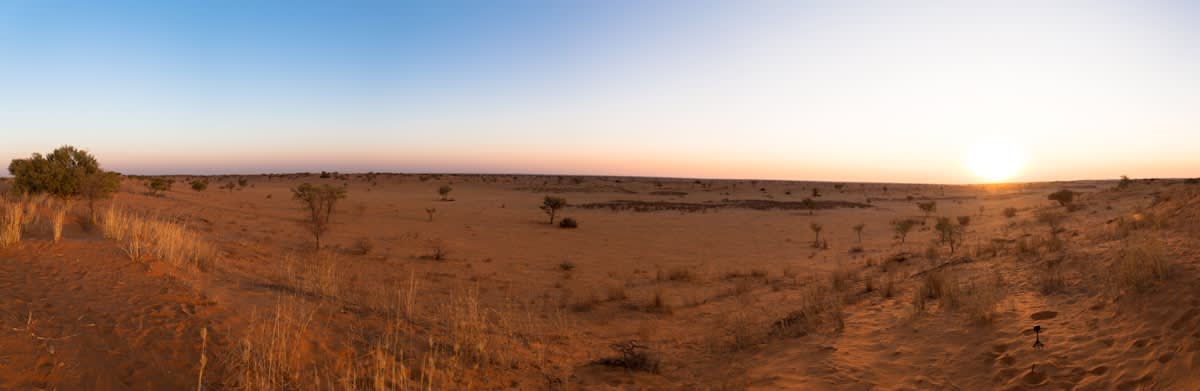
The geography of protein is being rewritten. For centuries, the ability to feed a population depended on the availability of arable land and the patience of biological growth cycles. That era is ending. We are witnessing a systemic shift where the 'farm' is no longer a plot of soil in the Outback or a paddy in Southeast Asia, but a stainless-steel bioreactor humming in an industrial park. The delta between traditional livestock and gas fermentation isn't just a matter of ethics or environment; it is a matter of industrial efficiency and capital velocity.
Why does this matter now? Because the capital is moving. We are seeing a simultaneous surge in two opposing directions: the aggressive consolidation of traditional land by ultra-high-net-worth individuals and the explosive growth of the precision fermentation infrastructure. This isn't a gradual transition. It is a high-stakes race to determine whether the future of calories will be extracted from the earth or synthesized from the air.
The Bioreactor Explosion: From Niche to Industrial Scale
The numbers coming out of the precision fermentation sector are staggering. The market for precision fermentation bioreactors was valued at $743.6M in 2025, but it is projected to skyrocket to $5,922.5M by 2033 (Source: Grand View Research, 2026). This represents a compound annual growth rate (CAGR) of 29.7%. When a market scales at nearly 30% year-over-year for nearly a decade, you aren't looking at a trend; you are looking at a total replacement of existing infrastructure. The move from $957.2M in 2026 to nearly $6 billion by 2033 suggests that the industry is moving past the pilot phase and into the era of mass commercialization.
Projected Growth of Precision Fermentation Bioreactors Market (2025-2033)
Executive Insight
+18.4%
YTD Growth
This growth is fueled by the ability to decouple protein production from the constraints of weather, soil quality, and animal husbandry. Gas fermentation—the process of using microbes to convert carbon dioxide and hydrogen into edible protein—effectively turns the atmosphere into a feedstock. This removes the need for the millions of hectares currently dedicated to soy and corn for animal feed, fundamentally challenging the valuation of traditional grazing lands.
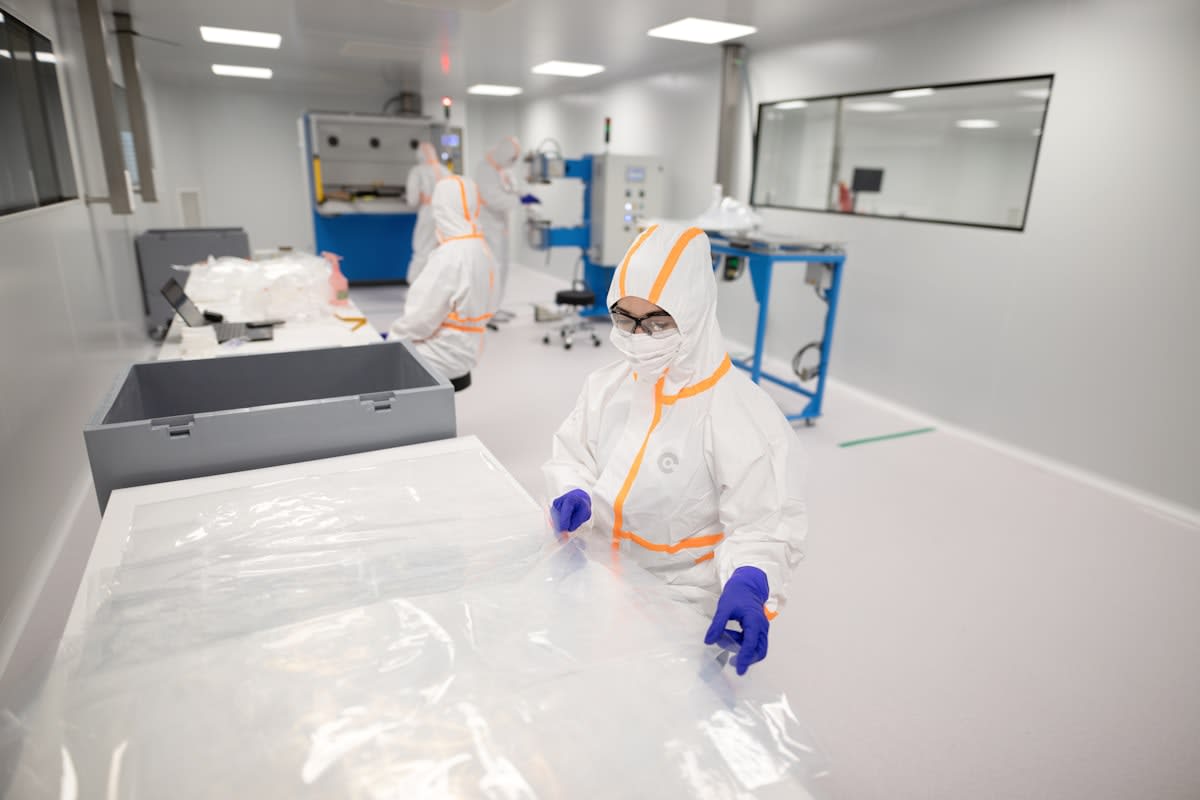
But bioreactors alone are just hardware. The real catalyst is the intelligence layer being draped over this hardware. The Artificial Intelligence in Agriculture market is forecasted to hit $35.48 billion by 2035, growing at a CAGR of 23.5% (Source: EIN News, 2026). This AI isn't just about autonomous tractors; it is about the predictive analytics and machine learning required to maintain the delicate biological equilibrium inside a 100,000-liter fermentation tank. Without this AI-driven precision, the cost of 'air-protein' would remain prohibitively high.
"Artificial Intelligence in Agriculture is transforming farming through automation, precision agriculture, smart monitoring, and data-driven crop management."— Market Overview, EIN News (2026)
The regional distribution of this AI surge reveals a strategic divide. North America currently controls about 38% of the AI agriculture market, leveraging its mature precision-agriculture ecosystem (Source: EIN News, 2026). However, the Asia-Pacific region is the fastest-growing segment, with a projected CAGR of 28.2% (Source: EIN News, 2026). This suggests that the East is not just adopting the technology but is aggressively optimizing it to ensure food security in regions where land is scarce.
As we transition from the lab to the field, a critical friction point emerges: the clash between the 'New Protein' tech stack and the 'Old Protein' land assets.
The Land Barons: A Hedge Against the Future?
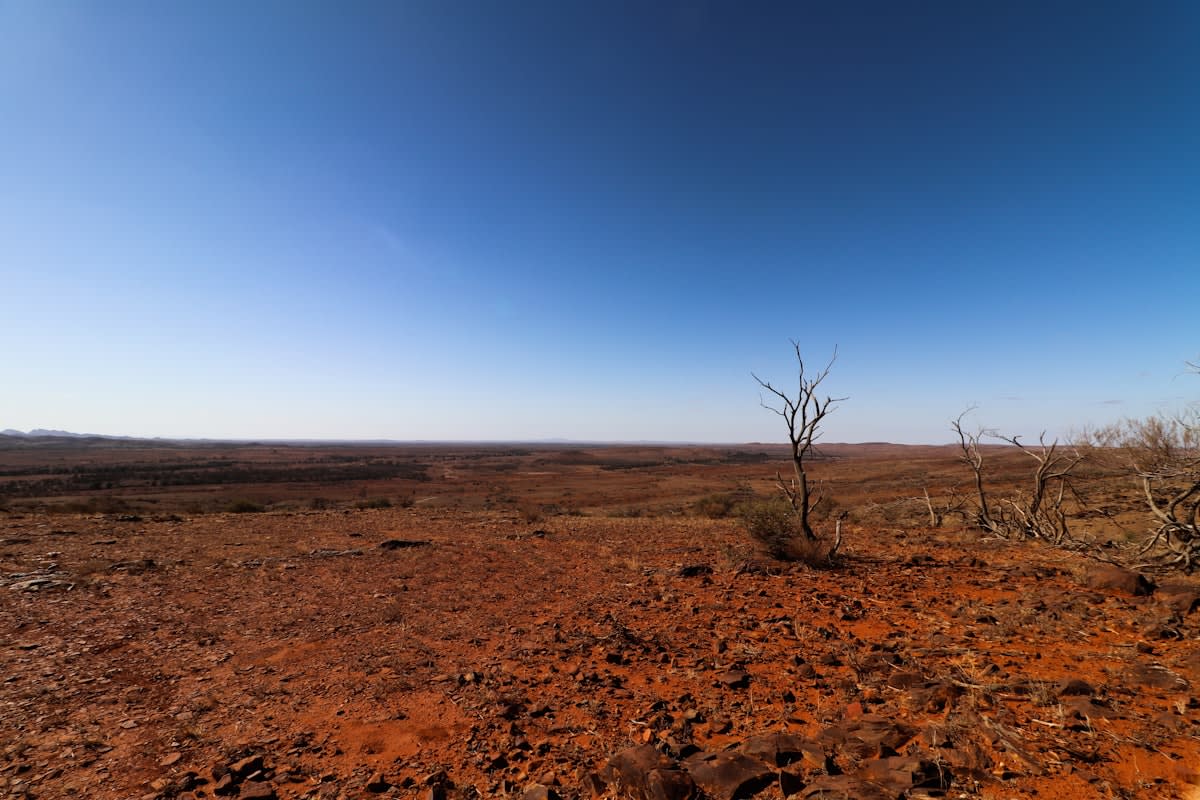
While bioreactors scale, the world's wealthiest individuals are doubling down on soil. In Australia, Gina Rinehart's rural interests, including Hancock Agriculture and S Kidman & Co, span more than 3.5 million hectares with assets valued at approximately $2 billion (Source: Hancock Agriculture, 2026). The strategy here is one of massive aggregation. In the last year, Hancock Agriculture acquired the Jandowae Aggregation in Queensland, while S Kidman & Co sold the Rockybank Aggregation for over $65 million (Source: Hancock Agriculture, 2026).
Is this a sign that traditional livestock is safe? Not necessarily. In the world of ultra-high-net-worth investing, land is often a hedge. By consolidating the most productive hectares, these 'Barons of the Bush' are securing the remaining prime assets as the rest of the industry pivots. They are playing a game of scarcity, betting that even in a world of air-protein, high-quality organic land will remain a premium luxury asset.
Similarly, in Malaysia, the push is toward 'going big' in commercial agriculture. Agriculture and Food Security Minister Datuk Seri Mohamad Sabu has urged Bumiputera farmers to move toward large-scale commercial operations to remain competitive (Source: NST Online, 2026). The example cited is a former engineer who transitioned to operating a 200-acre sweet potato farm in Terengganu (Source: NST Online, 2026). This move toward professionalization and scale is a defensive reaction to the same pressures driving the bioreactor boom: the need for extreme efficiency to survive in a globalized, tech-driven food economy.
From a practitioner's perspective, the debate in the industry has shifted from 'Will this work?' to 'How do we finance the CAPEX?' On the ground, the friction is palpable. Traditional farmers view bioreactors as an existential threat to their way of life, while venture capitalists view land as an inefficient, slow-moving asset. The real internal debate among ag-tech engineers is about the 'energy-protein trade-off.' They argue over whether the electricity required to power a $6 billion bioreactor fleet is more sustainable than the methane emitted by 3.5 million hectares of grazing land. It is a clash of metrics: carbon footprints versus land footprints.
| Metric | Traditional Livestock (Land-Based) | Precision Fermentation (Air-Based) |
|---|---|---|
| Primary Asset | Arable Land (e.g., 3.5M hectares) | Bioreactors ($5.9B projected market) |
| Growth Driver | Land Consolidation/Aggregation | AI & Machine Learning (23.5% CAGR) |
| Scalability | Linear (Limited by land availability) | Exponential (Limited by energy/hardware) |
| Key Region | Australia, North America | North America, Asia-Pacific |
The convergence of these trends suggests a future of stratified protein. We will likely see a world where 'commodity protein' is produced in massive, AI-optimized bioreactors in the Asia-Pacific and North American hubs, while 'heritage protein' is produced on the consolidated estates of land barons. The middle market—the small-scale livestock farmer—is the one most at risk. As Minister Mohamad Sabu noted in Malaysia, the only way to survive is to 'go big' (Source: NST Online, 2026).
Ultimately, the rise of gas fermentation is not just a technological victory; it is a spatial one. By removing the need for land, we are effectively expanding the 'productive area' of the planet to include the very air we breathe. The transition will be volatile, marked by the collapse of land values in some regions and the astronomical rise of biotech infrastructure in others. The protein pivot is here, and the clock is ticking for those still betting solely on the soil.
Fact-Check & Accuracy Note
Key claims regarding the precision fermentation market ($743.6M to $5.9B) are sourced from Grand View Research (2026). AI agriculture growth figures and regional percentages are sourced from EIN News (2026). Data on Australian land holdings is sourced from Hancock Agriculture (2026), and Malaysian agricultural policy details are from NST Online (2026). Ongoing debate remains regarding the total energy cost of bioreactor scaling versus the methane impact of traditional grazing.