Iran war creates two front defence dilemma for US against China and Russia
Source Entity
ARYAN SINGH
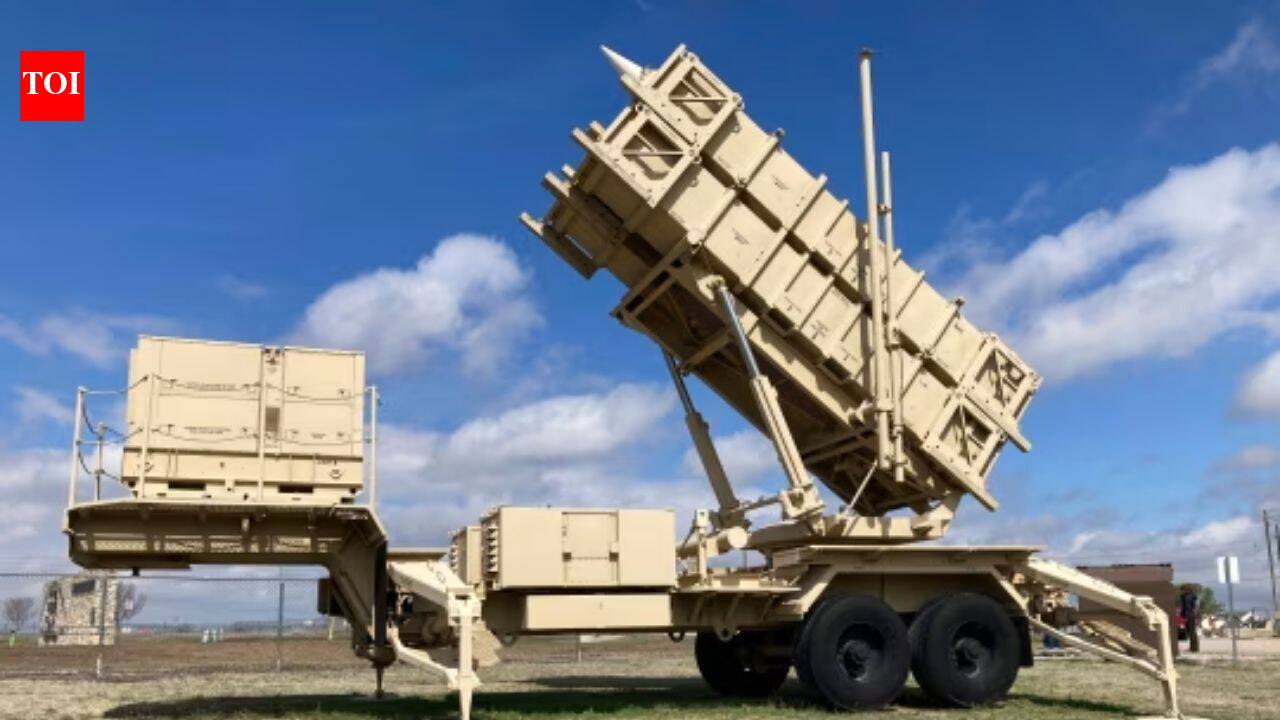
The heavy consumption of US air-defense munitions in the Middle East has created critical supply shortages, impacting global deterrence against China and Russia. This depletion threatens readiness in Europe and the Indo-Pacific, complicating the Pentagon's ability to maintain a two-front defense posture.
The Strategic Erosion of Global Deterrence
The ongoing conflict involving Iran and its proxies has forced the United States into a precarious military position, revealing the fragility of its global defense logistics. As American missile and air-defense stockpiles are rapidly depleted to manage regional instability in the Middle East, the ability of the Pentagon to maintain a credible deterrent against near-peer adversaries like China and Russia is being severely tested. This situation is no longer a localized tactical issue but a strategic dilemma that threatens the core of U.S. global security architecture.
The Critical Shortage of Interceptor Systems
At the heart of this crisis is the exhaustion of advanced defensive assets, specifically PAC-3 Patriot interceptors and ATACMS surface-to-surface missiles. Reports indicate that these inventories have dropped to levels described by officials as “beyond critical.” Because these systems require highly specialized manufacturing processes and long lead times, their depletion cannot be quickly remedied. The heavy reliance on these munitions to neutralize threats in the Middle East has effectively created a zero-sum game, where the protection of one theater directly compromises the defense capabilities of another.
Implications for Taiwan and the Indo-Pacific
The ripple effects of these shortages are most acutely felt in the Indo-Pacific, where Taiwan’s defense posture relies heavily on U.S. support. As the U.S. struggles to replenish its own stocks, the uncertainty surrounding its ability to respond to a potential contingency involving China continues to grow. If Washington is unable to guarantee the supply of precision-strike missiles and air-defense systems, the strategic calculus for regional stability shifts, potentially emboldening adversaries who perceive a window of vulnerability in American military readiness.
The European Front and Ukraine
Similarly, the conflict in Ukraine has been a significant driver of this munitions drain. Limited supplies of air-defense interceptors mean that the U.S. is forced to balance its commitment to Ukrainian sovereignty against the need to maintain sufficient stockpiles for its own national security. The "two-front dilemma" is now a reality, as the demand for guided rockets and THAAD interceptors outstrips the current industrial base's capacity to produce them, leaving European allies exposed to gaps in their integrated air and missile defense networks.
Industrial Base Constraints and Future Outlook
The fundamental problem is that the American industrial base was not designed for a prolonged, multi-front war of attrition. The replenishment process for these advanced weapons is expected to be lengthy and challenging, potentially undermining military readiness for years to come. Policymakers now face the difficult task of scaling up production while simultaneously managing active conflicts, a dual challenge that requires a fundamental reassessment of how the U.S. maintains its global defense posture in an era of renewed great-power competition.
Conclusion
In summary, the current depletion of U.S. munitions represents a significant strategic setback that extends far beyond the Middle East. By exhausting the very tools required for global deterrence, the U.S. is finding its capacity to influence outcomes in the Indo-Pacific and Europe increasingly restricted. Addressing these shortages will require more than just short-term tactical adjustments; it necessitates a long-term, systemic overhaul of defense manufacturing and a strategic re-evaluation of how the U.S. balances its global commitments against its finite military resources.