U.S. Navy blockade slashes Iran oil exports as Trump administration shifts to economic warfare
Source Entity
US Top News and Analysis
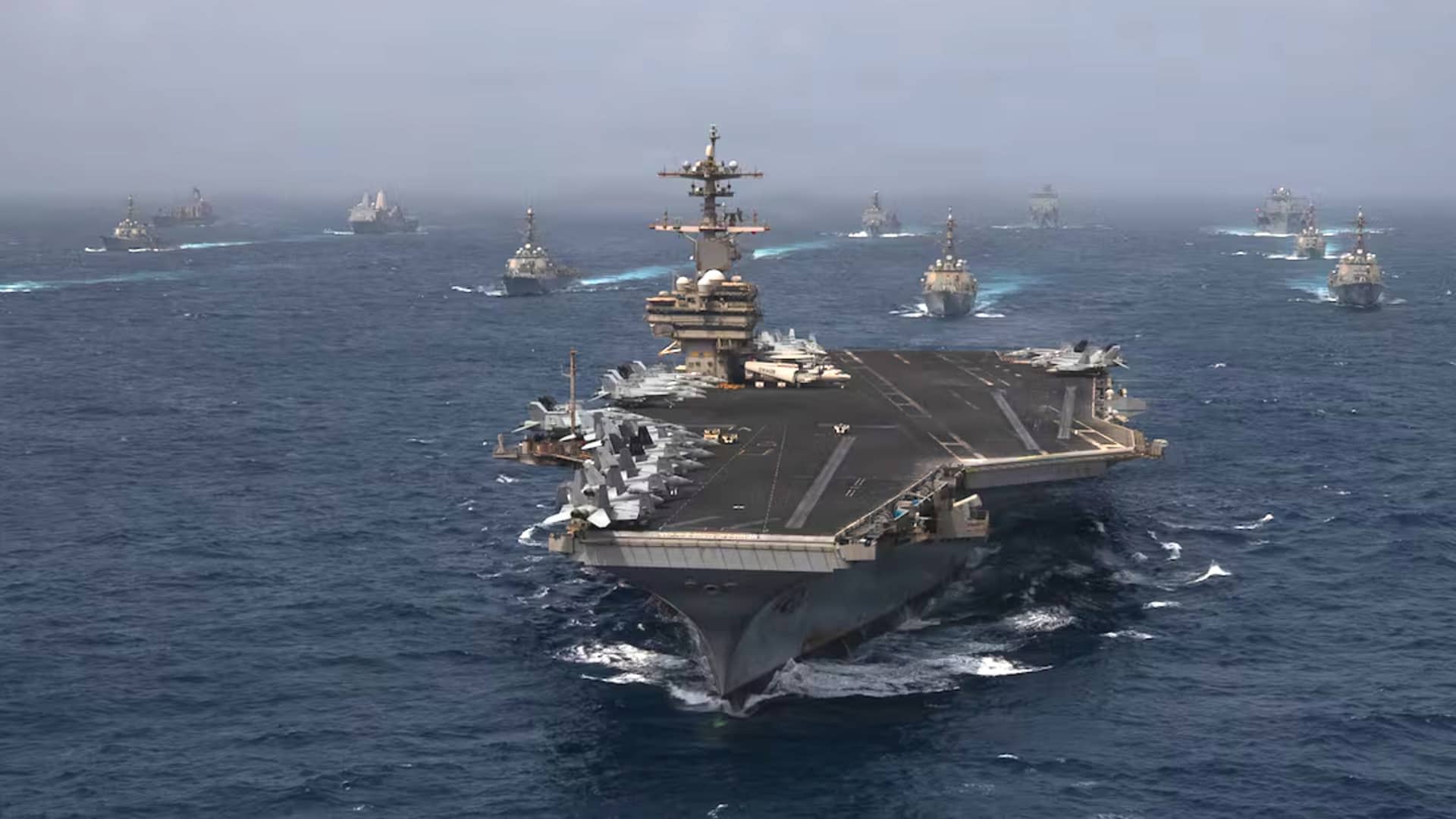
The Trump administration has pivoted to a naval blockade to curb Iranian oil exports after initial airstrikes failed to secure the Strait of Hormuz. This economic warfare has caused an 80% drop in Iranian crude loadings, aiming to force Tehran into negotiations through financial pressure.
The Shift to Economic Warfare in the Strait of Hormuz
Following a series of unsuccessful military engagements in July, the United States has fundamentally altered its strategy regarding Iranian aggression in the Strait of Hormuz. After a dozen waves of airstrikes failed to compel Tehran to relinquish its claims over the vital shipping artery, the Trump administration has transitioned toward a policy of systematic economic warfare. This pivot signifies a strategic recognition that kinetic military operations alone are insufficient to alter the behavior of the Iranian regime, necessitating a more comprehensive approach focused on the country's financial lifelines.
The Mechanics of the Naval Blockade
The centerpiece of this new strategy is a robust U.S. naval blockade, officially reimposed on July 14. This move serves as a direct retaliatory measure following documented Iranian attacks on oil tankers navigating the Strait. By leveraging maritime dominance to intercept and restrict the movement of Iranian crude, the U.S. has effectively bottlenecked the primary source of revenue for the Iranian state. The effectiveness of this operation is evidenced by the stark decline in export volumes, moving from a previous baseline to a mere fraction of prior capacity.
Impact on Iranian Crude Exports
The statistical reality of this blockade is profound. Trade intelligence firm Kpler reports that Iranian crude loadings have plummeted to approximately 260,000 barrels per day (bpd) in August. This figure represents an staggering 80% decline compared to the 1.7 million bpd recorded in August 2025, and a 70% decrease from the 893,000 bpd exported just last month. Such a rapid contraction in output underscores the severity of the economic pressure being applied, as Iran finds its ability to monetize its natural resources severely hampered.
Strategic Objectives and Financial Coercion
The overarching objective of the Trump administration is to exhaust Iran’s financial reserves, thereby forcing the leadership in Tehran to the negotiating table. The administration’s calculus is simple: by cutting off the lifeblood of the Iranian economy—oil exports—the U.S. aims to create an unsustainable fiscal environment that necessitates a diplomatic concession. This strategy seeks to force a full reopening of the Strait of Hormuz, ensuring global energy security without the need for further, potentially escalatory, military strikes.
Broader Implications and Future Outlook
The long-term implications of this strategy remain to be seen, as the efficacy of economic warfare often depends on the domestic resilience of the target nation. While the U.S. is betting on the inevitability of Iran running out of money, the situation creates significant uncertainty in global energy markets. Should the blockade persist, the global economy may face sustained volatility in oil prices, and regional tensions are likely to remain elevated. The international community will be closely watching whether this financial attrition leads to a breakthrough in the Hormuz crisis or results in further, more unpredictable regional instability.