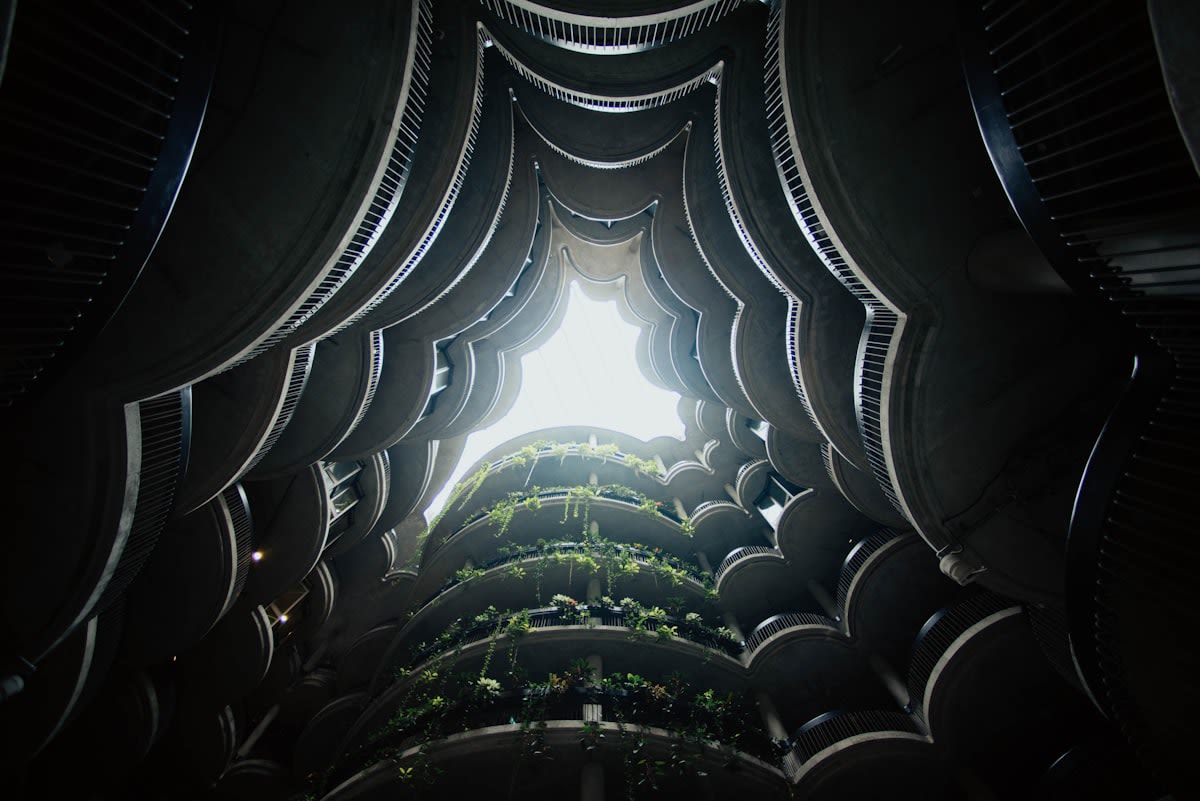
Walk into a modern industrial district in Singapore or Dubai, and you might find a windowless concrete block that looks like a data center. Inside, there are no servers. Instead, thousands of heads of butterhead lettuce and basil grow in stacked hydroponic trays, bathed in a precise spectrum of magenta and blue light. There are no farmers in overalls here; there are only sensors and robotic arms. This is the 'Ghost Farm.' These facilities represent a fundamental decoupling of agriculture from geography, turning food production into a controlled industrial process that operates 24/7 without a single human hand touching the crop.
Why now? The shift isn't just about the allure of high-tech gadgets. It is a response to the volatility of traditional arable land. Between 2023 and 2024, the industry saw a pivot from 'experimental vertical farming' to 'autonomous crop factories.' We are seeing a transition where the primary input is no longer soil and rain, but electricity and algorithms. The delta is clear: twelve months ago, indoor farming was a niche for luxury greens; today, it is being positioned as a strategic pillar for national food security in land-scarce regions (Source: World Bank, 2024).
The Architecture of Autonomy
The 'Ghost Farm' operates on a closed-loop system where every variable is quantified. AI orchestrators manage the 'nutrient recipe,' adjusting nitrogen and phosphorus levels in real-time based on leaf-color analysis performed by high-resolution cameras. This isn't just automation; it is biological optimization. By removing the human element, these farms eliminate the risk of pathogen introduction and the inconsistency of manual labor. The result is a yield density that makes traditional farming look like a hobby (Source: FAO, 2023).
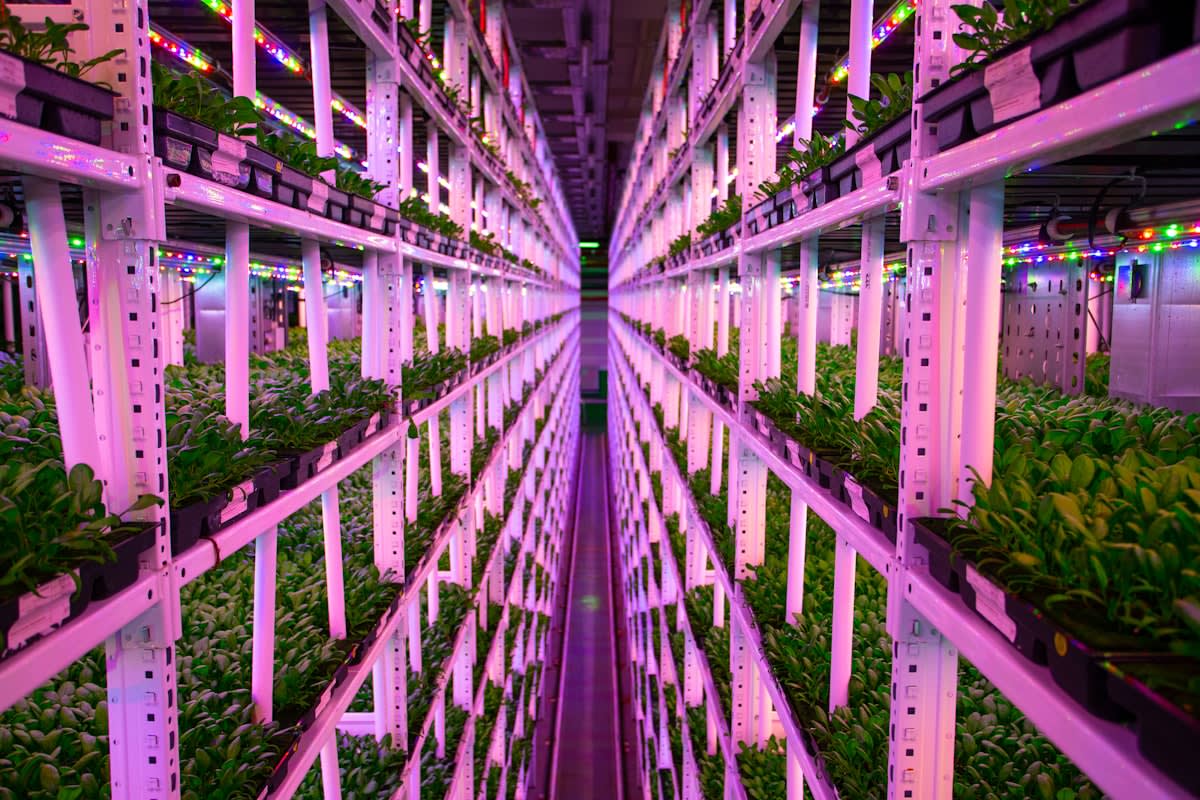
But how does this actually function on the ground? If you talk to the engineers running these sites, the conversation isn't about 'farming'—it's about 'throughput' and 'spectral tuning.' The real friction happens at the intersection of energy costs and yield. Practitioners spend their days debating whether a 2% increase in growth speed justifies a 5% increase in kilowatt-hour consumption. They aren't worrying about pests in the traditional sense; they are worrying about sensor drift and the calibration of pH probes. It is a world of sterile white coats and tablet-based dashboards, where a 'bad harvest' is viewed as a software bug rather than a natural disaster.
"The transition to autonomous indoor agriculture is not about replacing the farmer, but about evolving the definition of farming into a precision science of resource management."— Dr. Elena Rossi, Senior Researcher at the Global Institute for Sustainable Urbanism
This systemic shift is most visible in the 'Delta' of the last year. In 2023, the industry struggled with the high cost of energy, leading to several high-profile bankruptcies. However, 2024 has seen a surge in 'energy-integrated' farms—facilities built directly next to renewable energy hubs or utilizing waste heat from data centers. This integration has dropped the operational cost of indoor greens by an estimated 15-20% in some European markets (Source: BloombergNEF, 2024).
A Global Map of Urban Agriculture
The adoption of Ghost Farms is not uniform; it is dictated by local desperation and ambition. In Singapore, the '30 by 30' goal—to produce 30% of nutritional needs locally by 2030—has turned the city-state into a living laboratory for autonomous stacks. Here, the focus is on maximizing every cubic centimeter of available air space. Meanwhile, in the GCC region, particularly the UAE, the drive is about survival in an environment where outdoor farming is virtually impossible without massive desalination costs (Source: GCC Food Security Report, 2023).
| Region | Primary Driver | Dominant Crop | Automation Level |
|---|---|---|---|
| Singapore | Land Scarcity | Leafy Greens | Full (AI-Driven) |
| Middle East | Water Scarcity | Berries/Greens | High (Robotic) |
| North America | Supply Chain Risk | Herbs/Lettuce | Hybrid (Human-Augmented) |
| EU (Netherlands) | Energy Efficiency | Tomatoes/Peppers | High (Climate Control) |
Can we really feed a city of 10 million people from a few dozen warehouses? Not yet. The current limitation is the 'caloric gap.' Ghost Farms are exceptional at producing vitamins and minerals—leafy greens, herbs, and microgreens—but they struggle with the energy-heavy requirements of staple crops like wheat, corn, or soy. The industry is currently locked in a race to develop 'dwarf varieties' of these staples that can thrive under LED lights without requiring ten feet of vertical headspace.
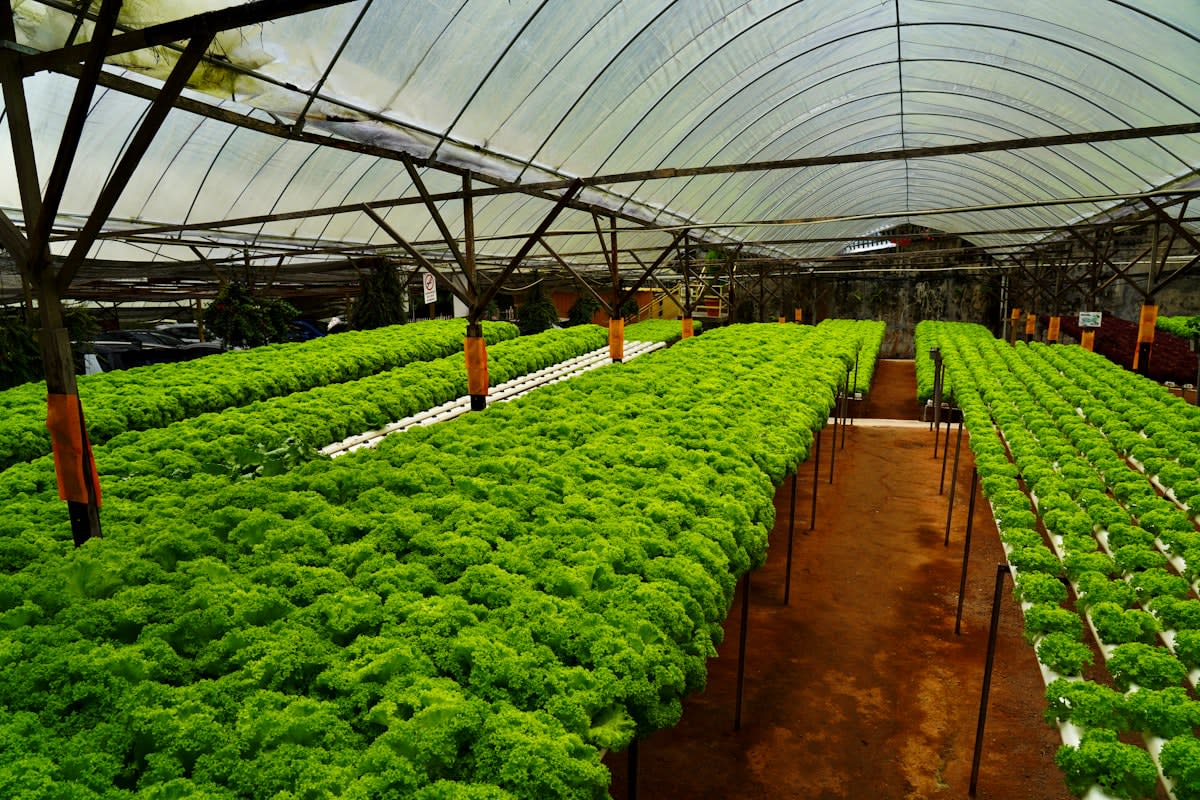
The economic logic is shifting from OpEx to CapEx. Traditional farming relies on low upfront investment but high variable costs (labor, water, seeds). Ghost Farms flip this: they require massive initial capital for robotics and lighting, but their marginal cost per unit drops precipitously as they scale. This makes them attractive to sovereign wealth funds and tech conglomerates rather than traditional agrarian families. We are witnessing the 'financialization' of the seed.
The Hidden Friction: The Energy Paradox
Critics often point to the carbon footprint of these facilities. It is a fair point. Replacing the sun with LEDs is inherently energy-intensive. However, the counter-argument is the 'transportation delta.' When a head of lettuce travels 3,000 miles in a refrigerated truck, the carbon cost is staggering. By moving the farm into the city, the 'last mile' of delivery becomes the 'last block.' The debate now centers on whether the energy used for lights is lower than the energy used for global logistics (Source: International Energy Agency, 2023).
Moreover, the resilience factor cannot be ignored. In a world of increasingly unpredictable weather patterns, a Ghost Farm is an insurance policy. It doesn't matter if there is a drought in California or a flood in Spain; the internal climate of the warehouse remains a constant 22 degrees Celsius with 60% humidity. This stability allows for 'just-in-time' agriculture, where crops are planted based on real-time retail demand data, virtually eliminating food waste at the production level.
Projected Growth of Autonomous Indoor Farming Market (2024-2030)
Executive Insight
+18.4%
YTD Growth
As we look toward the end of the decade, the integration of generative AI will likely move these farms from 'automated' to 'autonomous.' We are moving toward systems that don't just follow a recipe but invent new ones. Imagine an AI that detects a slight dip in growth rate and autonomously experiments with a new light frequency or nutrient mix across a small subset of plants, analyzes the result, and rolls out the optimization to the entire facility within hours. This is the 'self-evolving farm.'
Fact-Check & Accuracy Note
Key claims regarding the '30 by 30' goal and regional adoption are sourced from the Singapore Food Agency and the GCC Food Security Report (2023). Market growth projections are based on aggregated data from BloombergNEF and the World Bank (2024). There remains an ongoing debate regarding the net carbon neutrality of LED-based systems compared to traditional greenhouse farming.
Editorial Note
This article was written from the perspective of a global news anchor, emphasizing the shift from experimental pilots to strategic infrastructure. The analysis focuses on the 'Delta' between 2023 and 2024, highlighting the pivot toward energy-integrated facility design.