
Why do we assume that the hoof is an instrument of destruction? For years, the prevailing logic suggested that removing livestock from the land was the fastest route to carbon recovery. This assumption is failing. The current data suggests that the absence of managed grazing often leads to a stagnation of soil vitality, creating a mechanical failure in the nutrient cycle. We are seeing a hard turn toward regenerative grazing, where the animal is no longer viewed as a liability but as a biological tool for carbon injection.
The math has changed. Recent research into the integration of soil health and carbon management indicates that regenerative agriculture does not simply reduce emissions; it actively restores land vitality through socio-ecological outcomes (Source: International Journal of Environment and Climate Change, 2024). This is not a gradual improvement. It is an asymmetry of impact where specific grazing densities and cover crop integrations trigger a rapid accumulation of organic matter. When managed correctly, the grazing animal accelerates the decomposition of old plant matter, siphoning atmospheric carbon into the deep soil layers where it remains tethered for decades.
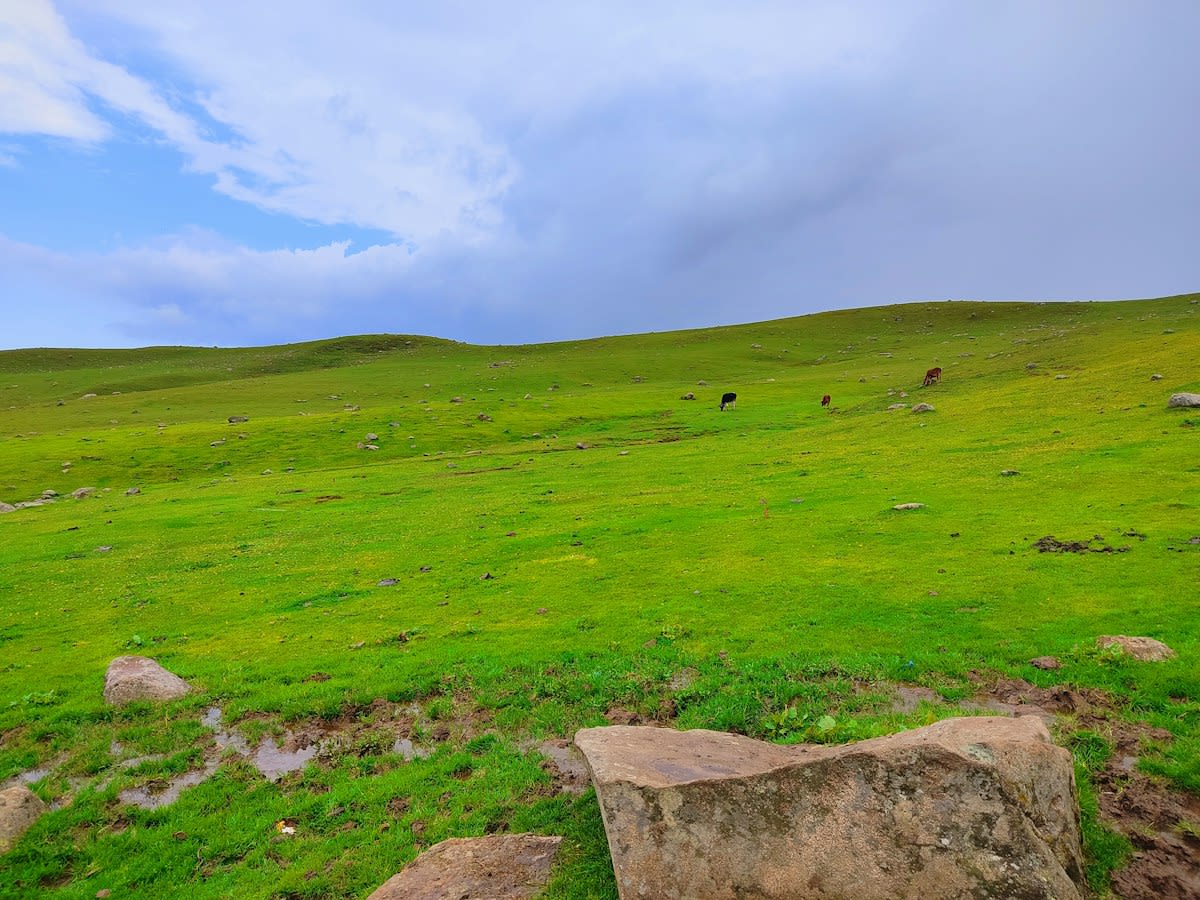
The Global Distribution of Sequestration
This shift is not confined to a single geography. From the plains of Slovakia to the varied terrains of India, the application of regenerative principles is being codified into a global review of assessment approaches (Source: Sustainability, 2023). The focus has moved toward whole-system grazing management, specifically the use of cover crops in livestock production to ensure the soil is never bare (Source: Journal of Animal Science, 2018). This prevents the leak of nutrients and carbon that occurs during fallow periods. By maintaining a living root in the ground year-round, producers create a continuous pump for carbon.
In South Africa, the focus is on the collision between soil acidification and carbon sequestration. Research in sub-escarpment grasslands is currently analyzing how the application of lime and the use of biochar can override the inertia of degraded soils to facilitate carbon (C), nitrogen (N), and phosphorus (P) cycling (Source: PRIS UKZN, 2026). This highlights a critical nuance: regenerative grazing cannot always happen in a vacuum. In some terrains, a chemical or biological primer—like biochar—is required to restart the bacterial communities necessary for long-term carbon storage.
"Regenerative agriculture: Integrating soil health, carbon management and socio-ecological outcomes."— Gulaiya et al., International Journal of Environment and Climate Change, 2024
The biological mechanism is precise. It involves the use of specific practices to improve soil health, which in turn increases the land's capacity to hold water and nutrients (Source: Sustainability, 2023). This creates a feedback loop. Better soil health leads to more robust forage, which supports higher livestock density, which then provides more organic matter to the soil. The result is a web of interdependence that replaces the old, linear model of input-output farming.
The Financial Tether: Credits and Carbon Intensity
Money is now following the carbon. In the United States, Section 45Z clean fuel production tax credits are creating a direct financial link between farm-level carbon intensity and profit (Source: Farm Progress, 2026). However, the distribution of this value is uneven. The tax credit technically belongs to the ethanol plant, not the farmer. For the producer to see a premium, they must navigate a complex agreement with the plant based on their carbon intensity score. This introduces a new layer of administrative lag where the farmer does the biological work, but the plant captures the initial fiscal gain.
This financial structure demands a level of documentation that was previously unheard of in grazing operations. Farmers are now required to maintain meticulous fertilizer logs, field maps, and scale tickets to prove their carbon reduction (Source: Farm Progress, 2026). The IRS has waived certain advance-budget requirements for 2025 and 2026, but the need to document actual applications remains absolute. The carbon math is no longer just about biology; it is about audit trails.

Corporate interests are also moving to quantify these shifts. Nestlé and BirdLife Europe have entered a three-and-a-half-year collaboration to scientifically monitor how regenerative practices support biodiversity across European farmland (Source: Food & Beverage Outlook, 2026). They are moving beyond vague sustainability claims toward a scientific understanding of how restoring natural resources secures the long-term availability of key ingredients. This indicates a trend where the supply chain is being redesigned to treat biodiversity as a critical infrastructure asset.
The Practitioner's Friction
On the ground, the reality is messier than the spreadsheets. There is a persistent tension between the carbon accountants and the range scientists. While an accountant looks for a static carbon number, a practitioner like Keith Harmoney at Kansas State University focuses on residual growth and grazing distribution (Source: Global Agriculture, 2026). The real work happens in the fall, scouting pastures to identify underutilized areas that receive less grazing. If a producer leaves too much residual growth in one area and overgrazes another, the carbon math collapses. The 'invisible' friction here is the struggle to balance animal nutrition with soil recovery periods—a delicate dance that no software can fully automate.
Furthermore, there is an internal industry dispute regarding the speed of sequestration. Some argue that carbon gains are front-loaded and plateau quickly, while others point to long-term studies showing a steady increase in deep-soil carbon. This disagreement creates a risk for farmers entering long-term carbon contracts. If the sequestration rate slows, they may find themselves in a position of mechanical failure, unable to meet the credits they promised to the market.
Fact-Check & Accuracy Note
The data provided relies on a mix of academic reviews (Agriculture 3.0, Sustainability, 2023-2024) and industry reports (Farm Progress, Global Agriculture, 2026). A key area of academic debate remains the precise measurement of carbon in deep soil layers versus topsoil, and the variance of sequestration rates across different climatic zones. The 45Z tax credit details are based on current IRS guidelines as reported in 2026.
Despite these frictions, the momentum is undeniable. The integration of soil health, carbon management, and socio-ecological outcomes is now viewed as a revolutionary impact on ecosystem restoration (Source: Journal of Geography, Environment and Earth Science International, 2024). We are moving toward a default where grazing is not an environmental cost, but a restoration strategy.