Novellas with Groff
Source Entity
Hacker News
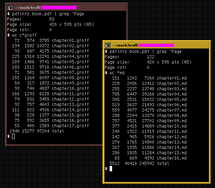
A developer has successfully utilized the Groff document formatting system to write two novellas, marking a personal transition from technical writing to creative prose. The project highlights the versatility of command-line tools in modern creative workflows.
The Intersection of Code and Creativity: Writing Novellas with Groff
In a fascinating convergence of technical utility and creative expression, a developer recently documented their journey of crafting two novellas using Groff, a venerable document formatting system. Traditionally used for typesetting manuals and academic papers in Unix-like environments, Groff serves here as a minimalist, distraction-free environment for long-form fiction. This unique workflow highlights a growing trend among technical professionals who prefer the control and simplicity of markup languages over the feature-heavy bloat of modern word processors.
Breaking the Barrier of Technical Writing
For many in STEM fields, writing is often viewed through the lens of academic or professional documentation—constrained, rigid, and strictly objective. The author notes that their academic history was defined by an aversion to creative writing, favoring the comfort of physics and mathematics. By repurposing Groff, a tool explicitly designed for technical typesetting, the author was able to bridge the gap between their analytical comfort zone and the subjective nature of storytelling. This suggests that the medium of production can significantly influence one's willingness to engage in creative endeavors.
The Mechanics of Production: Length and Efficiency
The author provides specific data regarding their output, noting that the first novella spanned approximately 50 A5 pages (15,000 words), while the second expanded to 120 pages (40,000 words). These figures sit on the threshold of traditional novella definitions, which typically range between 17,500 and 40,000 words. The evolution in speed is particularly striking: while the first project required seven months of labor, the second was completed in a mere ten days. This dramatic increase in velocity suggests that once the technical "friction" of the tool is overcome, the creative process can accelerate significantly.
Minimalism as a Creative Catalyst
By choosing to keep these works private, the author emphasizes that the value of the project lies in the act of creation rather than the outcome of publication. This approach mirrors the "digital minimalism" movement, where individuals strip away the pressures of social validation and algorithmic discovery to focus on the intrinsic satisfaction of the task. Using a command-line tool like Groff enforces a focus on content over formatting, allowing the author to treat their prose as data to be structured rather than art to be styled.
Future Implications for Creative Workflows
This experiment serves as a testament to the enduring relevance of legacy software in modern creative workflows. As commercial software suites become increasingly complex and subscription-dependent, there is a clear appetite for lightweight, text-based tools. We may see a future trend where writers, particularly those with a technical background, increasingly turn to plain-text formats like Markdown, LaTeX, or Groff to curate a focused environment that minimizes distractions and maximizes productivity.
Conclusion
Ultimately, the use of Groff to write fiction is a reminder that the most effective tool for any creative endeavor is the one that removes the most obstacles between the creator and the page. By mastering a system typically reserved for technical manuals, the author successfully demystified the creative process, proving that writing is a skill that can be approached with the same rigor and systematic focus as any technical discipline.