Prerequisites for Landscape Conversion
Transitioning from a monoculture to a restored landscape requires more than a change in seed choice; it demands a complete audit of the site's biological and abiotic baselines. Operators must first secure high-resolution soil mapping that identifies nutrient deficiencies, compaction layers, and microbial activity across different topographic zones. Water rights and hydrological maps are equally vital, as restoration often involves redirecting runoff or establishing riparian buffers that can conflict with existing drainage easements. Without a precise understanding of the site's current state, any attempt at restoration is merely guesswork. This phase requires a willingness to accept a temporary dip in raw output while the biological infrastructure rebuilds.
Operational Requirements
Essential Toolkit: High-resolution GIS mapping, Haney soil tests for microbial activity, local native seed banks, and a 3-to-5 year capital reserve to cover the transition lag in commodity yields.
The Execution Sequence
- Establish Biological Anchors through Riparian and Edge Restoration
- Implement Multi-Species Cover Cropping to Break Soil Compaction
- Introduce Strategic Polycultures and Intercropping
- Integrate Perennial Structures via Agroforestry and Silvopasture
- Close the Nutrient Loop with Managed Intensive Grazing
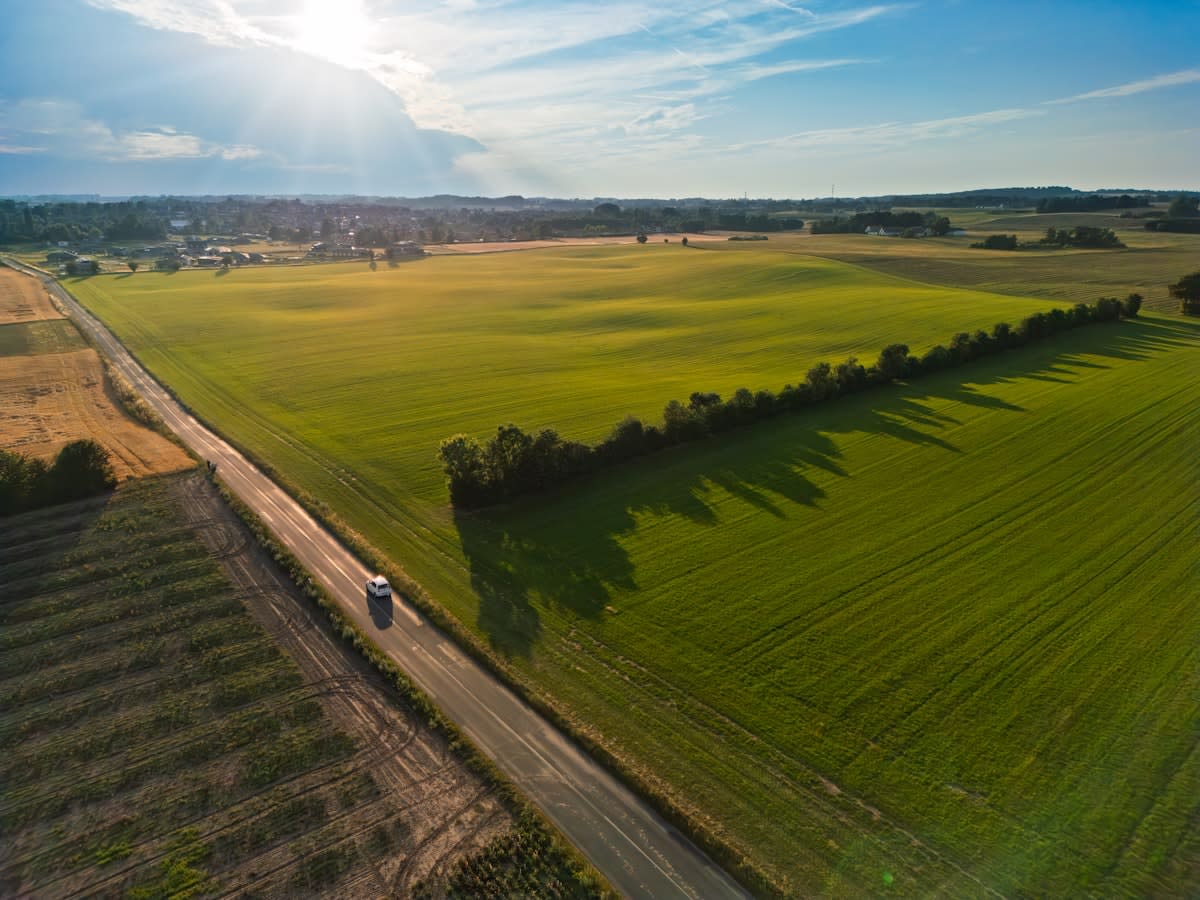
The first step focuses on the edges. Industrial mono-cropping typically strips the land of all non-crop vegetation, creating a biological desert. By establishing hedgerows and riparian buffers—strips of native vegetation along water bodies and field boundaries—you create corridors for pollinators and predatory insects. In the French plains, the restoration of traditional bocage landscapes has shown that these edges act as windbreaks and nutrient filters, reducing nitrogen runoff by up to 40%. These anchors provide the seed rain and insect populations necessary to support the interior of the field.
Once the edges are secure, the focus shifts to the soil matrix. Mono-cropping relies on synthetic inputs that often kill the soil's fungal networks. Introducing multi-species cover crops—mixing legumes, brassicas, and grasses—mechanically breaks up compaction and pumps carbon into the rhizosphere. This is not about a single cover crop, but a tailored mix designed for the specific soil deficiency of the zone. For example, deep-rooted tillage radishes can penetrate hardpan layers that traditional plowing cannot reach, creating channels for water and air.
| Metric | Industrial Monoculture | Restored Landscape | Delta |
|---|---|---|---|
| Soil Organic Matter (SOM) | 1.2% | 3.5% | +191% |
| Water Infiltration Rate | 15mm/hr | 85mm/hr | +466% |
| Pollinator Diversity | Low (1-2 species) | High (20+ species) | Exponential |
| Input Dependency | High (Synthetic) | Low (Biological) | -70% |
Moving deeper into the transition, the operator must replace the single-crop reliance with strategic polycultures. This involves intercropping—planting two or more crops in proximity—to maximize light interception and nutrient uptake. In the Brazilian Cerrado, integrating nitrogen-fixing legumes with primary grains has reduced the need for synthetic urea by significant margins. The goal is to mimic the layered structure of a natural ecosystem, where different root depths and nutrient needs complement rather than compete with one another.
The integration of perennials is where the transition reaches landscape-level stability. Agroforestry, specifically alley cropping, involves planting rows of trees or shrubs among annual crops. These perennials provide a permanent root structure that prevents erosion and sequesters carbon deep in the subsoil. When combined with silvopasture—the integration of trees, forage, and livestock—the land becomes a multi-story production system. This diversification hedges against market volatility; if the grain price drops, the timber or livestock components provide a financial safety net.

The final phase is the closure of the nutrient loop. Industrial systems export nutrients via harvest and import them via bags of fertilizer. To break this cycle, managed intensive grazing (MIG) is introduced. By moving livestock through the restored landscape in high-density, short-duration bursts, the animals provide natural fertilization and stimulate plant growth through grazing and trampling. This mimics the ancestral movements of wild herbivores, accelerating the accumulation of soil organic matter and increasing the water-holding capacity of the land.
Managing the transition requires a clinical approach to the yield gap. There is often a period of 3 to 7 years where the biological systems are not yet fully optimized, but the synthetic supports have been removed. This is the danger zone. Success depends on diversifying income streams early—such as carbon credits or specialty polyculture markets—to offset the temporary decline in bulk commodity volume. The focus must shift from maximizing yield per acre to maximizing profit per acre through reduced input costs.
Common Failure Points
- Over-reliance on a single cover crop species, leading to new forms of biological vulnerability.
- Ignoring local hydrology and attempting to force a restoration model from a different climate zone.
- Scaling too quickly before the soil microbial community has recovered from decades of fungicide use.
- Failure to secure long-term land tenure, making the multi-year investment in perennials a liability.
- Attempting to manage a polyculture system with the same rigid scheduling used for monocultures.
Many practitioners fail because they treat restoration as a checklist rather than a dynamic feedback loop. The most frequent error is the 'copy-paste' approach, where a model that worked in the American Midwest is applied to the Australian Outback without adjusting for soil pH or rainfall patterns. True restoration requires constant observation and iterative adjustments. If a specific intercrop pairing fails in year one, the practitioner must analyze the competition for light and water rather than abandoning the polyculture model entirely.