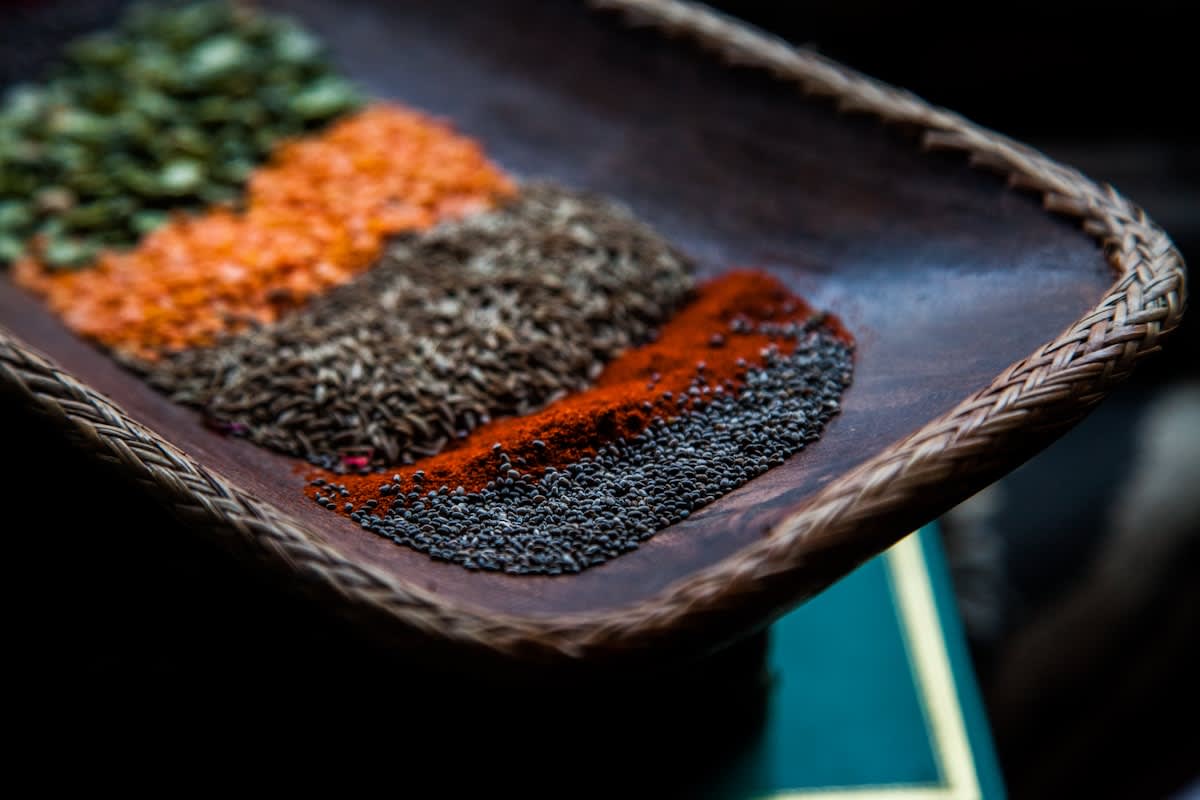
The Great Genetic Pivot
For decades, the global food system operated on a singular, aggressive logic: maximize yield per hectare through genetic uniformity. We engineered a world of high-performing monocultures, creating a fragile efficiency that worked perfectly—until it didn't. Today, we are witnessing a systemic reversal. The focus has shifted from the laboratory-optimized seed to the landrace, the ancient variety that evolved over millennia to survive droughts, pests, and erratic soil chemistry. This isn't a nostalgic retreat to primitive farming; it is a high-stakes race to recover the biological data necessary for survival in a volatile climate.
The delta between last year's agricultural discourse and today's is stark. Twelve months ago, the industry conversation centered almost exclusively on CRISPR and precision gene editing to 'fix' existing crops. Now, the momentum has swung toward 'Crop Wild Relatives' (CWRs) and ancestral genetics. The realization is simple: it is faster and more effective to rediscover a naturally drought-resistant gene in an ancient Ethiopian grain than to attempt to engineer one from scratch in a sterile lab. We are moving from a phase of synthetic creation to one of genetic recovery.

Why the sudden urgency? The vulnerability of our current seed stock has become a liability. When a handful of genetically identical varieties dominate global production, a single evolved pathogen can wipe out entire regional economies. By reintegrating ancient genetics, nations are essentially diversifying their biological portfolios. This shift is most visible in the Global South, where seed sovereignty is being reclaimed not just as a cultural right, but as a national security imperative.
The Mechanics of Sovereignty: From Vaults to Fields
Seed sovereignty operates on two parallel tracks: ex-situ and in-situ conservation. Ex-situ involves the massive, frozen archives like the Svalbard Global Seed Vault, which acts as the world's ultimate backup drive. However, the trend is shifting toward in-situ conservation—keeping seeds in the ground, in the hands of farmers. This allows the genetics to continue evolving in real-time alongside the changing environment. A seed frozen in a vault is a snapshot; a seed grown in a shifting climate is a living adaptation.
"The loss of agrobiodiversity is not just a loss of plants, but a loss of the knowledge systems that managed them. To secure food systems, we must protect the genetic resources and the traditional knowledge of the farmers who preserved them."— FAO, State of the World's Biodiversity for Food and Agriculture
Consider the resurgence of millets in India and Africa. These ancient grains were dismissed as 'poor man's food' during the Green Revolution's obsession with wheat and rice. Now, they are being repositioned as 'nutri-cereals' because of their extreme water efficiency and nutritional density. This is a strategic pivot. By scaling these ancient genetics, regions are reducing their reliance on expensive, water-heavy imports and volatile global commodity markets (Source: FAO, 2023).
| Feature | Industrial Monoculture | Ancient Landraces |
|---|---|---|
| Genetic Profile | Uniform / Narrow | Diverse / Broad |
| Climate Resilience | Low (Requires Inputs) | High (Adaptive) |
| Input Dependency | High (Fertilizers/Pesticides) | Low (Co-evolved with Soil) |
| Ownership Model | Corporate Patents | Communal/Farmer-led |
This transition creates a fascinating friction in the field. As a practitioner, you see this play out in the heated debates over 'Participatory Plant Breeding' (PPB). In PPB, the scientist isn't the sole authority; the farmer is a co-researcher. The debate on the ground isn't about whether ancient seeds work—they clearly do—but about who owns the resulting 'improved' variety. Does the genetic credit belong to the community that saved the seed for ten generations, or the institution that sequenced its genome?
This friction is where the real work happens. In the Andean highlands, for instance, the recovery of thousands of potato varieties isn't just about food; it's about resisting the homogenization of the landscape. When farmers exchange seeds, they are exchanging survival strategies. They are debating which variety handles the new frost patterns of the 2020s better than the ones used in the 1990s. This is decentralized R&D at its most efficient.
The Economic Logic of Resilience
The shift toward ancient genetics is driven by a cold economic calculation: the cost of failure is now higher than the cost of transition. Monocultures are efficient in stable environments, but they are catastrophic in unstable ones. The 'yield gap'—the difference between potential and actual yield—is narrowing for ancient grains as we apply modern agroecological techniques to them. We are seeing a hybrid model where ancient genetics are paired with precision ecology.
- Reduced Input Costs: Ancient varieties often require 30-50% less synthetic nitrogen (Source: CGIAR, 2022).
- Market Differentiation: Rising consumer demand for 'heritage' and 'ancient' grains is creating premium price points.
- Risk Mitigation: Diversified crop portfolios prevent total harvest loss during extreme weather events.
- Soil Regeneration: Many ancient genetics have deeper root systems, improving carbon sequestration and soil health.
However, the race for seed sovereignty is not without its pitfalls. The risk of 'biopiracy' remains a critical concern. When a corporation identifies a resilient gene in a landrace and patents a modified version of it, the original guardians of that seed often see none of the profit. This has led to a surge in 'Community Seed Banks'—grassroots infrastructures designed to legally and physically protect genetic heritage from predatory patenting.
Growth in Community Seed Bank Networks (Global Estimate)
Executive Insight
+18.4%
YTD Growth
Looking ahead, the integration of ancient genetics will likely define the next era of agricultural productivity. We are moving toward a 'Mosaic Model' of farming, where a single farm may utilize a mix of high-yield hybrids and resilient landraces to balance productivity with security. The goal is no longer the highest possible peak of production, but the highest possible floor of resilience.
Fact-Check & Accuracy Note
Key claims regarding crop diversity loss and the role of CWRs are sourced from the FAO's State of the World's Biodiversity for Food and Agriculture and CGIAR research reports. The trend toward Community Seed Banks is based on observed growth in grassroots networks across Asia and Africa. Note that 'seed sovereignty' remains a politically contested term, with debates continuing over the balance between intellectual property rights and the 'common heritage of mankind' principle.