Gold is a static store of value. It sits in vaults, unchanging, providing a hedge against currency collapse through sheer inertia. But in the context of global food security and planetary stability, gold is useless. The real reserve currency of the 21st century isn't a metal; it is the complex, invisible network of fungi, bacteria, and archaea living beneath our feet. We are witnessing a fundamental transition from an extractive chemical economy to a generative biological one. Why did we spend seventy years pretending that soil was just dirt?
For the better part of the last century, the global agricultural strategy was built on the Green Revolution's obsession with NPK—nitrogen, phosphorus, and potassium. This approach treated the soil as a passive vessel, a sterile sponge designed to hold synthetic inputs. The result was an immediate surge in yields, but it came with a hidden debt. By bypassing the natural biological pathways of nutrient cycling, we effectively bankrupt the soil's microbial ledger. According to the Food and Agriculture Organization of the United Nations (Source: FAO, 2022), roughly one-third of the world's soils are already moderately to highly degraded, a systemic failure that no amount of synthetic fertilizer can fix.
The Biological Intelligence Shift
The shift we are seeing now is a move toward biological intelligence. Instead of feeding the plant directly with salts, the new strategic imperative is to feed the microbiome. When we prioritize microbial diversity, we unlock a self-regulating system that manages water retention, pest resistance, and nutrient availability autonomously. This isn't just about 'organic' farming; it is about high-performance biological engineering. In the Brazilian Cerrado, the adoption of no-till farming and cover cropping has demonstrated that restoring soil biology can maintain high productivity while drastically reducing reliance on external inputs (Source: Embrapa, 2021).
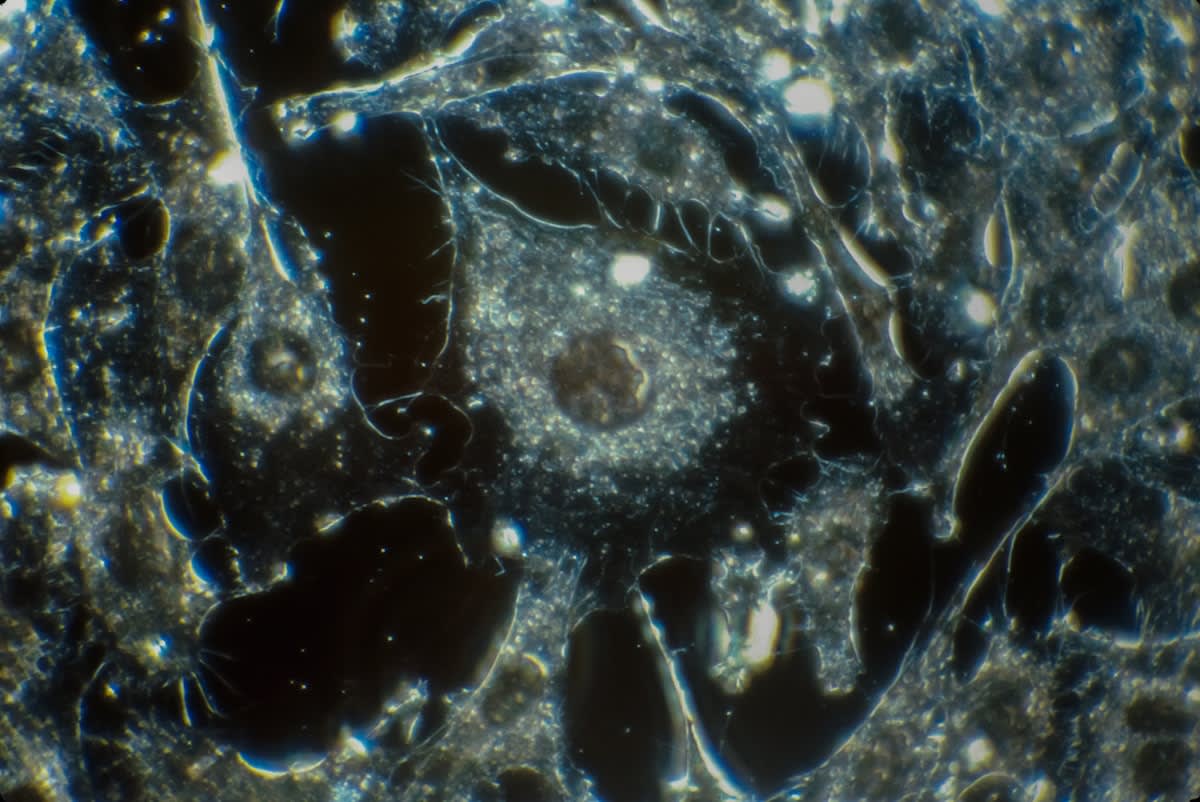
What happens when the ledger is balanced? A soil rich in microbial diversity acts as a massive carbon sink and a buffer against climatic volatility. While chemical-heavy soils collapse during droughts or wash away during floods, biologically active soils possess a structural integrity provided by glomalin—a 'soil glue' produced by fungi. This resilience is the ultimate hedge. As the IPCC has noted, the capacity of soils to sequester carbon is one of the few scalable tools we have to mitigate atmospheric warming (Source: IPCC, 2023).
This transition isn't happening in a vacuum; it is being driven by the realization that synthetic inputs have hit a wall of diminishing returns. We are seeing a global divergence in how practitioners approach the land. In parts of India, movements toward Zero Budget Natural Farming (ZBNF) are attempting to decouple food production from the debt cycles of chemical procurement, focusing instead on on-farm biological preparations (Source: ICAR, 2020). The debate is no longer about whether biology matters, but about how we quantify it.
"The era of treating soil as a substrate for chemistry is over. We are entering the era of soil as a living system. The competitive advantage of the next decade will belong to those who can manage the microbiome, not those who can buy the most fertilizer."— Institutional Position, Food and Agriculture Organization (FAO)
But let's be honest about the friction on the ground. If you spend a week talking to agronomists in the Midwest or the plains of Ukraine, you'll find a deep ideological divide. On one side, you have the legacy consultants who view soil biology as 'voodoo' or a secondary concern to chemistry. On the other, you have the new guard of regenerative practitioners who view synthetic NPK as a drug that creates dependency. The real fight isn't over the science—the science of the microbiome is settled—it's over the risk profile. Switching from a chemical-led system to a biological one often involves a 'transition dip' in yields that most farmers cannot afford without new financial instruments.
Quantifying the Invisible Asset
How do we value something we cannot see? The market is currently attempting to build a 'Soil Ledger' through carbon credits and biodiversity offsets. However, carbon is a crude metric. A field can be high in carbon but low in the specific microbial diversity required for nutrient cycling. The next evolution in agricultural finance will be the 'Bio-Metric'—a valuation based on the functional diversity of the soil microbiome.
| Metric | Chemical-Centric Model | Microbial-Centric Model |
|---|---|---|
| Primary Value Driver | Input Volume (NPK) | Biological Diversity |
| Resilience Profile | Fragile (Dependent on Inputs) | Adaptive (Self-Regulating) |
| Carbon Impact | Net Emitter (Fertilizer Production) | Net Sink (Sequestration) |
| Cost Structure | High OpEx (External Purchases) | Low OpEx (Internal Cycling) |
| Long-term Asset Value | Depreciating (Soil Erosion) | Appreciating (Soil Health) |
This economic pivot changes the geopolitical map. For decades, power resided with the nations that controlled the synthesis of ammonia and the mining of potash. In a microbial economy, power shifts toward those who possess the most diverse genetic libraries of soil organisms. We are seeing a quiet race to map the 'soil genome,' as nations realize that a specific strain of fungus from a remote forest in Southeast Asia could be the key to unlocking phosphorus in depleted soils globally.
Is this a utopian vision? Hardly. The transition is fraught with systemic hurdles. The current global supply chain is optimized for the chemical model. From the way seeds are coated in fungicides to the way crop insurance is structured, the system is designed to penalize biological complexity. To move the needle, we need a complete restructuring of agricultural risk. We need 'Transition Insurance' that protects farmers during the three-to-five-year window when the microbiome is recovering but yields haven't yet stabilized.
Furthermore, we must address the issue of microbial sovereignty. As biotech firms begin to patent specific microbial consortia, we risk recreating the seed monopolies of the 1990s. If the 'biological ledger' is owned by three global corporations, the resilience we seek will be locked behind a paywall. The true strategic advantage lies in open-source microbial diversity, where regional adaptations are shared and scaled.
The Path Forward: From Extraction to Stewardship
The move toward microbial diversity is not a retreat to the past; it is an advancement into a more sophisticated future. It requires a marriage of ancient wisdom—such as the composting practices of traditional Asian agriculture—and cutting-edge metagenomics. By sequencing the soil, we can now identify exactly which microbes are missing from a degraded field and 're-inoculate' the land with precision. This is the essence of the new soil ledger: measuring, valuing, and restoring the biological capital of the earth.
Ultimately, the question is one of timing. Do we wait for the total collapse of the chemical model, or do we proactively invest in the biological one? The evidence suggests that the cost of inaction is far higher than the cost of transition. When the next systemic shock hits—be it a supply chain rupture in fertilizer or a catastrophic weather event—the farmers with the most diverse microbial ledgers will be the only ones still standing.
Fact-Check & Accuracy Note
Key claims regarding soil degradation are sourced from the FAO 2022 report. Carbon sequestration capacities are aligned with IPCC 2023 findings. The efficacy of no-till in the Cerrado is based on Embrapa's long-term research. Ongoing debates in the field center on the 'transition dip' in yields and the standardization of 'regenerative' metrics, which currently lack a single global regulatory definition.