
The Philosophy of the Closed Loop
Waste is a design flaw. For decades, the modern kitchen has operated on a linear trajectory: buy, consume, discard. This model ignores the biological reality that in nature, there is no such thing as waste; the output of one process is always the input for another. By shifting the focus from disposal to regeneration, we transform the kitchen from a site of consumption into a miniature ecosystem where every peel, seed, and stem serves as a catalyst for the next meal.
The scale of the problem is staggering. According to the Food and Agriculture Organization (FAO), roughly 33% of all food produced globally for human consumption is lost or wasted. In high-income nations, nearly 40% of this waste occurs at the retail and consumer levels. This isn't just an environmental failure; it is a massive inefficiency in resource management. Why are we paying for calories and nutrients only to pay someone else to haul them to a landfill where they produce methane?
The Goal
A circular kitchen isn't about achieving a pristine, empty trash can. It is about optimizing the flow of energy and nutrients through your home to maximize value and minimize leakage.
Prerequisites: Your Circular Toolkit
You cannot build a circular system with linear tools. The plastic-wrapped, single-use convenience of the modern supermarket is the primary enemy of the zero-waste kitchen. Before you change your habits, you must change your infrastructure. You need tools that facilitate longevity, bulk storage, and biological breakdown.
- Glass storage containers (various sizes) for bulk goods and fermentation
- Beeswax wraps or silicone lids to replace cling film
- A digital kitchen scale for waste auditing
- A composting system (Bokashi bin for urban apartments or a vermiculture worm farm for gardens)
- Reusable mesh produce bags for market shopping
- Vacuum sealer or Mason jars for long-term preservation
Invest in quality over quantity. A single set of high-quality glass jars is more valuable than a dozen plastic tubs that will degrade and leach chemicals into your food. The goal is to create a permanent inventory of vessels that can move from the market to the fridge and then to the pantry without adding a single gram of new packaging to the system.
Step 1: The Brutal Waste Audit
You cannot optimize what you do not measure. Most people guess what they waste, but guessing is not a strategy. For seven consecutive days, treat your trash can like a laboratory. Every item that leaves your kitchen must be weighed and categorized. Are you throwing away wilted greens? Half-eaten takeout? Packaging from pre-cut fruit? This data reveals the specific leaks in your system.
- Set up three separate bins: Compostables, Recyclables, and Landfill.
- Weigh each bin daily using your digital scale and record the weight in a log.
- Identify the top three most frequent 'waste offenders' (e.g., plastic film, potato peels, expired yogurt).
- Trace these offenders back to their source: Was it a purchasing error? A storage failure? A cooking habit?
- Set a target reduction percentage (e.g., reduce landfill waste by 50% in month one).
The audit usually reveals a shocking truth: we waste the most where we are the least mindful. Often, the 'landfill' bin is filled with items that could have been composted or avoided entirely through better sourcing. Once the data is clear, you stop fighting a vague battle and start solving specific engineering problems.
Step 2: Strategic Procurement
Circular systems begin at the point of entry. The supermarket is designed for the linear model, pushing pre-packaged, hyper-processed goods that generate immense waste. To break this, shift your sourcing to bulk-buy stores, farmers' markets, and local cooperatives. Think of the wet markets in Bangkok or the traditional mercadillos of Mexico City, where packaging is minimal and products are fresh and seasonal.
Buy only what you can realistically process. The 'bulk discount' is a trap if 20% of that bulk purchase ends up in the bin. Instead, focus on high-turnover staples in bulk and highly seasonal produce from local growers. This reduces the carbon footprint of transport and ensures that the food you buy has a longer natural shelf life because it hasn't spent two weeks in a shipping container.
"The most sustainable item is the one you didn't buy. Efficiency in the circular kitchen starts with the discipline of the shopping list."— Master Practitioner's Axiom
Step 3: Preservation and Life Extension
Freshness is a fleeting state. The key to zero waste is the ability to freeze time. This requires mastering preservation techniques that move beyond the freezer. Fermentation, pickling, and dehydrating are not just culinary trends; they are essential tools for resource resilience. A surplus of cabbage in autumn becomes sauerkraut for winter, ensuring no nutrient is lost.
Lacto-fermentation is particularly powerful because it requires only salt and time. By creating an anaerobic environment, you allow beneficial bacteria to preserve the food while increasing its nutritional value. This process transforms a potential waste product—like the stems of kale or the tops of carrots—into a probiotic-rich condiment.
| Technique | Best For | Shelf Life | Complexity |
|---|---|---|---|
| Lacto-Fermentation | Cabbage, Carrots, Radishes | 6-12 Months | Low |
| Dehydration | Herbs, Fruits, Mushrooms | 1 Year | Medium |
| Quick Pickling | Onions, Cucumbers, Peppers | 1 Month | Low |
| Vacuum Sealing | Meats, Hard Cheeses | 3-6 Months | Medium |
Step 4: Root-to-Stem Culinary Logic
Most home cooks use only 60-70% of the vegetables they buy. The rest—the peels, the cores, the stalks—is discarded. Root-to-stem cooking challenges this inefficiency. Broccoli stalks, when peeled and sliced, have a sweetness similar to water chestnuts. Potato peels, tossed in olive oil and salt and roasted, become high-value crisps. This is not about deprivation; it is about extracting maximum value from every gram of organic matter.
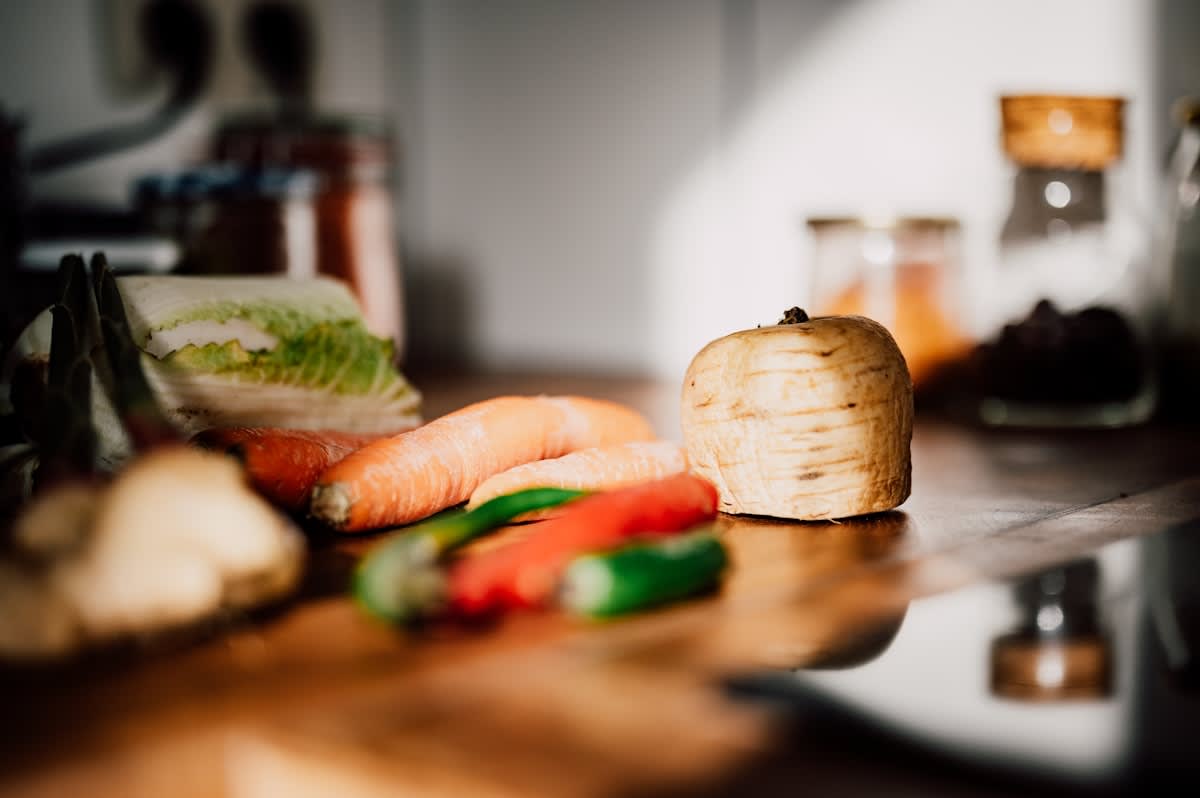
Establish a 'stock bag' in your freezer. Every onion skin, celery end, and carrot peel goes into this bag. Once full, simmer these scraps with water and a splash of apple cider vinegar to create a rich, homemade vegetable broth. You are essentially reclaiming the flavor and minerals that the linear system tells you to throw away.
Step 5: Closing the Loop with Composting
Even with perfect procurement and cooking, some waste is inevitable. The final step of the circular kitchen is returning that organic matter to the earth. When food waste ends up in a landfill, it decomposes anaerobically, producing methane—a greenhouse gas far more potent than CO2. Composting converts this potential pollutant into a nutrient-dense soil amendment.
For those in urban environments, Bokashi is the gold standard. Unlike traditional composting, Bokashi uses an inoculant to ferment organic matter, including meat and dairy, in a sealed bucket. This prevents odors and pests while preparing the waste for rapid integration into soil. For those with garden access, vermiculture (worm farming) offers a high-efficiency way to produce worm castings, the most potent natural fertilizer available.
The loop is closed when the compost you create feeds the herbs or vegetables you grow on your windowsill or in your backyard. This is the ultimate realization of the circular kitchen: your waste becomes the fuel for your next harvest. By implementing these systems, households can reduce their landfill contributions by up to 30%, significantly altering their environmental footprint.
Common Pitfalls and How to Avoid Them
- The Perfection Trap: Trying to go 'zero waste' overnight often leads to burnout. Start with one category (e.g., plastics) and master it before moving on.
- Over-Buying Preservation Gear: Do not buy a dehydrator and a vacuum sealer before you have a surplus of food that actually needs them.
- Ignoring the 'Cold Chain': Putting all your vegetables in the fridge can actually speed up the decay of some items. Learn which produce prefers the counter and which prefers the crisper.
- Compost Neglect: Forgetting to balance 'greens' (nitrogen) and 'browns' (carbon) in a traditional bin, leading to odors and slow decomposition.
The transition to a circular kitchen is an iterative process. It requires a shift in mindset from being a consumer to being a manager of resources. The reward is not just a cleaner planet, but a more intentional, flavorful, and cost-effective way of eating. The circular kitchen is a testament to the fact that resilience is built through small, systemic changes.