
The Great Decoupling: A New Urban Mandate
For decades, the city was a parasitic entity, importing calories from a distant rural hinterland and exporting waste. This month, that logic is collapsing. We are witnessing a 'Nutrient Pivot' where urban planners no longer view food production as a rural prerogative but as a core piece of municipal infrastructure. The goal is no longer just efficiency; it is autonomy. By integrating production directly into the city grid, metropolitan areas are attempting to insulate themselves from the volatility of global logistics and the environmental degradation of traditional industrial farming.
This shift isn't theoretical. Across the globe, from the dense corridors of East Asia to the expanding urban fringes of Sub-Saharan Africa, the blueprint for the city is changing. In Niamey, Niger, the pressures of rapid urbanization are forcing a reimagining of how urban agriculture can be scaled to support growing populations. The focus has shifted from haphazard community gardens to structured, evidence-based frameworks for site selection and policy development. Why now? Because the cost of distance has become too high, both financially and ecologically.
The Technological Leap
The Delta: In 2023, urban agriculture was largely defined by the 'Internet of Things' (IoT) as a bridging concept for data collection. By 2024, the focus has pivoted sharply toward vertical farming and fully integrated closed-loop systems, moving from mere monitoring to active, autonomous production.
The Closed-Loop Revolution
The most aggressive manifestation of this pivot is found in the rise of Recirculating Aquaculture Systems (RAS). In Canada, these land-based facilities are redefining protein production by treating water as a precious, circular asset rather than a disposable resource. Modern RAS facilities can recycle more than 90% of their water, a staggering statistic that removes the traditional reliance on open-water environments. This isn't just about conservation; it's about control. By filtering and treating water in a closed loop, these systems dramatically reduce nutrient discharges into surrounding ecosystems, solving one of the oldest criticisms of aquaculture.
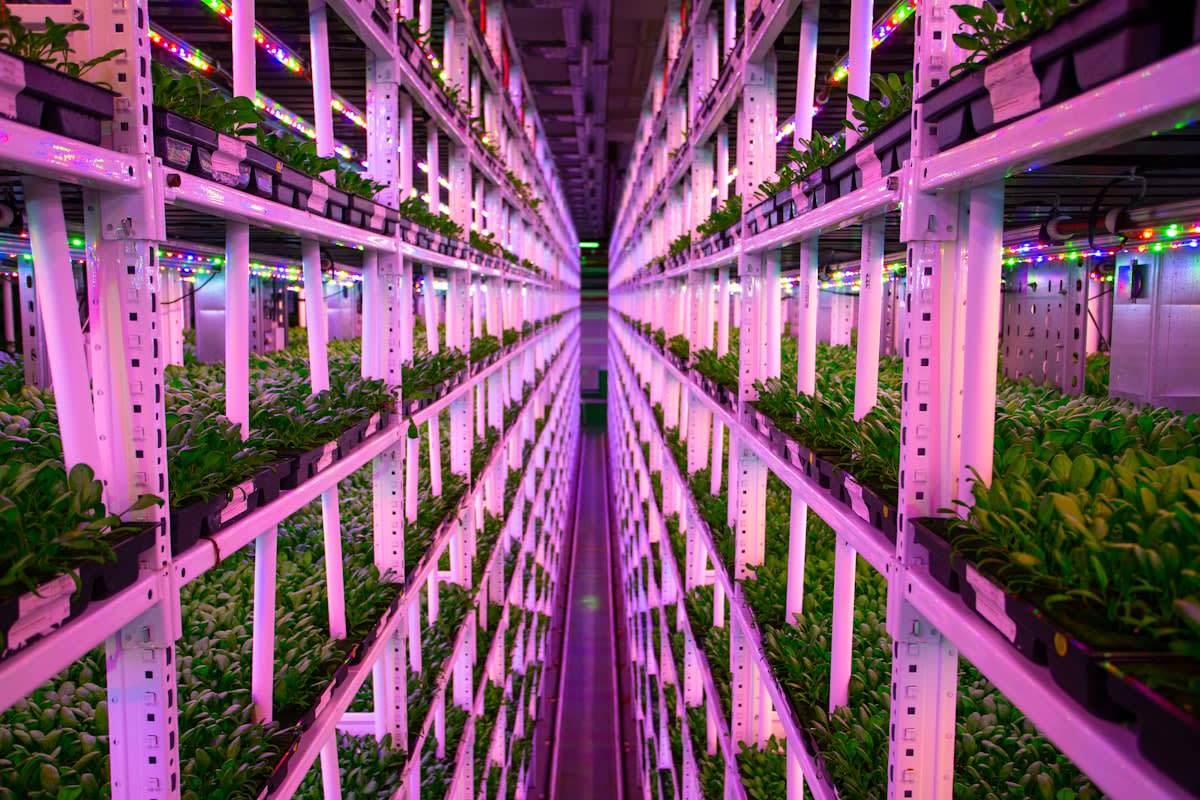
The strategic advantage of RAS is its modularity. Because environmental conditions can be tightly controlled, these farms are being placed closer to major consumer markets. This eliminates thousands of kilometers of transport, slashing carbon emissions and ensuring that the 'nutrient window'—the time between harvest and consumption—is minimized. When the farm is in the city, the supply chain is no longer a chain; it is a circle. This proximity creates a level of resilience that traditional agriculture, tethered to specific climates and soil types, simply cannot match.
"Closed systems can improve biosecurity, reduce exposure to parasites and limit interactions between farmed and wild fish populations."— Canadian Aquaculture Innovation Report
From Monitoring to Mastery: The ICT Evolution
The transition toward autonomy has been fueled by a rapid evolution in Information and Communication Technology (ICT). A systematic review of smart urban agriculture reveals a clear trajectory. Earlier efforts were obsessed with sensors and remote sensing—essentially, the 'eyes' of the operation. These tools told planners that a plant was thirsty or a nutrient level was low. However, around 2023, the Internet of Things (IoT) became the central nervous system, linking data collection to automated management. We have moved from observing the problem to automating the solution.
| Era | Primary Tech Focus | Operational Goal | System Nature |
|---|---|---|---|
| Pre-2023 | Sensors & Remote Sensing | Environmental Monitoring | Open/Passive |
| 2023 | IoT Integration | Connectivity & Management | Hybrid |
| 2024+ | Vertical Farming & RAS | Nutrient Autonomy | Closed-Loop |
This technological maturity is now enabling complex applications, such as fuzzy-based adaptive temperature management in hydroponic systems. By considering nutrient solution dynamics in real-time, these systems can optimize growth cycles with a precision that mimics nature while removing its unpredictability. In urban aquaculture, ensemble shuffling-CNN models are now being used to predict water quality parameters in small fishponds. This level of granular control ensures that urban nutrient production is not just possible, but commercially viable at scale.
The Nutritional Imperative: Addressing the Health Gap
Why is this pivot so urgent? Look at the health data. In regions like Shandong Province, China, and across Kazakhstan and Japan, there is a documented struggle with childhood obesity and nutritional imbalances. The paradox of the modern city is that while calories are abundant, actual nutrients are often scarce or degraded by long-haul transport. When food travels thousands of miles, it is bred for durability, not density. By shifting production into the urban core, cities can pivot from producing 'fillers' to producing 'nutrients'.
The ability to control the exact nutrient profile of crops in a vertical farm means that municipal governments can align food production with public health goals. Imagine a city where school-aged children in high-risk zones have direct access to produce grown in the same neighborhood, tailored to combat the specific nutritional determinants of obesity seen in their population. This transforms urban agriculture from a hobbyist's pursuit into a critical tool for preventative healthcare.

Redefining the City Grid
The Nutrient Pivot is fundamentally a spatial revolution. City planners are now tasked with finding 'optimal site selection' for food production, treating a vertical farm with the same importance as a power substation or a water treatment plant. This requires a total rethink of zoning laws. We are seeing a move toward mixed-use developments where residential blocks are vertically integrated with hydroponic layers and RAS basements. The 'grocery store' is no longer a destination; it is a byproduct of the building's own metabolism.
This autonomy extends to energy and water. Just as semiconductor plants are adopting closed-loop cooling systems to prevent aquifer depletion, urban farms are integrating with the city's waste-to-energy streams. The goal is a symbiotic urban ecosystem where the waste of one process—be it heat from a data center or CO2 from a residential block—becomes the input for the nutrient hub. This is the ultimate expression of urban resilience: a city that breathes, eats, and sustains itself.
As we look toward the next decade, the divide between 'rural' and 'urban' will continue to blur. The Nutrient Pivot isn't about replacing the countryside; it's about relieving the pressure on it. By taking the burden of basic nutritional needs off the global supply chain, we allow rural lands to return to regenerative practices while cities become the high-tech engines of nutritional autonomy. The loop is closing, and the city is finally learning how to feed itself.