
Your taste buds are not broken, but they have been hijacked. For decades, the industrial food complex has engineered products to hit what food scientists call the bliss point—a precise calibration of salt, sugar, and fat that overrides your natural satiety signals. When you spend years consuming these hyper-palatable compounds, a fresh apple or a steamed piece of broccoli can taste remarkably bland. The challenge isn't just a matter of willpower; it is a physiological decoupling. To exit this system, you don't need a luxury health food budget or a personal chef. You need a tactical plan to dismantle the industrial grip on your palate while keeping your expenses low.
I have spent over fifteen years analyzing food systems from the logistics of grain silos in the Midwest to the street markets of Bangkok. One thing becomes clear: the most resilient diets are not those found in expensive wellness boutiques, but those rooted in minimally processed, culturally specific staples. The industry wants you to believe that eating 'clean' requires a premium subscription to organic brands. That is a marketing lie. The real exit strategy involves returning to the basics of food preparation—skills that were systematically stripped away to make room for the microwave and the plastic wrapper.
Prerequisites: The Minimalist Toolkit
Before you change what you eat, you must change how you prepare it. You cannot fight a system designed for convenience with a lack of tools. However, you do not need a kitchen full of gadgets. Most of the 'essential' tools marketed to home cooks are unnecessary clutter. To execute this exit strategy, you only need a few versatile items that allow you to handle raw ingredients efficiently.
- A heavy-bottomed pot or cast-iron skillet: Essential for searing and slow-cooking cheap cuts of meat or legumes.
- A sharp chef's knife: The primary tool for eliminating pre-cut, processed vegetables.
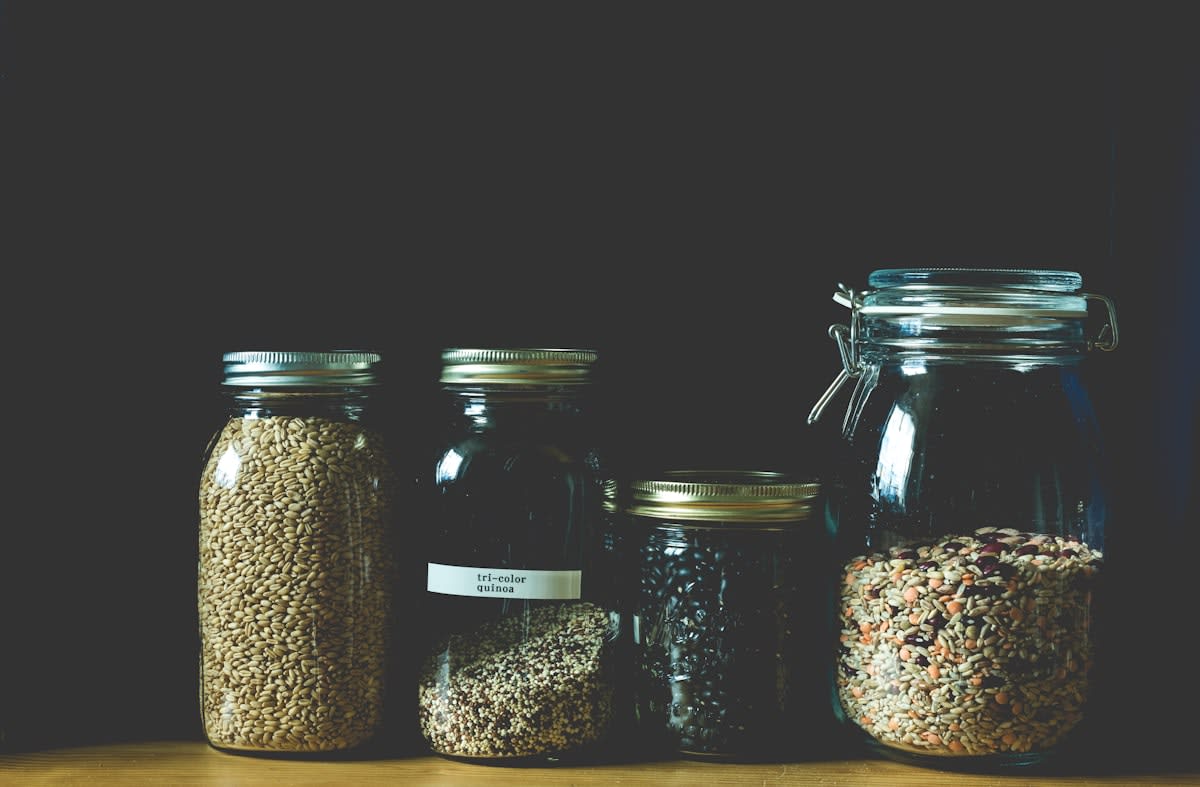
- Bulk storage containers: Glass or BPA-free plastic to hold grains and pulses bought in volume.
- A basic spice rack: Salt, black pepper, and three regional staples (e.g., cumin, paprika, soy sauce) to replace industrial flavor enhancers.
- A slow cooker or pressure cooker: Optional, but critical for making tough, budget-friendly ingredients palatable.
Why focus on the tools? Because the friction of preparation is where most people fail. When you are tired after a ten-hour workday, the distance between a raw lentil and a cooked meal feels like a mountain. By optimizing your toolkit, you reduce that friction. The goal is to make the healthy choice the path of least resistance.
The Step-by-Step Palate Reclamation
Reclaiming your palate is a biological process, not an overnight switch. If you move from a diet of neon-colored snacks to steamed kale in twenty-four hours, you will likely crash and return to the processed foods within a week. The strategy is a gradual slide—replacing industrial components with whole versions while your taste receptors recalibrate.
- Audit via the NOVA Classification: Begin by categorizing your pantry using the NOVA system, which divides food into four groups: unprocessed/minimally processed, processed culinary ingredients, processed foods, and ultra-processed foods (Source: FAO, 2019). Your goal is not to eliminate 'processed' foods entirely—salt and oil are processed—but to aggressively target Group 4 (ultra-processed), which contains additives like emulsifiers and artificial sweeteners.
- The Substitution Slide: Identify your top three ultra-processed triggers. If it is flavored yogurt, switch to plain yogurt with fresh fruit. If it is boxed cereal, move to oats with honey. By substituting the 'vehicle' of the flavor rather than the flavor itself, you trick your brain into accepting the change.
- Anchor Your Diet in Global Staples: Shift your spending toward high-nutrient, low-cost anchors. In South Asia, this is dal (lentils); in Latin America, it is beans and corn; in West Africa, it is cassava or yams. These staples are naturally nutrient-dense and cost a fraction of processed substitutes (Source: World Food Programme, 2023).
- Implement the 80/20 Preparation Rule: Spend 80% of your effort on 'batch processing' during your days off. Cook large quantities of grains and legumes. When the mid-week fatigue hits, you aren't deciding whether to order fast food; you are simply reheating a whole-food base and adding fresh greens.
- The Salt and Sugar Wean: Gradually reduce the added sodium and refined sugar in your cooking. Your palate typically resets within 14 to 21 days. After this window, the artificial intensity of ultra-processed foods often becomes repulsive rather than appealing.
From a practitioner's perspective, the real friction occurs in the 'middle ground.' I often see people debate whether a specific brand of almond milk is 'ultra-processed' or just 'processed.' In the field, we stop arguing about the semantics of a single ingredient and look at the overall pattern. The debate isn't about a single piece of bread; it is about the systemic reliance on industrial formulations that replace whole foods. The goal is a shift in the center of gravity of your diet, not a quest for absolute purity.
"Ultra-processed foods are not just 'junk food'; they are industrial formulations that use substances not used in home kitchens, designed to be hyper-palatable and cheap, often at the expense of nutritional density."— Carlos Monteiro, Professor and Creator of the NOVA Classification
Budgeting for the Transition
The most common myth is that eating whole foods is more expensive. This is only true if you try to buy 'pre-packaged health foods.' A bag of organic kale chips is an ultra-processed product in a healthy costume. A bunch of raw kale is incredibly cheap. To keep costs down, you must move your shopping from the center aisles of the supermarket to the perimeter and local wet markets.
| Ultra-Processed Option | Whole-Food Alternative | Cost Impact | Nutritional Shift |
|---|---|---|---|
| Sugared Breakfast Cereal | Steel-cut Oats & Frozen Berries | Lower | Lower Sugar, Higher Fiber |
| Processed Deli Meats | Roasted Whole Chicken/Legumes | Lower | Lower Sodium, Higher Protein |
| Store-bought Fruit Snacks | Seasonal Local Fruit | Comparable | Vitamin C vs. Corn Syrup |
| Instant Noodles | Brown Rice/Soba & Frozen Veg | Slightly Higher | Complex Carbs vs. Refined Flour |
Focus on the 'cost per nutrient' rather than the 'cost per calorie.' While a large bag of processed chips provides cheap calories, the cost per micro-nutrient is nearly zero. Conversely, a kilo of dried chickpeas provides protein, fiber, and minerals for a negligible price. When you shift your accounting to nutrient density, the whole-food path becomes the only economically rational choice.
Common Pitfalls to Avoid
Even seasoned practitioners fall into these traps. The most dangerous is the Health Halo—the tendency to trust a product because it says 'Organic,' 'Gluten-Free,' or 'Non-GMO' on the front, while the ingredient list on the back is a chemistry textbook. If the product has more than five ingredients and includes things you cannot find in a home kitchen (like soy lecithin or maltodextrin), it is still ultra-processed.
- The Organic Trap: Spending your entire budget on organic versions of processed foods instead of conventional versions of whole foods.
- The All-or-Nothing Crash: Attempting to remove all processed foods in one day, leading to decision fatigue and bingeing.
- Ignoring Cultural Staples: Trying to adopt a 'Western' health diet (like avocado toast) instead of using the cheap, whole foods native to your region.
- Over-reliance on Supplements: Replacing real food with powders and pills, which increases costs without providing the satiety of whole foods.
The final hurdle is the social pressure of convenience. In a world designed for speed, taking an hour to cook is often viewed as a luxury. But we must ask: is it a luxury, or is it a basic requirement for biological health? The time you spend in the kitchen is an investment in your long-term cognitive and physical resilience.
Fact-Check & Accuracy Note
Key claims regarding the NOVA classification are sourced from the FAO (2019) and the research of Carlos Monteiro. Statistics on global staples and nutrient density are based on World Food Programme (2023) guidelines. The 14-21 day palate reset window is a widely observed physiological trend in nutritional practice, though individual results vary based on previous levels of sugar dependency.