The Great Reclassification: From Waste to Asset
For decades, the industrial food complex viewed side-streams—the husks, peels, and spent grains left over from processing—as a liability. These materials were either landfilled or sold as low-value animal feed, a linear model that bled both nutrients and profit. That era is ending. We are witnessing a systemic pivot where the world's most innovative kitchens and food scientists are treating agricultural leftovers not as trash, but as raw, untapped luxury assets. This isn't about virtue signaling or a desperate attempt to save the planet; it is a calculated move toward resource efficiency and the discovery of entirely new flavor profiles and nutritional densities.
The scale of this shift is reflected in the numbers. The Upcycled Food Ingredients Market is currently on a trajectory to reach a valuation of USD 580.6 billion. This isn't a slow climb; it is a surge fueled by a convergence of retailer sustainability commitments and a sudden, aggressive appetite for alternative protein and fiber sources. When you look at the delta between the industry's approach twelve months ago and today, the narrative has shifted from 'reducing waste' to 'maximizing biological value.' The focus has moved from the periphery of the supply chain to the very center of product development.
The Circular Shift
The transition to upcycled ingredients represents a move from a linear 'take-make-waste' economy to a circular biological system where every calorie is accounted for.
Why now? The catalyst is a combination of regulatory pressure and technological breakthroughs. We are seeing an explosion of investment in food-waste recovery technologies that allow us to extract proteins and fibers with a precision that was impossible five years ago. This is no longer about simply drying out some leftover pulp. It is about molecular transformation. By utilizing advanced drying, fermentation, and fractionation techniques, companies are now able to isolate specific proteins from side-streams and stabilize them for use in high-end bakery and beverage products, effectively creating luxury ingredients from what was previously discarded.
The Technical Engine: Fermentation and Fractionation
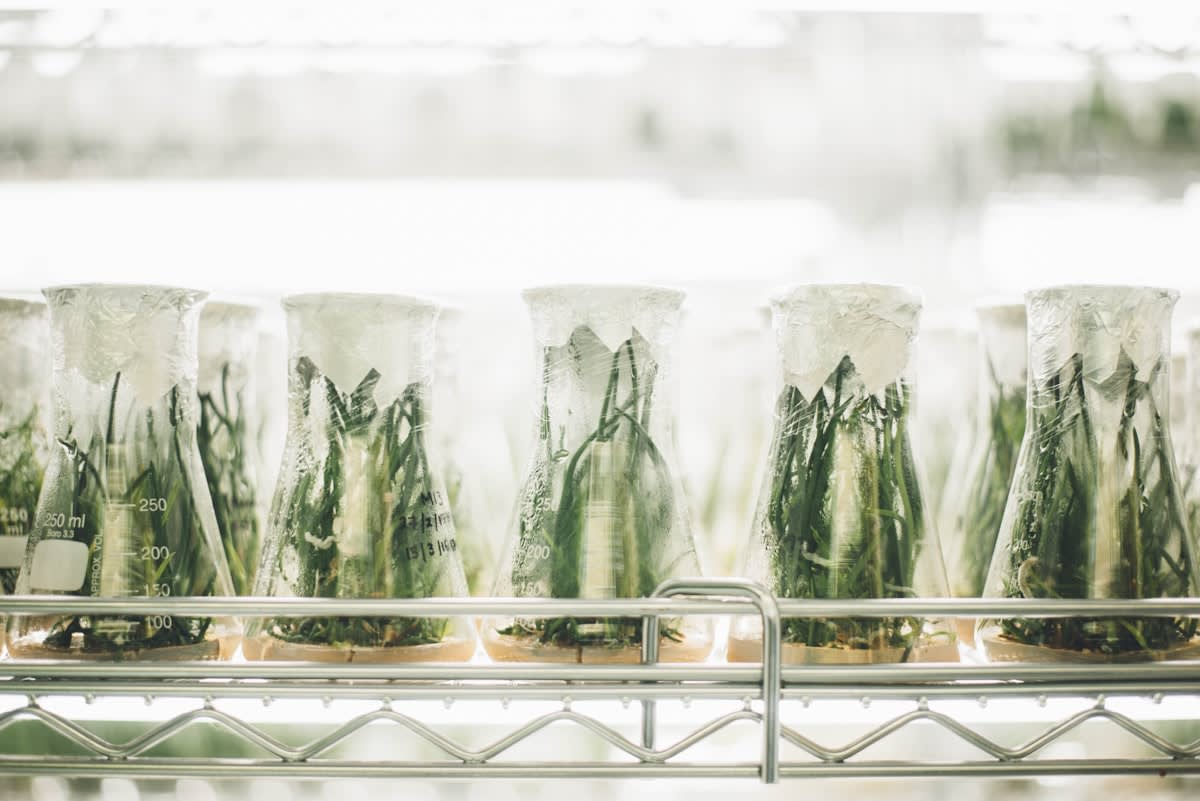
To understand how a brewery byproduct becomes a luxury protein, one must look at the technology. Fractionation is the hero here. It allows processors to separate a complex mixture—like a seed or a grain—into its constituent parts: proteins, fats, and carbohydrates. When applied to upcycled streams, this means we can strip away the undesirable elements of 'waste' and leave behind a pure, high-functioning protein isolate. Combine this with precision fermentation, and you can actually 'upcycle' the nutritional profile of the ingredient, enhancing its taste or bioavailability before it ever reaches a chef's station.
Stabilization technologies have also solved the historical Achilles' heel of upcycled foods: shelf life. In the past, recovered fibers and flours were prone to rapid oxidation and spoilage. Today's stabilization methods ensure that these ingredients maintain their luxury status from the factory to the fork. This technical maturity is why we are seeing a surge in the adoption of upcycled ingredients in the bakery and beverage sectors, where consistency and stability are non-negotiable.
| Growth Driver | Technical Enabler | Market Outcome |
|---|---|---|
| Retailer Sustainability Commitments | Fractionation | Pure Protein Isolates |
| Demand for Alternative Proteins | Precision Fermentation | Enhanced Flavor Profiles |
| Circular Food System Interest | Stabilization Tech | Long-shelf-life Upcycled Flours |
| Food-Waste Reduction Mandates | Advanced Drying | Recovered Nutrient Powders |
This technological leap has created a new hierarchy of ingredients. At the top of this list is brewer's spent grain. Why does it lead the source segment? Because it is an abundant, protein-rich byproduct of one of the world's oldest industries. By applying these new recovery technologies, the industry has turned a bulky, wet waste product into a versatile, nutrient-dense flour and protein source that appeals to both the health-conscious consumer and the high-end pâtissier.
The Psychology of the Plate: Labels and Luxury
The success of upcycled proteins depends entirely on consumer perception. Can you sell 'waste' as a luxury? The data suggests that the answer is yes, provided the framing is correct. Research from the Bloomberg American Health Initiative highlights a critical trend: consumers are significantly less likely to select foods with high climate impacts when menu items are clearly labeled with climate grades. This suggests that the modern diner is not just looking for taste, but for an alignment of their meal with their values. When an upcycled protein is presented as a 'climate-positive luxury,' the perceived value increases.
This behavioral shift is creating a feedback loop. As consumers gravitate toward lower-impact choices, restaurants and manufacturers are incentivized to integrate more upcycled ingredients. We are seeing a move away from the 'crisis' narrative—where eating sustainable food felt like a sacrifice—toward an 'opportunity' narrative, where choosing upcycled proteins is a sign of sophistication and awareness. The climate grade is becoming the new Michelin star for the environmentally conscious elite.
However, this transition isn't uniform across the globe. While some regions are leading in industrial upcycling, others are rediscovering latent biological wealth. In the GCC region, for instance, there is a growing conversation about wild berries—nutrient-dense, local resources that have been ignored in favor of chemical-drenched imports. While not a 'waste' product in the industrial sense, the logic is the same: identifying underutilized biological assets and elevating them to market status. Whether it is a brewery in Europe or a wild berry patch in the Middle East, the goal is the same: localized, resilient, and high-value nutrition.
"The future of food isn't about finding new lands to farm; it's about finding new ways to value what we've already grown."— Industry Analysis on Circular Food Systems
Global Circularity: The Netherlands and Beyond
The Netherlands provides a masterclass in this systemic shift. By integrating circular economy principles across multiple sectors—from automotive to food and beverages—they have created an ecosystem where one industry's waste is another's raw material. In this environment, the 'Zero-Waste Protein Surge' isn't an isolated trend; it's a component of a broader national strategy to decouple economic growth from resource consumption. When the entire infrastructure supports circularity, the cost of recovering upcycled proteins drops, and the scalability increases.
This global mosaic of adaptation shows that the upcycled protein market is not a monolith. In North America, the drive is often led by venture-backed tech startups focusing on fermentation. In Europe, it is driven by circular economy policy and luxury gastronomy. In other regions, it is a return to indigenous, underutilized flora. Despite these different paths, the destination is the same: a food system that is resilient, efficient, and capable of producing luxury-grade nutrition without expanding its environmental footprint.
Ultimately, the USD 580.6 billion valuation is more than just a market forecast; it is a signal of a fundamental shift in human ingenuity. We are moving past the era of extraction and into the era of optimization. The most innovative kitchens in the world are no longer just cooking; they are practicing a form of biological alchemy, turning the discarded remnants of our agricultural past into the luxury ingredients of our future.