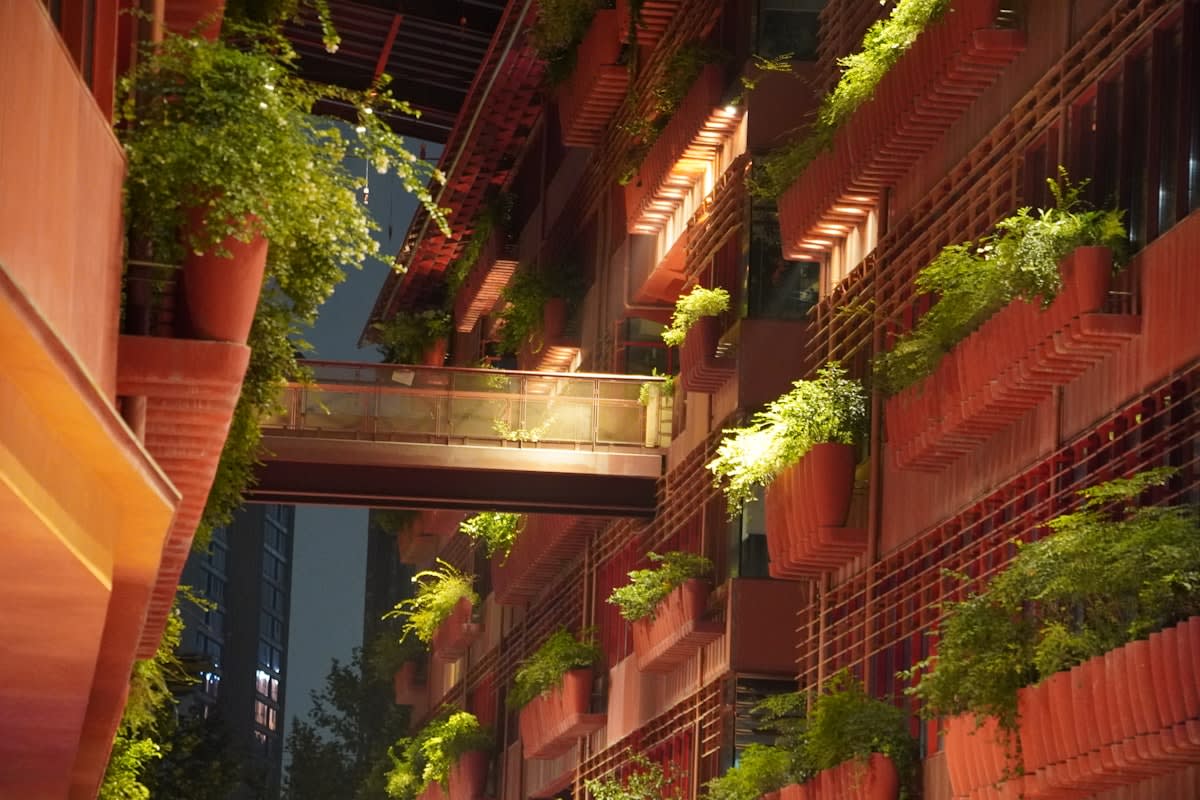
The Urban Carbon Opportunity
Why do we treat urban greenery as a mere aesthetic luxury rather than critical infrastructure? For too long, city landscaping has been a sterile exercise in control—manicured lawns and isolated ornamental trees that contribute nothing to the planetary carbon cycle. The shift we are seeing now is a move toward nature-based solutions, where the goal is not just to plant, but to engineer a self-sustaining ecosystem. When we treat a backyard, a balcony, or a community lot as a carbon sink, we are essentially building a biological machine designed to pull CO2 from the atmosphere and lock it into the soil.
This is not a fringe environmentalist hobby; it is a scalable strategy for resilience. From the regenerative agriculture summits in California to the community-led composting movements in Victoria, Australia, the blueprint is emerging. The objective is to move from a linear model of waste and maintenance to a circular model of regeneration. By focusing on soil health and species complexity, urban dwellers can mimic the large-scale restorative practices used by global entities like PepsiCo, which has already expanded regenerative and protective practices to 4.7 million acres worldwide to secure its supply chain.
The Paradigm Shift
Regenerative urbanism is about shifting the metric of success from 'how green does it look' to 'how much carbon is it sequestering and how diverse is the food web'.
Prerequisites: The Regeneration Toolkit
Before breaking ground, you must audit your available resources and environmental constraints. A carbon sink requires more than just seeds; it requires a dedicated stream of organic matter and a strategic selection of flora that can survive local stressors. In drought-prone regions like Colorado, the 'Garden In A Box' approach has gained traction, emphasizing water-saving landscapes that provide color without depleting precious aquifers. Your toolkit must prioritize inputs that build soil structure rather than synthetic fertilizers that degrade it.
- High-carbon organic matter (kitchen scraps, dried leaves, shredded cardboard)
- Native seed mixes tailored to your specific hardiness zone
- Drought-resistant cultivars for water-stressed urban environments
- Composting infrastructure (worm farms, Fogo bins, or community compost hubs)
- Soil testing kits to measure baseline organic matter and pH levels
The Execution Blueprint: Step-by-Step
- Establish a Closed-Loop Nutrient Cycle: Divert all organic waste from landfills to your soil. Use the Victorian model of 'garden gold' where kitchen scraps and garden cuttings are processed into nutrient-dense compost.
- Implement Stratified Planting: Avoid monocultures. Mimic the biodiversity of London's botanical pockets, integrating climbing wisterias, orchids, and topiary to create vertical layers of carbon absorption.
- Engineer a Complex Food Web: Design for predators. Introduce plants that attract beneficial insects and birds to ensure ecosystem stability and natural pest control.
- Scale and Maintain via Regenerative Logic: Transition from high-intervention maintenance to a system that relies on natural decay and regrowth, mirroring the nature-based climate strategies currently being integrated into California's state policy.
The first step—closing the nutrient loop—is where most urban projects fail. In Victoria, Australia, communities are actively fighting the concept of green 'waste' by diverting organic matter away from landfill. Currently, about 62% of organic waste in some regions is already diverted into mulch or compost. By treating your kitchen scraps as a raw material rather than trash, you are fueling the microbial life necessary to turn soil into a carbon sponge. Without this organic foundation, any plants you add are merely ornaments, not agents of sequestration.

Once the soil is primed, the focus shifts to structural diversity. A botanist's view of a city like London reveals that the most resilient spaces are those with varied architecture—from the historic wisterias of Chiswick to the orchids of Kew. By layering your planting—ground cover, shrubs, and canopy trees—you increase the total leaf area index, which directly correlates to the amount of CO2 the space can process. In drought-heavy zones, this means selecting species that provide maximum coverage with minimum water, as seen in the recent late-summer restocking of drought-resistant gardens in Colorado.
However, plants alone do not make an ecosystem. Research led by the University of Waikato and the German Center for Integrative Biodiversity Research (iDiv) underscores a critical point: healthy ecosystems rely on complex food webs. Specifically, a greater diversity of predators is essential for maintaining natural processes like pest control and climate regulation. If your urban space only attracts pollinators but lacks predators, the system remains fragile. You must intentionally plant for the entire food chain to ensure the long-term stability of your carbon sink.
"Ecosystems are powered by the relationships between species—who eats whom, how energy moves through the food web and the important role predators play in keeping everything in balance."— Dr. Andrew Barnes, University of Waikato
Scaling this mindset requires a departure from traditional gardening. We should look to the corporate shift toward regenerative agriculture for a roadmap. PepsiCo's target to source 90% of its key ingredients sustainably by 2030, having already reached 70%, demonstrates that restorative practices can be scaled across millions of acres. For the urban practitioner, this means moving beyond a single flower bed to creating corridors of biodiversity that connect with other urban green spaces, effectively creating a city-wide network of nature-based solutions.
| Feature | Traditional Urban Gardening | Regenerative Carbon Sink |
|---|---|---|
| Soil Management | Synthetic fertilizers/Chemicals | Closed-loop composting/Organic matter |
| Plant Selection | Aesthetic monocultures/Lawns | Stratified native biodiversity |
| Ecosystem Goal | Visual appeal/Low maintenance | Carbon sequestration/Food web stability |
| Water Usage | High-frequency irrigation | Drought-resistant/Water-saving design |

Common Pitfalls in Urban Regeneration
The most frequent error is the 'green facade' fallacy—planting a variety of species without establishing the underlying biological relationships. Many practitioners plant native flowers but fail to provide the nesting sites or predatory habitats required to sustain a food web. As the University of Waikato research suggests, without predator diversity, the ecosystem cannot function effectively, leaving it vulnerable to pests and reducing its overall stability. A garden that looks biodiverse but lacks a functioning food web is merely a collection of plants, not a carbon sink.
Another critical failure is the over-reliance on external inputs. Bringing in bagged soil and store-bought fertilizers creates a dependency that contradicts the logic of regenerative agriculture. The goal is to mirror the nature-based solutions discussed at the California Farmland Summit, where the focus is on identifying challenges and sharing successful, self-sustaining practices. If you are importing nutrients rather than generating them from your own organic waste, you are not building a sink; you are managing a subsidized display.
Finally, avoid the trap of 'static design'. A true carbon sink is dynamic; it evolves as the soil health improves and new species migrate into the space. The botanist's guide to London shows us that nature's story is one of constant growth and adaptation—take the wisteria brought from China that continues to thrive centuries later. Allow your space to shift. Do not fight the system that has existed for years; instead, be open to the stories your land tells you as it returns to a state of biological productivity.